Shared vs. Exclusive Christmas Party Venue Hire: Which to Book and Why



Choosing between a shared and an exclusive Christmas party comes down to three things: how much control you want over the evening, how big your group is, and how much of the planning you’re willing to take on yourself.
A shared party is simpler and often cheaper, as it happens alongside other events in shared areas of the same space.
An exclusive party gives you the whole venue, a fully personalised evening, and a genuine “VIP” feeling at a higher cost and with more to plan.
What Is a Private (Exclusive) Christmas Party?
A private, or exclusive, Christmas party means hiring a venue entirely for your own group. Nobody else’s event is happening in the building at the same time. The space, the schedule, the entertainment and the atmosphere all belong to your team alone.
This is the format that suits companies wanting a fully branded, bespoke evening: a specific theme, a run of speeches and awards, or simply the reassurance that the whole night runs exactly to your plan.
What Is a Shared Christmas Party?
A shared Christmas party brings multiple events and groups together, usually hosted by the venue or event organisers. Each group gets a set number of places, while the venue – in most cases – handles the food, entertainment and overall running of the night.
It’s a lower-effort, often lower-cost way to get a proper night out without any of the logistics, but remember that you’ll be sharing the venue with strangers.
The Difference Between Shared and Exclusive Christmas Parties
| Shared Christmas Party | Exclusive Christmas Party | |
| Venue use | Shared with other companies/groups attending the same venue | The whole venue, exclusively for your group |
| Planning effort | Low — book places, pick a menu, show up | Higher — venue, catering, entertainment and timings all need arranging |
| Cost | Generally lower, priced per person | Generally higher, often with a minimum spend |
| Control | Set schedule and format, run by the venue | Full control over layout, timing, theme and programme |
| Best suited to | Smaller teams, budget-conscious groups | Larger groups, or any team wanting a fully personalised night |
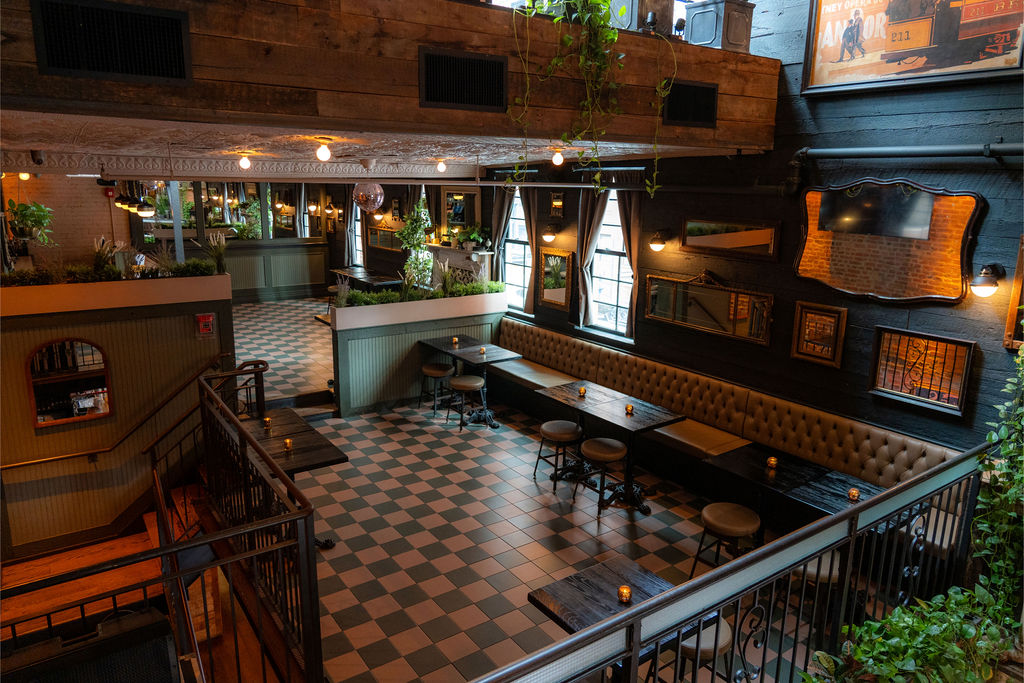
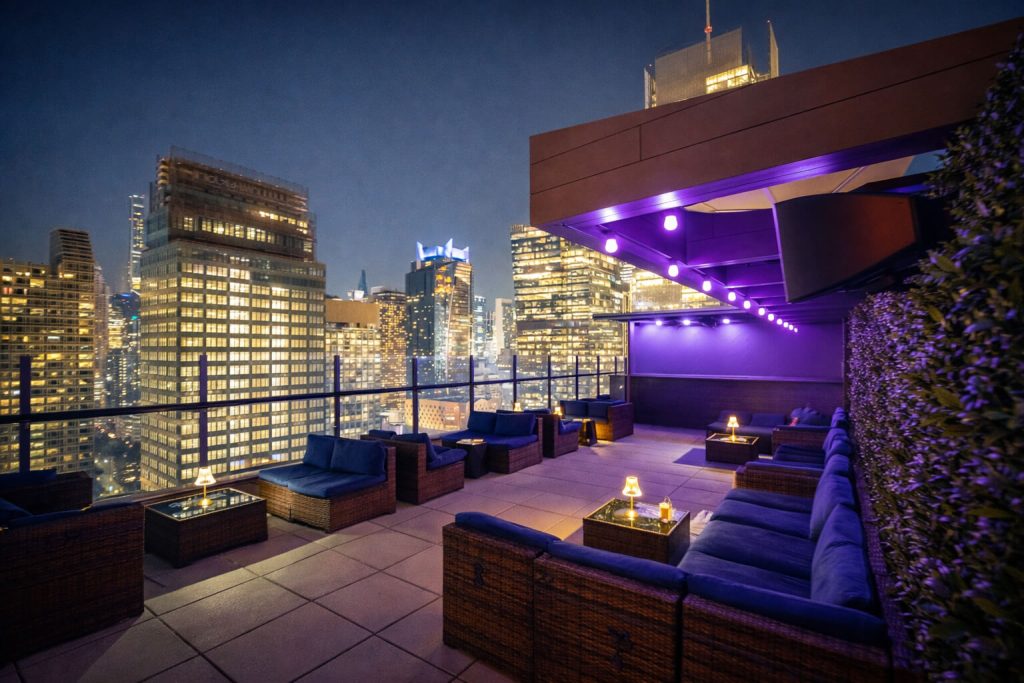
What Type of Event Suits Shared and Exclusive Venues
- A shared party delivers a lively, ready-made ambience: the buzz of a full room, other people’s energy carrying the night, and zero admin. It suits teams who want a proper night out without anyone having to run it.
- It’s a genuinely good call for a small startup of 5–10 people, since it gives everyone the chance to mingle beyond their own desk-mates rather than running out of things to talk about by 9pm.
- An exclusive party delivers something different: the feeling of being genuinely looked after. Nothing about the evening is a compromise between your event and someone else’s; the room, the pacing, and the attention of the staff are entirely yours.
- For occasions that call for a bit of ceremony (a big year for the business, an anniversary, an awards-style evening), that undivided feeling is often the whole point of booking exclusively. At a larger scale, it also means turning an entire venue into a proper multi-room event. One space for dinner, another for dancing, another for cocktails, ideal for groups running into the hundreds.
What Exclusive Spaces Offer: Personalisation and that VIP Feeling
A few things specifically set it apart:
The Undivided Attention of the Events Team
When a venue’s team is focused on a single event rather than juggling several, the difference shows. Requests get handled immediately, service stays consistent all night, and nothing about your experience is competing for the same staff as someone else’s party down the corridor.
Customised Catering
Exclusive hire generally means a menu built around your event specifically (dietary needs, a theme, or simply what your group actually likes) rather than choosing from a fixed shared-party menu designed to work for everyone at once.
A Cohesive Experience From Start to Finish
Perhaps the least obvious benefit of exclusive hire is coherence. There’s no jarring shift from a shared entrance to a private room, no competing music drifting in from another event, and no sense that the atmosphere you’ve built is being diluted by something happening on the other side of a wall. For a night where the mood matters, that uninterrupted flow is a genuine advantage.
Small Exclusive Spaces vs. Large Shared Spaces
Venue size and format don’t always move together the way people assume.
Small teams, small exclusive spaces
A team of 10–20 people can absolutely book exclusively — a private dining room, a small bar, or a pub function room can be hired outright without needing a huge budget, giving a small group the same “whole venue” feeling on a modest scale.
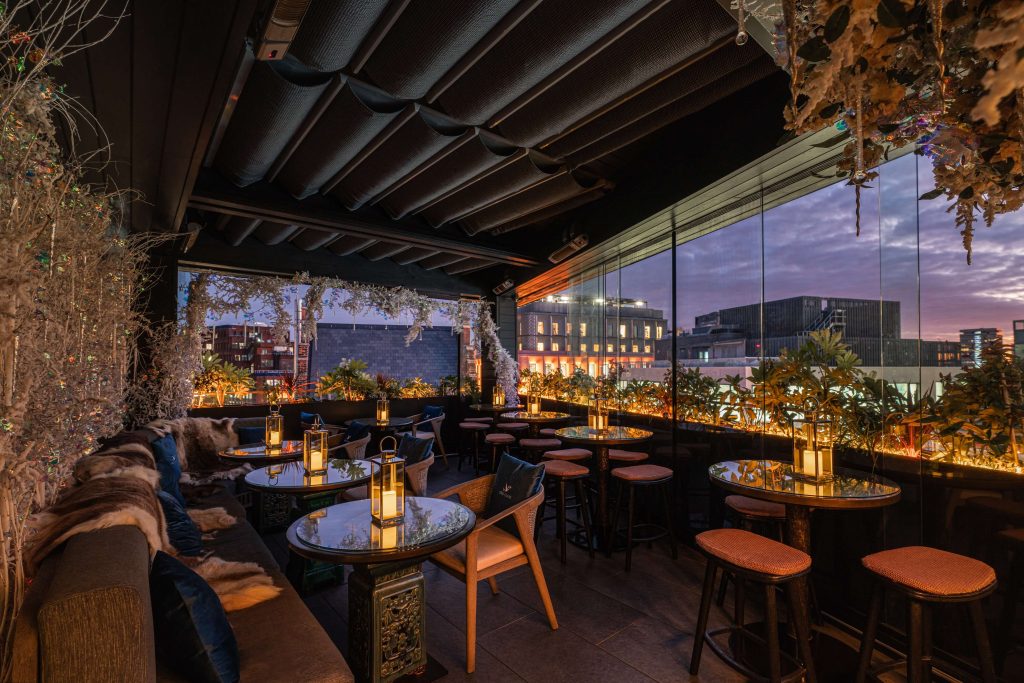
Small teams, shared spaces.
For the same size group, a shared party night is often the more cost-effective route, since a smaller team may not comfortably meet an exclusive venue’s minimum spend.
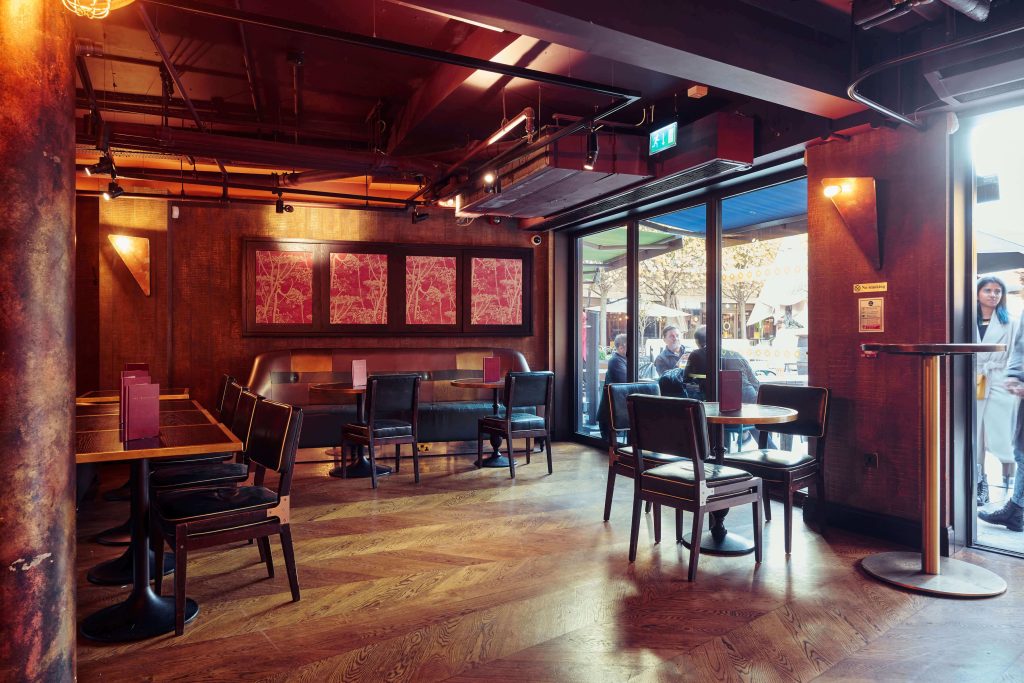
Large teams, large exclusive spaces
For 150+ guests, exclusive hire of a bigger venue (a convention centre, a large event space, or a full-building restaurant buyout) becomes genuinely practical, since a group that size can meet minimum spends comfortably and benefits most from having full control over layout and flow.
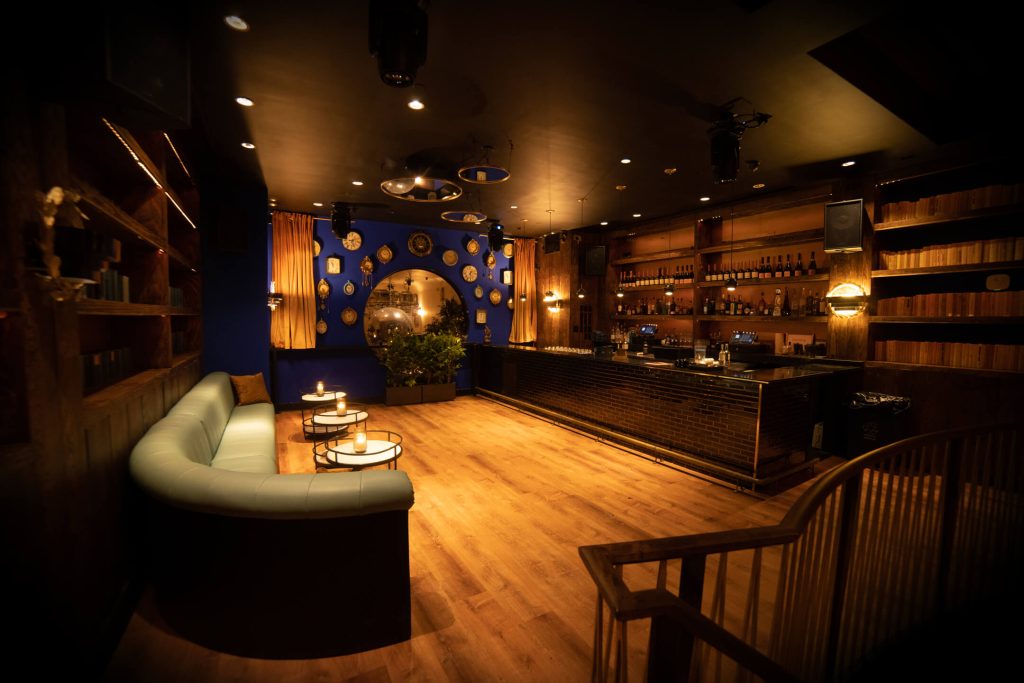
Large teams, large shared spaces
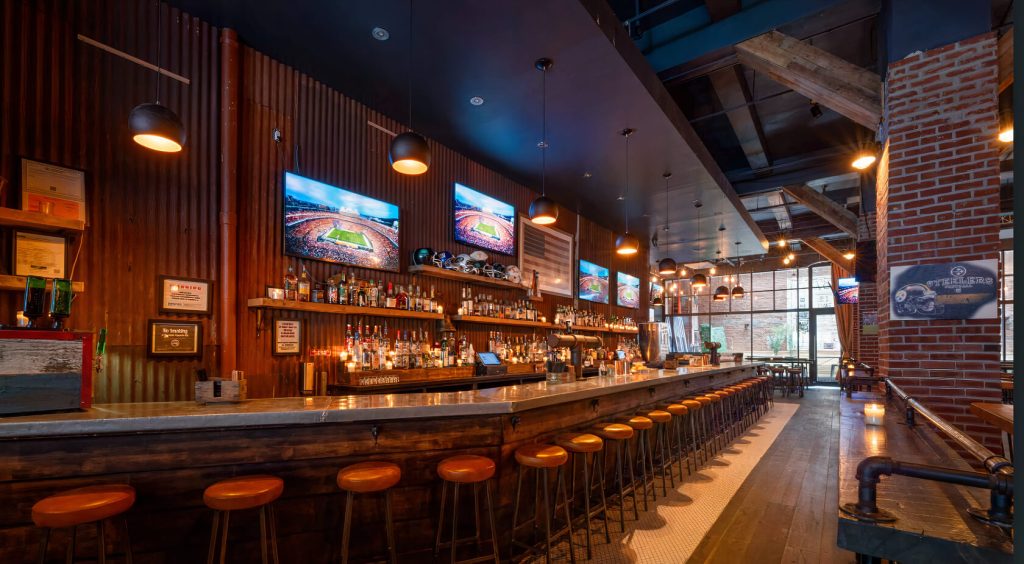
Big groups can also join a large-scale shared party night, particularly if the goal is atmosphere and energy over full control — a big shared room can deliver a scale of event that a smaller company couldn’t practically host alone.
Why Shared Christmas Parties Are Proving So Popular in 2026
Shared Christmas parties have grown into one of the most in-demand formats this year, and the reasons are fairly consistent across the market: lower cost, far less planning, and a ready-made atmosphere that doesn’t depend on your own team building it. For businesses that want a proper night out without owning every decision, a shared party removes almost all of the friction.
Here are five venues worth considering for shared and exclusive Christmas parties this year:
| UK | USA | Australia | Singapore | Canada | Ireland | |
| Exclusive Hire | Ballie Ballerson | Lovebirds Wine Bar + Bistro | Storyville | The Velvet Affair by Noble Affairs | 11:59 Bar:Café | Lennan’s Yard |
| Semi-private Hire | Bocconcino Mayfair Restaurant | St Tropez West Village | The Emerald Peacock | Raffles Place Event Venue | Reid’s Distillery | BrewDog Outpost Dublin |
What Should You Choose for Your Christmas Party
- Cost. Shared parties are typically priced per person and tend to be the more budget-friendly option. Exclusive hire usually involves a minimum spend, which pushes the overall cost higher but spreads more reasonably across a larger group.
- Flexibility. Exclusive hire gives you control over timing, running order, and any speeches or awards. Shared parties follow a set programme — you gain simplicity, but trade away adaptability.
- Group size. Shared parties suit smaller teams well; exclusive hire becomes more cost-effective as group size grows, since the fixed minimum spend is shared across more guests.
- Planning lead time. Exclusive hire generally needs booking further ahead, with more decisions to make along the way — décor, entertainment, catering, minimum numbers. Shared parties are simpler: book your places, choose a menu, and you’re largely done.
- Cancellations. Shared events tend to be more forgiving if your headcount shifts, since you’re not responsible for filling an entire venue. Exclusive hire usually comes with minimum numbers and deposit terms that are worth understanding well before you book.
Shared:
Pros: Lower cost, minimal planning, ready-made atmosphere, more forgiving on final numbers.
Cons: Less control over timing and format, shared crowd, fixed schedule
Exclusive:
Pros: Full control, personalised catering and theme, undivided staff attention, a cohesive experience from start to finish.
Cons: Higher cost, longer planning lead time, minimum spend and deposit commitments.
If your team can stretch to it, exclusive hire is generally the stronger choice when the occasion itself calls for something memorable — a landmark year, a proper thank-you to the team, or simply wanting the whole evening to feel considered rather than shared. Shared parties remain the smart, low-friction option when budget or time are the bigger constraints, but they involve a genuine trade-off in control and personalisation that’s worth going into with open eyes.
Popular Types of Shared and Exclusive Christmas Spaces
Shared venue formats typically include large bars and restaurants running dedicated party nights, hotel ballrooms hosting multiple companies on rotation through December, and dedicated Christmas party venues built specifically around the shared-night format.
Exclusive venue formats range from intimate private dining rooms and pub function rooms at the smaller end, up to full restaurant buyouts, blank-canvas event spaces, and convention centres for large-scale exclusive events.
Whether you’re going shared or exclusive, Tagvenue’s range spans everything from a handful of guests to a few hundred. Here’s what that looks like in practice.
Small venues: private dining rooms, small cafes, function rooms within a bar, creative studios, blank canvas spaces, small galleries, and even quirkier spots like a hair studio. In markets like Australia, an outdoor space or rooftop is a genuine option too, given the season falls in summer.
Large venues: whole bars, warehouses, exhibition centres, theatres, mansions, and full restaurant buyouts — though a restaurant doesn’t have to mean a big space, since plenty stay small and cosy even on exclusive hire.
Types of Groups and Events Best Suited to Each
| Factor | Shared Party | Exclusive Hire |
| Budget | Lower, priced per person | Higher, usually a minimum spend |
| Group size | Best for smaller teams (under ~30) | Cost-effective from mid-size groups up, ideal for 100+ |
| Formality | Informal, relaxed | Can flex from informal to fully formal (awards, speeches) |
| Flexibility on numbers | High — easy to adjust headcount | Low — minimum numbers usually apply |
| Planning effort | Minimal | Moderate to high |
| Atmosphere | Bigger-room energy, mingling with other companies | Entirely your own crowd and pace |
| Branding/theming | Not possible — set by the venue | Fully customisable |
| Best for | Startups, small teams, low-admin planners | Milestone years, formal programmes, large-scale events |
Find Shared and Exclusive Christmas Party Venues Wherever You Are
Whichever format suits your team, Tagvenue lists both shared and exclusive Christmas party venues across major cities:
- Christmas party venues in London
- Christmas party venues in Manchester
- Christmas party venues in NYC
- Christmas party venues in Sydney
- Christmas party venues in Melbourne
- Christmas party venues in Toronto
- Christmas party venues in Singapore
- Christmas party venues in Dublin
Quiz: What Type of Christmas Party Fits Your Team?
What sounds like your team? Think of it for a sec, and then decide what types of activities you’d like to host. If A, B, C, D, or E sounds like your group, you know what to do next.
A: The “we’ve got a seating plan and we’re sticking to it” team: You like things to run on time. There’s a running order, maybe a couple of short speeches, and everyone knows roughly what’s happening and when. Best fit: Exclusive hire
B: The “just feed us and let us loose” team: Nobody wants to organise anything. A good meal, a lively room, and someone else handling the logistics is exactly the energy your team is after. Best fit: Shared party
C: The “this year’s been huge, we want to mark it properly” team: It’s been a big year, and a generic night out doesn’t quite feel like enough. You want the evening to feel considered, not just booked. Best fit: Exclusive hire
D: The “we love our team, but we’re nosy about everyone else’s” team: You’re happy with your own crowd, but there’s a part of you that likes a bigger room, new faces, and not knowing exactly what’s coming next. Best fit: Shared party
E: The “we’ll sort it eventually” team: Every year starts with good intentions and ends with a scramble in November. You mostly just want something booked that works, with minimal decisions along the way. Best fit: Shared party — it’s the easiest format to book without a long lead time
Most teams won’t fit neatly into one box, and that’s fine, the honest takeaway is that shared parties tend to win on convenience, while exclusive hire wins when the occasion itself deserves something built specifically around it.
Check out our other Christmas articles:
- Booking Mistakes to Avoid
- Company Christmas Party Tips From the Experts
- Christmas Party Ideas for Large Groups
- Small Office Christmas Party Ideas
Shared or exclusive Christmas party, Tagvenue Has the Venue
Browse the best spaces to celebrate the holiday season.
FAQ
What’s the main difference between a shared and an exclusive Christmas party?
A shared party means your team joins a larger, professionally run event alongside other companies, following a set schedule. An exclusive party means the whole venue is yours, with full control over timing, catering, and format.
Is a shared or exclusive Christmas party cheaper?
Shared parties are typically priced per person and tend to be more budget-friendly overall. Exclusive hire usually involves a minimum spend, which raises the total cost but can work out reasonably per head for larger groups.
How far in advance should I book each format?
Exclusive hire generally needs a longer lead time, since there’s more to arrange — venue, catering, entertainment and minimum numbers. Shared parties can often be booked with less notice, since the format and programme are already set by the venue.
Can a small team book an exclusive venue?
Yes — small private dining rooms, bars and pub function rooms can all be hired exclusively without needing a large budget, giving a small team the same “whole venue” feeling on a smaller scale.
What happens if our numbers change after booking?
Shared events tend to be more forgiving on headcount changes, since you’re not responsible for filling an entire venue. Exclusive hire usually comes with minimum-number and deposit terms, so it’s worth confirming the venue’s policy before booking.
Which option gives more control over entertainment and timing?
Exclusive hire. Since the venue is entirely yours, you can set your own running order, book your own entertainment, and adjust timings freely — something a shared party’s fixed schedule doesn’t allow.
Related articles
See all
Corporate Christmas Party Trends in 2026: What Companies Are Doing Differently