What Do Employees Actually Want From a Work Christmas Party in 2026?




Employees want a Christmas party that feels like genuine appreciation, not another obligation: fully paid for, scheduled to respect their personal time, with good food and drink, low-pressure entertainment, and the option to skip it without consequences. That’s the consistent answer across employee surveys and workplace forums.
Do Employees Even Want a Party?
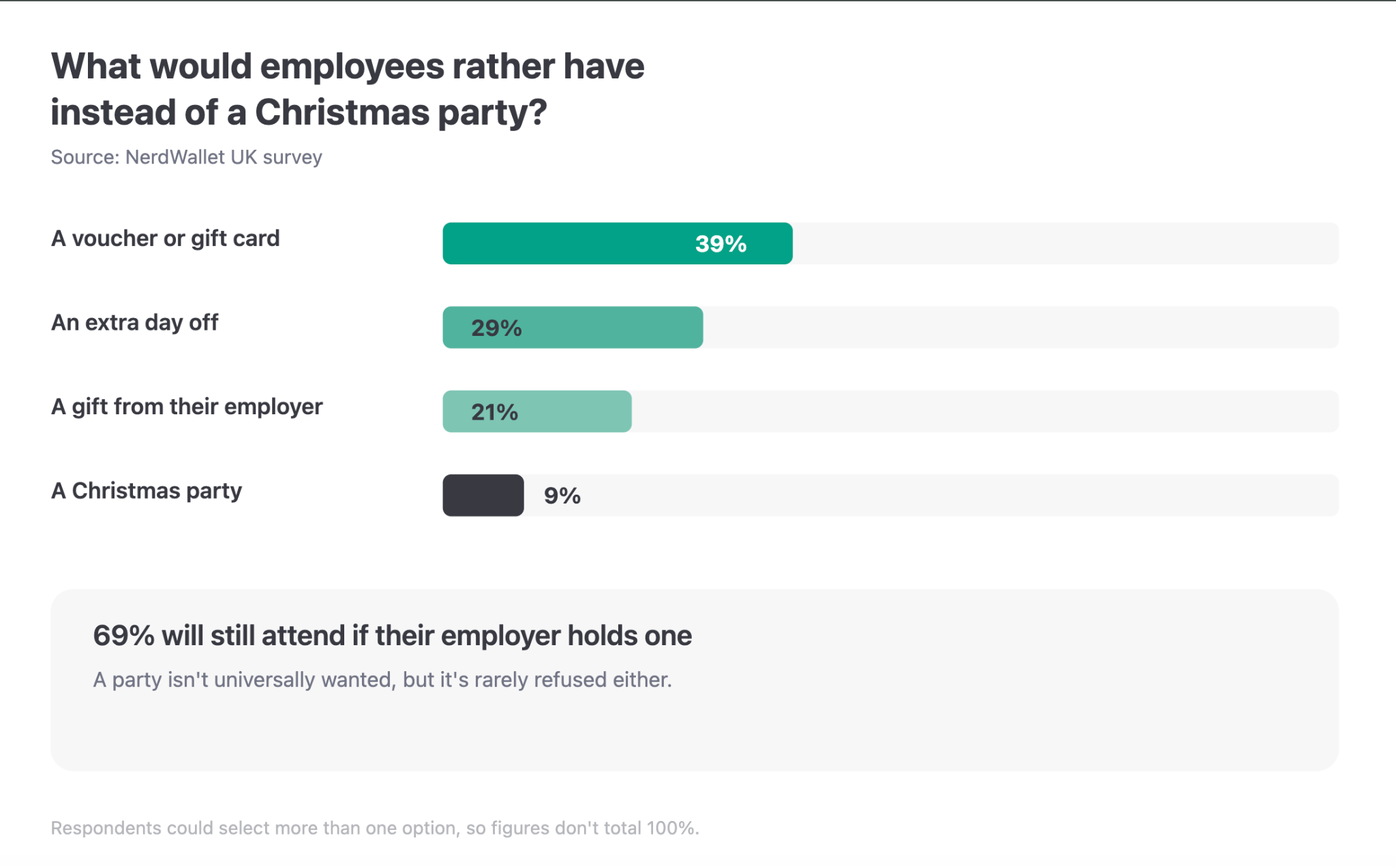
Not necessarily. A recent NerdWallet UK survey found only 9% of employees would choose a work Christmas party. Given alternatives, 39% said a voucher or gift card, 29% wanted a day off, and 21% would rather have a gift. Yet 69% said they will still turn up if their employer holds a party anyway.
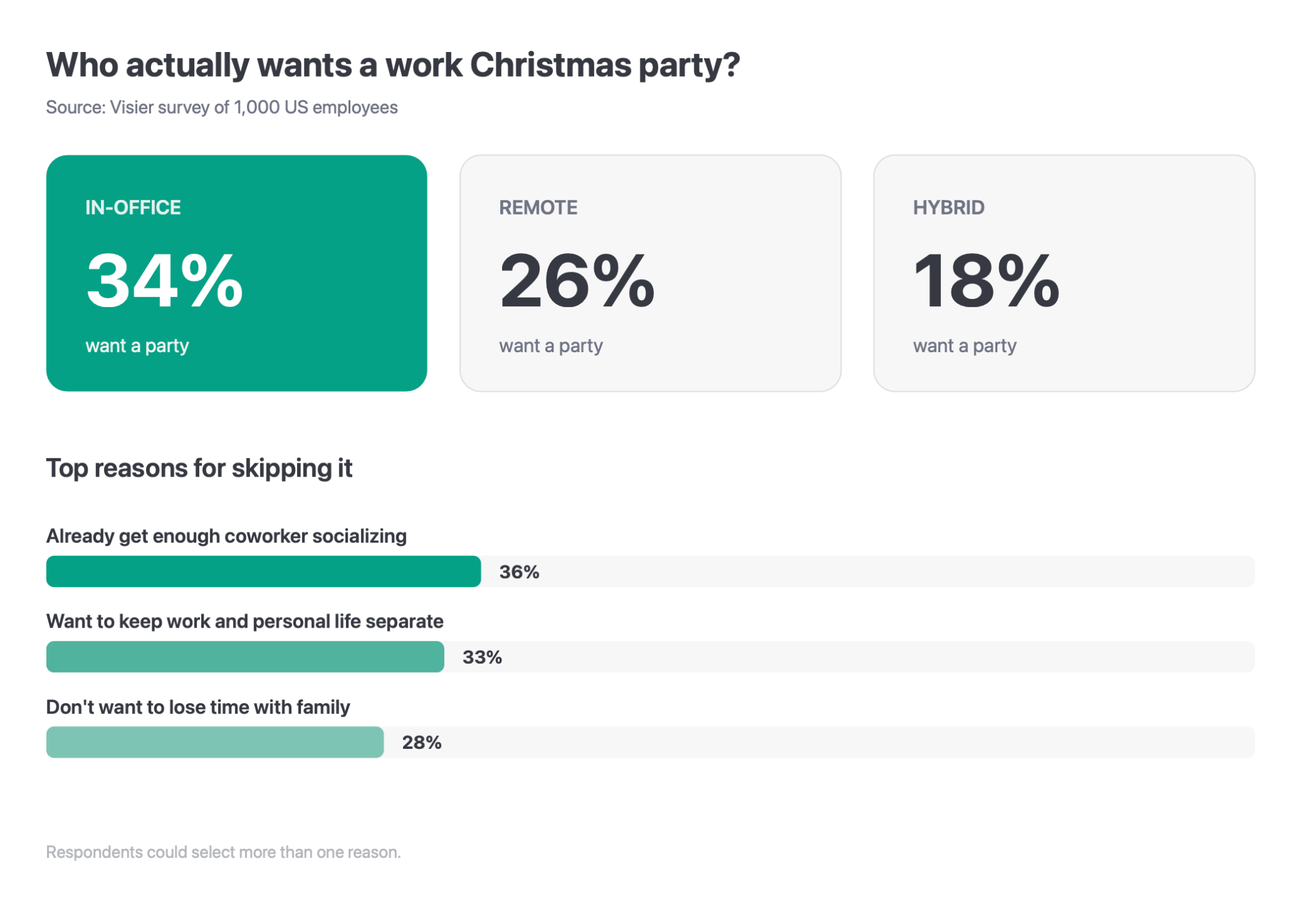
A separate US survey by Visier found that preferences also vary by work style: 34% of in-office employees wanted a party, compared with 26% of remote workers and just 18% of hybrid employees. Among the main reasons for skipping it are: already getting enough coworker socializing during the working day (36%), wanting to keep work and personal life separate (33%), and not wanting to lose time with family (28%).
The takeaway isn’t that employers should stop holding Christmas parties. It’s that a party shouldn’t be treated as a reward everyone automatically wants.Asking employees what they prefer, and making attendance genuinely optional, is a better starting point.
Dinner vs. Activities: What People Say They Want vs. What Actually Gets Booked
When it comes to the party iteself, employee preferences are relatively simple: good food and drink, light entertainment such as music or casual games, and — critically — nothing that forces participation.
That is a notable contrast with much of the “Christmas party ideas” content online, which tends to promote escape rooms, casino nights, and immersive themed events. Tagvenue’s own booking data tells a more grounded story: pubs and bars are by far the most-booked venue type for parties in both London and New York City, far ahead of restaurants, versatile event spaces, or anything more elaborate.
This pattern aligns with what employees say they value: good food and drink, room to socialise, and no expectations of competing in a quiz or putting on a costume.
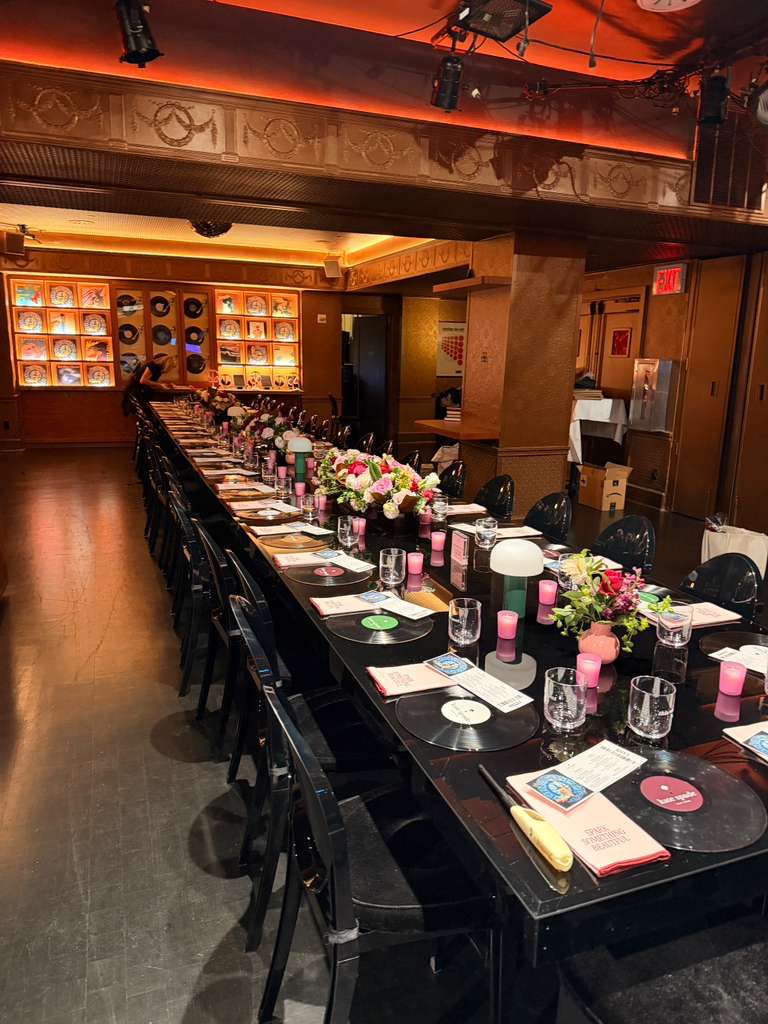
That’s not to say activities have no place. For teams that genuinely want something more structured, casual games, trivia or a cocktail-making class can add structure without making participation feel compulsory.
Alcohol: Handle With Care
Alcohol is still common at work Christmas parties, but employers appear to be becoming more cautious about it. According to Challenger, Gray & Christmas’ long-running annual survey, in 2023, 57% of companies planned to serve alcohol at their holiday party, down from 63% in 2022.
The concern isn’t new. In a 2017 Associated Press report, SHRM’s Ed Yost warned: “As soon as you introduce alcohol at an off-site activity, people’s guards are dropped.”
Real workplace forums back this up with plenty of cautionary tales. Reader threads on sites like Ask a Manager are full of open-bar-gone-wrong stories, and a growing number of companies now issue a fixed number of drink tickets instead of an open bar.
The practical takeaway: give good non-alcoholic drinks the same consideration as alcoholic ones, and don’t make drinking the centre of the event.
Group Size and Format: Intimate vs. Company-Wide
Format shifts a lot depending on group size, and interestingly, London and NYC don’t behave identically. In London, pubs and bars dominate at every size, with restaurants a clear second. In New York City, apartment and penthouse venues show up far more often relative to overall bookings than they do in London, suggesting that smaller, more private formats are more common there.
That distinction matters for the “what do employees want” question too. Smaller, quieter events can help address some of the inclusivity and low-pressure concerns raised throughout the research: they’re easier to navigate, make conversation simpler, and can work better for people who don’t drink or don’t enjoy large, noisy events.

Budget: Who Pays, and What’s Typical
Every source agrees on one thing without exception: employees expect the company to cover the cost of a work Christmas party. NerdWallet’s UK data found 14% of workplaces won’t cover any cost at all — travel, food, or alcohol — and that’s the kind of detail that can quickly turn a perk into a source of resentment.
Based on Tagvenue’s own booking data, average party spend runs to roughly £37.78 per head in the UK and $19.77 per head in the US, though this varies significantly by city, venue type and format. Whatever the budget, the principle is simple: employees shouldn’t be expected to subsidise their own appreciation event.
Shared vs. Private: A Related Decision
Once you’ve settled on the format and budget, there’s another choice to make: whether to book a shared party night, alongside other companies, or hire a venue exclusively for your team.
We’ve covered the trade-offs in more detail — including cost, flexibility, and which format suits different groups — in Shared vs. Exclusive Christmas Party Venue Hire: Which to Book (and What It Costs).
Timing: The Most Overlooked Factor
Timing can matter as much as the format itself. Events held during working hours or as an early evening slot are less likely to eat into personal or family and don’t risk ruining the next morning – one of the recurring concerns raised in employee feedback.
One recurring Ask a Manager story captures the problem well: a “mandatory” party scheduled 4–9 pm clashed with an employee’s daughter’s school concert, exactly the kind of avoidable friction that turns a goodwill gesture into a grievance.
A daytime event, an early-finish evening slot, or a reasonably timed Friday event (giving people the weekend to recover) can avoid any stress, and cost less to boot, since daytime and early slots are typically cheaper than a full Friday or Saturday night booking.
Bringing It Together
The research is strikingly consistent: employees want a fully-paid, well-fed, low-pressure event on a schedule that respects their time, with genuine choice about whether and how much they participate. It’s a far cry from the elaborate, activity-packed productions most “party ideas” content pushes, and it’s exactly the kind of relaxed pub, bar, or intimate venue format that shows up most often in real bookings.
Whatever your team’s version of that looks like – a Friday-evening pub takeover in London, an intimate apartment gathering in NYC, or something in between – Tagvenue makes it easy to compare venues by format, capacity, budget and timing in one search.
For a broader look at how company events and workplace culture are shifting in 2026 more generally, see the Tagvenue Work Social Index.
FAQ
Do employees prefer a party during the day or in the evening?
Events during working hours or in an early-evening slot are generally preferred, since they don’t cut into personal or family time. If an evening event is the only option, ending at a reasonable hour and holding it on a Friday (so people have the weekend to recover) both help.
Should alcohol be included at a work Christmas party?
Most sources agree alcohol can be included, but it shouldn’t be the default or focus of the event. A real choice of non-alcoholic drinks matters as much as the alcoholic options, and a full open bar carries real risk that a growing number of companies are managing with drink tickets instead.
Do employees prefer a shared party or an exclusive one?
It depends on group size and what the team values. Shared parties are typically lower-cost and lower-effort, while exclusive hire gives more control and privacy. See our full breakdown in Shared vs. Exclusive Christmas Party Venue Hire.
What gifts do employees really want at a Christmas party?
Research suggests the gift itself matters less than genuine recognition. A thoughtful, inexpensive gift or gesture tends to land better than an expensive but impersonal one, especially when paired with real appreciation rather than treated as a box to check.
Related articles
See all
Party Venues for Hire: Why Tagvenue Is the Best Place to Book, Whatever Your Budget or Group Size