How to Find a Private Dining Room for 20, 30 or 50 Guests



Tagvenue is the number one way to find private dining rooms across the UK. Here’s why: private dining isn’t limited to a curtained-off corner in a restaurant. The options stretch far wider: elegant hotel dining rooms with skyline views, atmospheric spaces in museums, historic buildings, and other unexpected venues that turn a simple dinner into something memorable. Tagvenue makes all of these easy to discover in one place.
Simply filter by group size to match your party exactly. For gatherings of fewer than 50 guests, the platform surfaces intimate options instantly. You can refine further by facilities, amenities, or dietary requirements so the space and the menu fit your event needs perfectly.
Whether you’re planning in London, Manchester, Birmingham, Cardiff, Nottingham, or other popular UK cities, Tagvenue brings the full range of private dining rooms — restaurant, hotel, museum and beyond — together in a single, simple search.
How to Choose a Private Dining Room for Your Event
When selecting a private dining room, start by defining your non-negotiable requirements. These will quickly narrow your options and prevent costly mismatches later.
1. Guest Count & Capacity
- Confirm the exact (or realistic maximum) number of guests.
- Check both seated capacity and standing/cocktail capacity if your event mixes formats.
- Ask about minimum spend or minimum guest numbers — many venues enforce these.
- Ensure the room won’t feel cramped or emptily oversized.
2. Location & Accessibility
- Proximity to your guests or transport links (public transport, parking, rideshare drop-off).
- Step-free access, lifts, and accessible toilets if needed.
- Easy loading for any décor, AV, or catering deliveries.
3. Budget
- Room hire fee (or whether it’s waived with a food & beverage minimum).
- Food & drink packages, service charges, corkage, and VAT/tax.
- Extra costs: AV equipment, décor, staffing, overtime, cleaning fees.
- Clarify cancellation and deposit policies in writing.
4. Privacy & Atmosphere
- Fully private room vs. semi-private (screened area in a larger restaurant).
- Noise levels from adjacent spaces.
- Natural light, views, acoustics, and overall style that matches your event tone (formal, casual, celebratory, corporate).
5. Food, Drink & Service
- Menu flexibility (set menus, à la carte, dietary requirements, tasting options).
- Ability to customise or bring in external caterers (rare but sometimes possible).
- Service style (plated, family-style, buffet) and staff-to-guest ratio.
- Bar options and wine list quality.
6. Technical & Practical Amenities
- AV capabilities: screen/projector, sound system, Wi-Fi strength, power sockets.
- Climate control and lighting adjustability.
- Cloakroom, restrooms (ideally dedicated or nearby), and storage space.
- Timing flexibility (set-up and clear-down windows).
7. Availability & Logistics
- Date and preferred time slot availability.
- How far in advance you need to book.
- Any restrictions on décor, music, or external suppliers.
Quick Checklist to Take With You
Before you contact any venue, have these ready — it means sending the same, complete brief to every venue at once instead of a slower back-and-forth:
- Exact guest count, plus a small buffer
- Date, and ideally a backup date or two
- Time (lunch or dinner)
- Occasion
- Hard budget ceiling per person, including extras
- Food style (set menu, family-style, buffet, tasting menu)
- Drinks (open bar, wine/beer only, cash bar, BYOB)
- Privacy level (fully private vs. semi-private)
- Must-have amenities (AV, accessibility, private toilets)
- Preferred location radius
- Sending this to five venues individually, by phone or email, is exactly the repetitive part of the process a venue marketplace is built to remove — submit it once, and compare real, upfront answers side by side.
- Once you have these requirements locked in, you can efficiently shortlist venues (via platforms like Tagvenue, Peerspace, OpenTable, or direct outreach) and request proposals that match them.
Food Options for Private Dining on Tagvenue
- Tagvenue makes it easy to organise almost any style of private dining. Most venues offer multi-course set menus or prix-fixe packages, while others specialise in sharing-style meals, canapé receptions, chef’s tables, or more casual grazing setups. Many will also customise menus to suit dietary requirements.
You’ll find private dining rooms covering a wide range of cuisines, including:
- Indian (modern, classic North Indian, and some Sri Lankan-influenced) such as PARO
- Japanese and sushi (including modern Japanese and omakase-style) such as Tokyo at Chotto Matte Manchester
- Italian (trattorias, pizza-focused spots, and refined Italian restaurants) such as Gusto Italian, Birmingham
- Mexican such as Trejo’s Tacos Notting Hill
- Mediterranean such as Casa do Frango – London Bridge
- American and steakhouse such as Christopher’s American Bar and Grill
- French and brasserie such as Côte Brasserie Edinburgh
- Seafood such as The Seafood Bar
Many spaces also highlight strong vegetarian, vegan, gluten-free, and halal options.
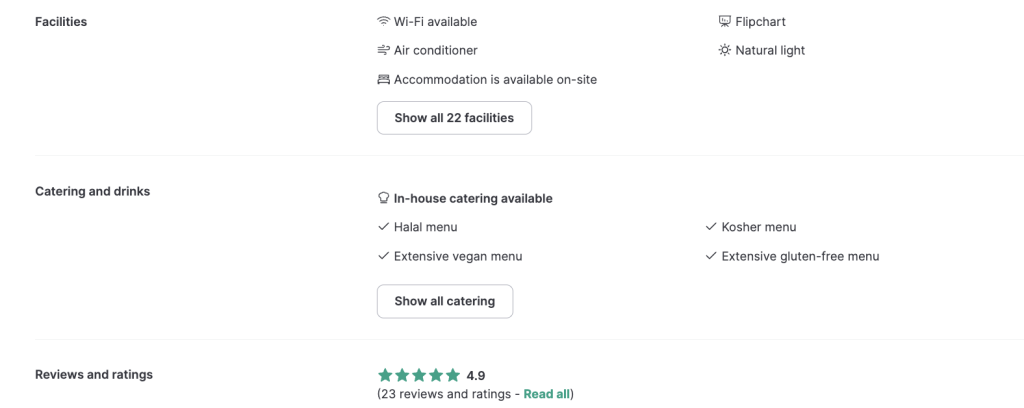
Private dining rooms on Tagvenue clearly display catering options plus key facilities such as sound systems, natural light, air conditioning, parking, Wi-Fi, accessibility features (step-free access and accessible toilets), capacity details, and space type (private, semi-private or whole venue).
Pricing is typically structured as a minimum spend or a per-person package (often starting from around £40–£80 per person, depending on the venue).
BYOB and External Catering
Flexibility around food and drink varies by venue type.
Most restaurant private dining rooms require in-house catering. External food is rarely allowed (a celebration cake is sometimes the only exception), and BYOB or corkage is uncommon. Many venues either prohibit outside alcohol or charge a significant fee.
Dedicated event spaces, galleries, lofts, some bars, and self-catering venues on Tagvenue are far more flexible. These often allow external catering — meaning your own caterer or an approved list — and BYOB/BYO alcohol, sometimes free of charge and sometimes with a corkage fee.
Tagvenue has dedicated filters and listings for self-catering and BYO venues in major UK cities, making these options easy to find.
Always check the details directly with the host if outside food or alcohol is important to your event.
Questions to Ask Venues About Food Packages
Menu & dietary
- Can you share your current private dining menus and packages, including prices per person?
- How flexible are the menus? Can we mix and match courses or request substitutions?
- Do you accommodate vegetarian, vegan, gluten-free, halal, or other dietary requirements? Is there an extra charge?
- Can the chef create a fully custom or themed menu for our group?
Pricing & structure
- Is the quoted price a set package or a minimum spend? What exactly is included (food only, soft drinks, wine, service charge, VAT/tax)?
- Are there different packages for lunch vs dinner, or weekday vs weekend?
- What is the cost for children’s portions or reduced menus?
- Are corkage or cakeage fees charged if we bring our own wine or celebration cake?
Logistics & service
- What is the service style (plated, family-style, buffet, canapés)?
- How far in advance do you need final numbers and menu choices?
- Can we do a tasting or sample key dishes beforehand?
- Are staff included in the package, and what is the typical staff-to-guest ratio?
External catering / BYOB
- Do you allow external catering or self-catering? If so, are there any restrictions or approved suppliers?
- Is BYOB permitted? Is there a corkage fee, and are there any limits on what we can bring?
- Can we bring our own celebration cake even if external catering is not allowed?
- These questions will quickly clarify what’s possible and help you compare options accurately.
When Should You Book a Private Dining Room?
- How far ahead you need to book depends heavily on group size — the bigger the room you need, the earlier you should start looking, since large private dining spaces are scarcer and get booked up faster.
- Tagvenue’s own booking data confirms this: private dining bookings cluster heavily around 20, 30 and 50 guests, and lead time increases accordingly.
When Should You Book a Private Dining Room?
How far ahead you need to book depends heavily on group size — the bigger the room you need, the earlier you should start looking, since large private dining spaces are scarcer and get booked up faster.
Tagvenue’s own booking data confirms this: private dining bookings cluster heavily around 20, 30 and 50 guests, and lead time increases accordingly.
| Group size | Avg. spend per head | Avg. lead time |
| ~20 guests | £76.82 | 40 days |
| ~30 guests | £58.20 | 59 days |
| ~50 guests | £64.31 | 52 days |
As a rule of thumb: for 20 guests, a few weeks’ notice is often enough. For 30 or 50, it’s worth starting your search at least six to eight weeks out, especially if you have your eye on a specific venue or a weekend date.
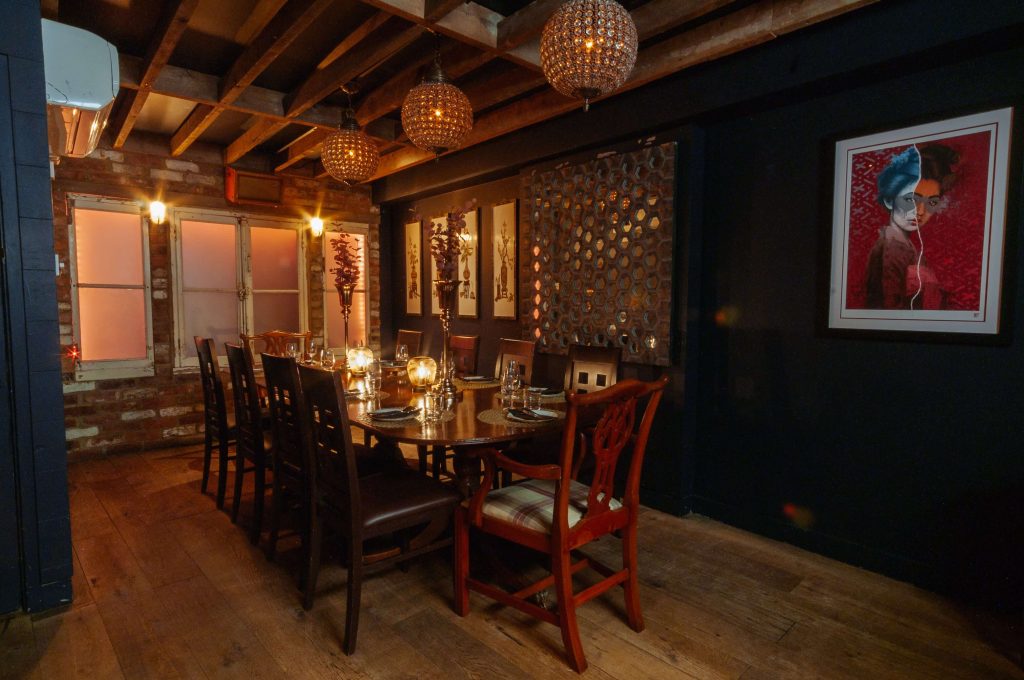
20 Guests: The Single-Table Sweet Spot
Twenty is often the easiest number to place well. Most standard restaurant private dining rooms comfortably seat 20 around a single long table, family-style, without anyone feeling cramped or too far from the conversation. It’s also small enough that a semi-private alcove or a curtained-off section of a larger restaurant can work just as well as a fully enclosed room.
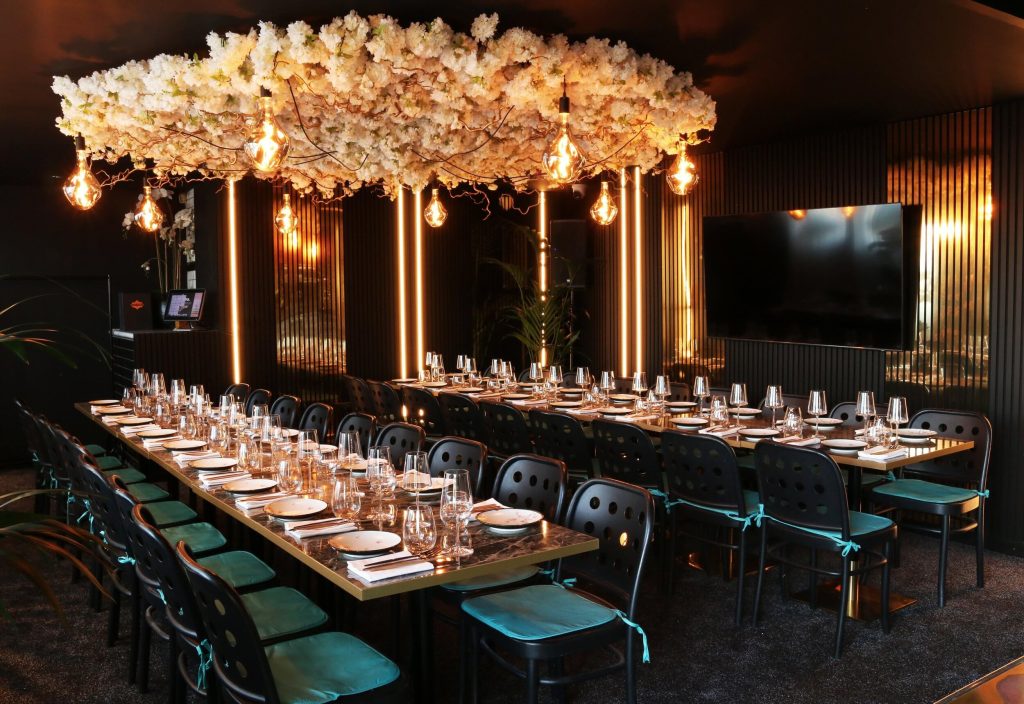
30 Guests: Where the Long Table Stops Working
Thirty is the point where a single long table typically becomes too stretched out for easy conversation — guests at either end can barely hear the middle. This is usually where it’s worth asking specifically for round tables or a split rectangular layout instead, and where mezzanines, private patios, or a larger semi-private section start to make more sense than a small standard PDR.
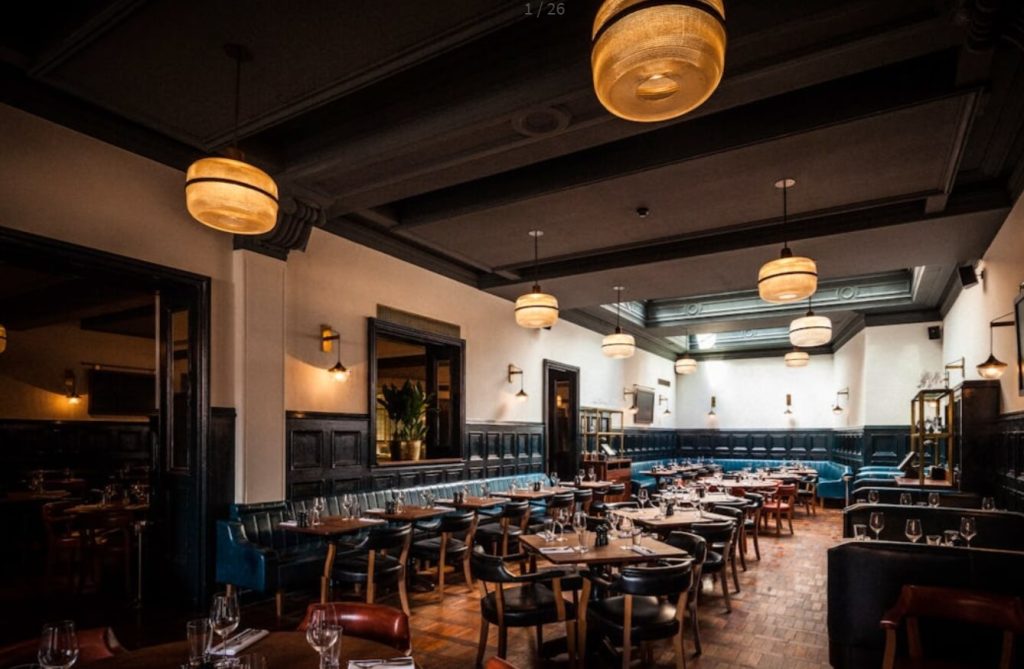
50 Guests: When You Need More Than a Standard Room
At 50, most single private dining rooms won’t cut it — this size usually calls for a dedicated salon, a full mezzanine buyout, or a partial (sometimes full) restaurant takeover. It’s also the size where the gap between “advertised capacity” and “comfortable seated capacity” matters most: a room marketed for 50 may only work at that number standing, not seated with room for staff to move between tables.
Private Dining on a Budget, and When to Spend More
Private dining spans a much wider price range than people expect, and the right tier usually comes down to the occasion.
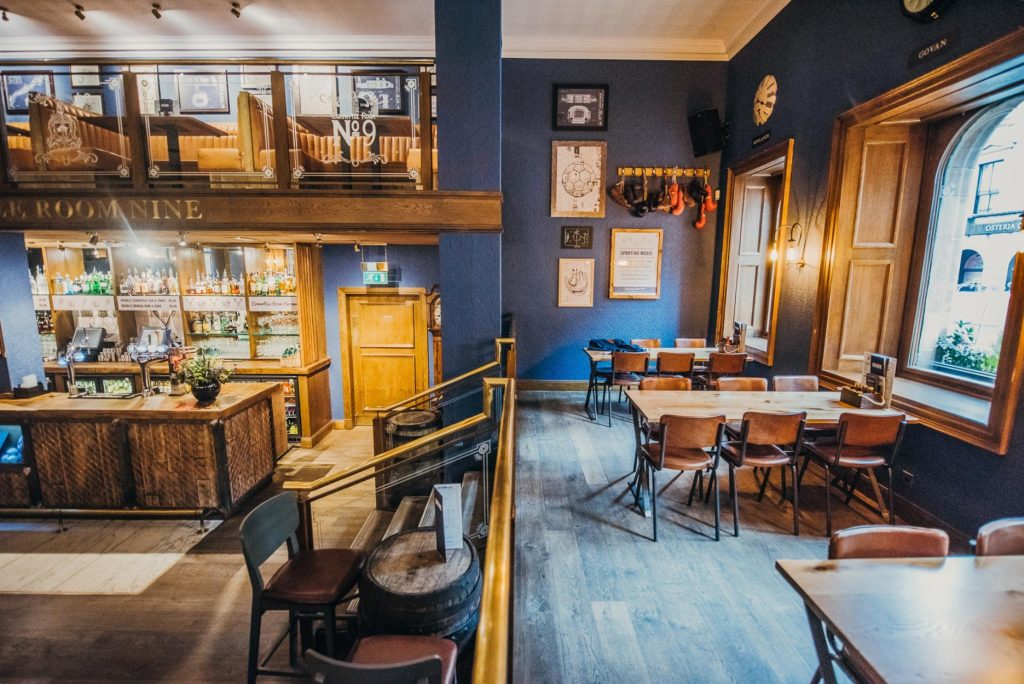
Budget-friendly (roughly £25–£40 per person): A casual family lunch, a child’s birthday, or an impromptu catch-up with friends doesn’t need a five-course tasting menu. Gastropub function rooms, casual Italian trattorias, and neighbourhood restaurants with a semi-private corner all fit comfortably in this range, often with a simple set menu or family-style sharing plates.
Mid-range (roughly £40–£65 per person): The most common tier for milestone birthdays, work celebrations, and engagement dinners — a proper set menu, a dedicated private room, and usually a drinks package included.
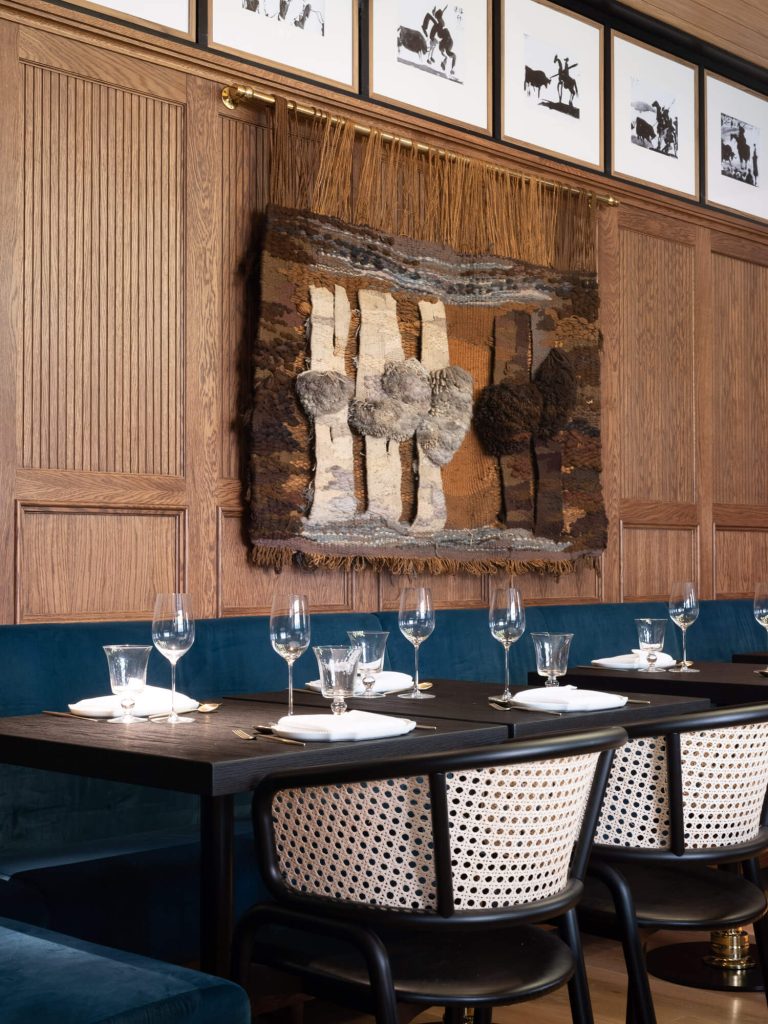
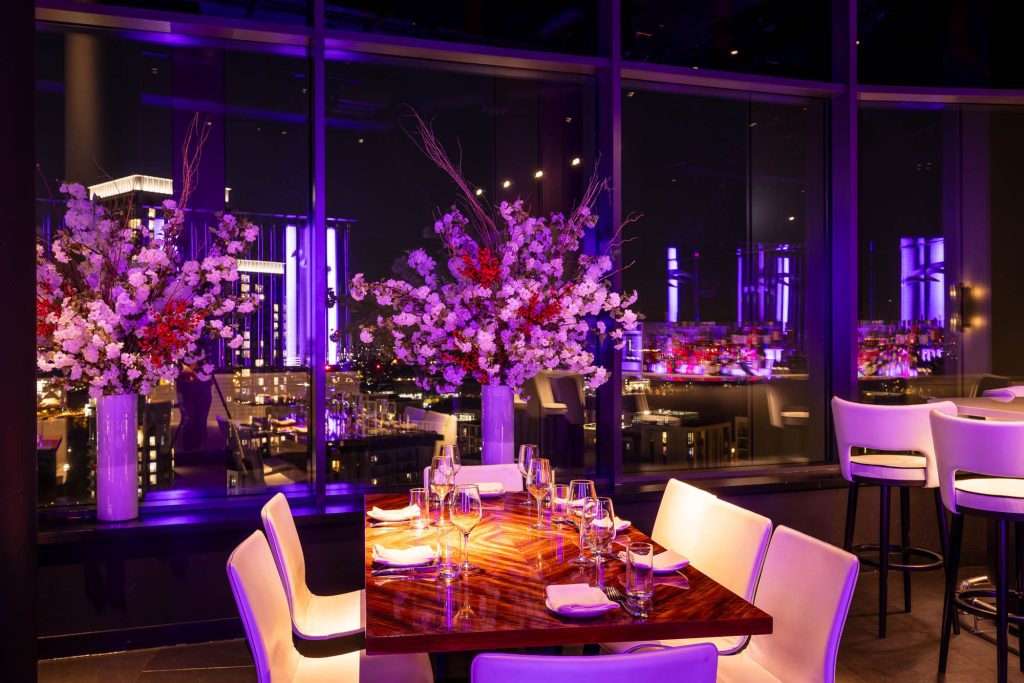
High-end (£65+ per person): For a proposal, an anniversary, or an occasion that calls for something memorable — think elegant hotel dining rooms, tasting menus, and unusual venues like museum function rooms. This is where the more distinctive spaces such as (the National Motorcycle Museum, York Castle Museum, 20 Stories, Sea Containers mentioned earlier, tend to sit.
Seated vs. Standing Capacity: What you need to know
This is the single most common mismatch between what a room is advertised as and what it can actually deliver.
A venue’s listed capacity is often its maximum standing figure, not a comfortable seated-dinner number — and the difference can be significant. Real venue examples make the gap obvious: one well-known private dining room seats 50 but only holds 65 standing; another advertises “up to 60” but that’s standing capacity, with a much lower number seated.
Tip: Before booking, always confirm the seated capacity specifically for a dining layout, not the headline number on the listing.
Pricing of Private Dining Rooms: Minimum Spend vs. Flat Room Rental
Private dining rooms are rarely priced like a simple hourly room rate — most work on either a food and beverage minimum spend or a flat room rental fee plus a set or custom menu. Knowing which applies matters, because if fewer guests show up than expected, you’re often still on the hook for the agreed minimum or set-menu cost regardless.
This is actually where a general venue marketplace built around hourly rates can fall short for this specific use case. A low headline “room rate” doesn’t mean much if the real cost is dictated by a food-and-beverage minimum on top. Tagvenue is built specifically to handle this: because most private dining rooms price by minimum spend or per-person menu rather than a flat hourly rate, comparing real total cost — not just a room fee — is built into how listings are structured.
Other Questions Worth Asking Before You Book
- Is the room fully private, or semi-private and open to the rest of the restaurant?
- What’s the food and beverage minimum, separate from any room rental fee?
- Is there a set menu, and can it accommodate dietary restrictions?
- How long is the room booked for, and what happens if the event runs over?
- What’s the deposit and cancellation policy?
- Is the room — and its nearest restrooms — genuinely accessible?
Related Reading
- How to Find the Perfect Venue for Your Event
- What Is the Best Platform for Private Dining Venues?
- The Top 6 Private Dining Trends in London
- How to Book a Venue on Tagvenue: A Step-by-Step Guide
Find Your Private Dining Room on Tagvenue
Whatever your number — 20, 30, 50 or somewhere in between — Tagvenue lets you filter by guest count, budget and privacy level in one search, and compare real venues side by side instead of contacting each one separately.
FAQ
What is the best way to find private dining?
Start by working through the checklist above — guest count, budget, privacy level, and any must-have amenities — then compare UK venues on a marketplace like Tagvenue that lets you filter by all of these at once, rather than checking each restaurant’s website individually.
How much does private dining cost per person?
It varies significantly by venue type and city within the UK. Tagvenue’s own data shows an average of £76.82 per head for private dining bookings around 20 guests, £58.20 around 30 guests, and £64.31 around 50 guests — though this depends heavily on venue, menu style and location.
Are there any unique private dining rooms in London?
Yes, here are are our top picks for unique spots for private dining:
Where are most private dining rooms in the UK?
London accounts for the large majority of UK private dining bookings, followed by Manchester, then Liverpool, Leeds and Birmingham roughly level with each other, with Edinburgh, Bristol, Glasgow, Oxford and Cardiff rounding out the top ten. If your search isn’t tied to a specific city, London and Manchester offer by far the widest choice.
Why is a private dining room better than a restaurant for a party?
A private dining room gives you a space that’s yours for the evening — no other diners, no shared noise, and no competing for the waiter’s attention. That means conversation actually carries across the table, speeches or toasts don’t get lost in general restaurant chatter, and the room can be arranged around your group rather than a standard restaurant floor plan. It also tends to come with more flexibility on timing, menu customisation, and sometimes AV or music, none of which a normal reservation typically includes.
Can I host a wedding reception in a private dining room?
Yes, particularly for smaller or more intimate weddings. A private dining room works well for a wedding breakfast, an evening reception, or a smaller ceremony-and-meal combined. Tagvenue’s own data shows private dining bookings average around 20–50 guests, which lines up closely with the size of many intimate weddings. For a larger wedding, you’d typically need to look at bigger exclusive-hire venues instead, but for a smaller guest list, a private dining room is a genuinely strong, often more affordable option than a dedicated wedding venue.
Is private dining worth it?
For a group that wants to actually talk to each other rather than shout over a shared restaurant floor, yes — it’s generally worth the premium over a standard reservation, particularly once a group passes 15–20 people and a normal table layout stops working well.
Related articles
See all