What Is the Best Platform for Private Dining Venues?



For private dining, Tagvenue stands out because you can compare restaurants and hospitality spaces by the details that determine whether a group dinner will actually work: seated capacity, privacy, minimum spend, price per person, catering, accessibility and facilities.
Instead of searching “private dining near me” on Google and opening restaurant websites one by one, you can compare private rooms, semi-private areas, pub dining rooms, hotel spaces, rooftops and even full restaurant takeovers in one search.
You can also see the difference between a room for 12 people and a restaurant that can actually handle dinner for 80.
- What should you look for when booking a private dining venue?
- What types of private dining spaces can you book on Tagvenue?
- How much does private dining cost?
- What does private dining typically cost in London?
- What does private dining typically cost in New York?
- How many people can a private dining room hold?
- What should you ask before booking a private dining room?
- Why does privacy matter so much?
- What makes Tagvenue the best for private dining?
- How does Tagvenue compare with other private dining platforms?
- What kinds of private dining venues can you find on Tagvenue?
- What dining styles can private dining venues support?
- What occasions work well for private dining?
- How far ahead should you book private dining?
- So, what is the best platform for private dining venues?
What should you look for when booking a private dining venue?
Private dining is one of those event categories where the word “private” does a lot of work.
Sometimes it means a proper room with a door. Sometimes it means a section of the restaurant screened off with curtains. In other cases, you might have an upstairs dining room, mezzanine, cellar, private floor or an entire restaurant.
Before comparing restaurants, I would answer five questions:
- How many people need to sit down?
- Do you need complete privacy or just your own area?
- How much can you spend per person or in total?
- What kind of meal are you planning?
- What needs to happen besides eating?
That last question is easy to overlook. A birthday dinner for 16 may only need a long table and somewhere for a cake. A client dinner may require complete privacy. A company dinner for 50 could need a large private space, a microphone, a screen, invoicing and enough room for speeches.
That is why restaurant capacity alone is rarely enough information.
What types of private dining spaces can you book on Tagvenue?
Private dining comes in more formats than a traditional restaurant room. On Tagvenue, you can compare everything from small enclosed dining rooms and semi-private areas to pub spaces, hotel rooms, rooftops and full restaurant hire.
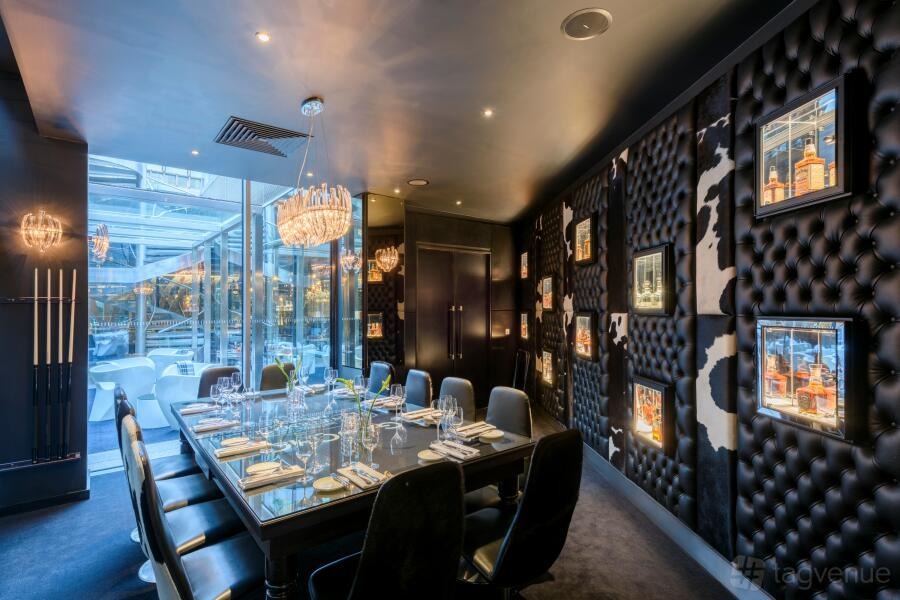
1. Fully private dining rooms
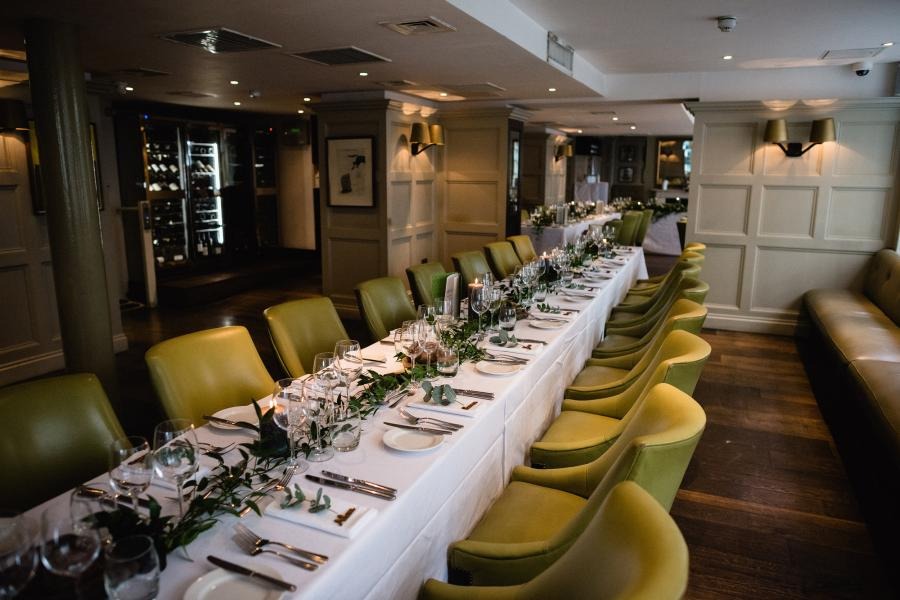
This is the classic option: a separate dining room within a restaurant, usually separated from the main restaurant by doors or its own entrance.
They work particularly well for client dinners, milestone birthdays, family events and occasions where people need to hear each other properly.
The size varies enormously.
At The Palm House in London, for example, its Private Dining Room 1 seats up to 12 guests and is listed from £1,200 minimum spend.
At the other end of the scale, La Goulue in New York can accommodate up to 80 seated guests and 120 standing, with private dining packages listed from $85 to $125 per person.
So “private dining room” does not automatically mean a tiny twelve-seat room behind the kitchen.
2. Semi-private dining areas
Sometimes hiring a completely separate room is unnecessary.
For birthdays, team dinners and more relaxed celebrations, a reserved part of the restaurant can give the group enough separation without paying for full exclusivity.
The important question is how semi-private the space actually is.
Look for whether it is divided by:
- doors
- curtains
- partitions
- a change of floor
- a separate mezzanine
- distance from the main dining area
For example, the semi-private area at Cottons Vauxhall in London accommodates up to 30 seated guests or 50 standing. Its listed minimum spend starts from £1,000 on some dates and increases depending on the day.
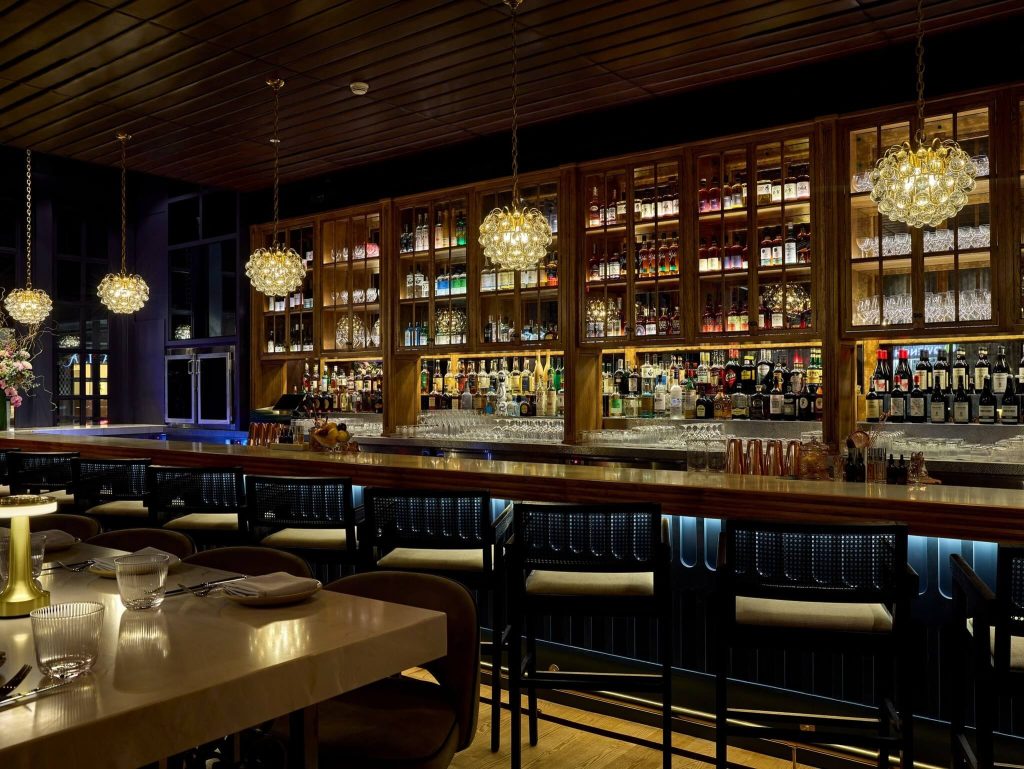
Semi-private dining is worth considering when you want your own section but do not need complete exclusivity.
3. Private dining rooms in pubs
An upstairs pub dining room can be a good middle ground between a restaurant booking and formal venue hire. You still get food, drinks and staff on site, but the room often feels more relaxed.
Tagvenue has London pub private dining rooms seating roughly 8 to 100 people, with an average minimum spend of about £500. Lower-cost rooms can start around £150. One example is The Perseverance, where its Private Dining Room accommodates 20 people seated or 30 standing and is listed from £150 minimum spend.
The Perseverance in Camden Borough
For a birthday dinner, leaving do or casual company meal, that is a very different proposition from booking a formal restaurant dining room.
4. Hotel dining rooms
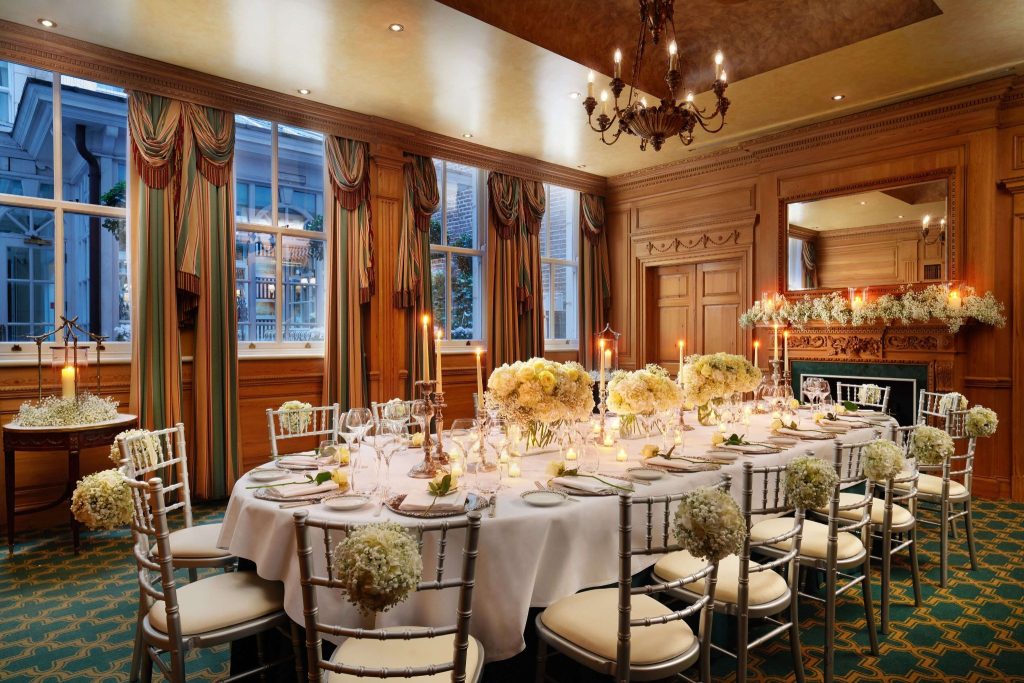
Hotels broaden the choice further. They can be especially useful for wedding dinners, family events, business meals and groups with guests travelling into the city.
The advantage is not simply accommodation. Hotels may also have several event rooms, reception areas and dining spaces within the same property, which gives you more flexibility if dinner needs to be paired with drinks beforehand or another part of the event.
For example, Tagvenue’s London private dining results include dedicated hotel dining spaces alongside restaurants, pubs and other hospitality venues.
5. Rooftops, conservatories and rooms with a view
Private dining does not have to mean four walls and a long table.
Some Tagvenue listings offer rooftops, conservatories or glass-covered spaces for group dining.
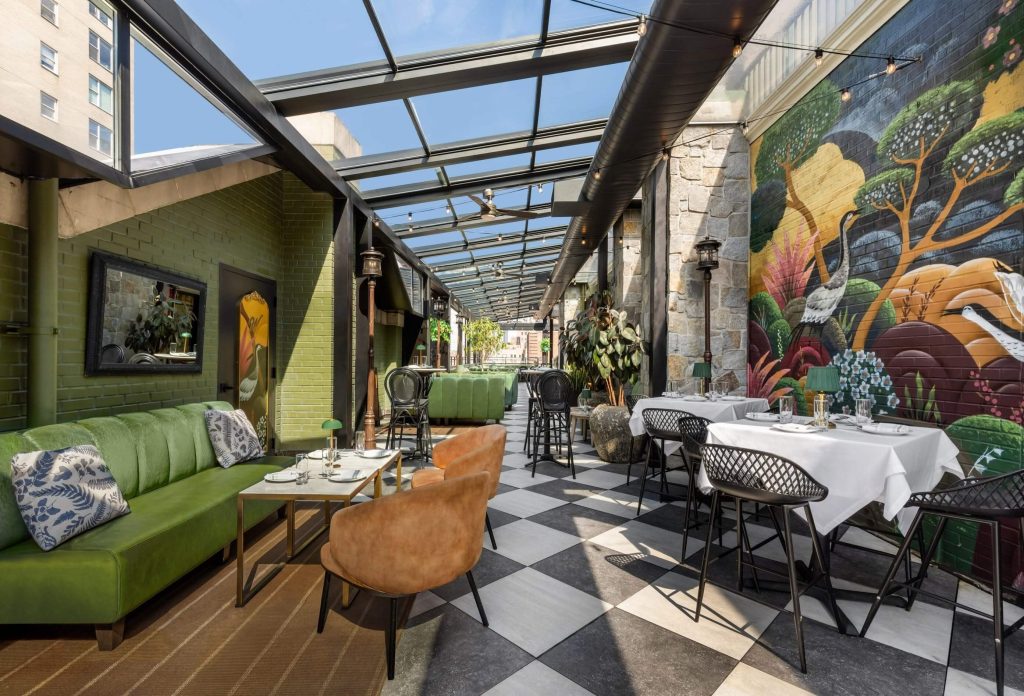
At Vintage Green Rooftop in New York, for example, the semi-private conservatory-style area seats up to 60 people, with packages currently listed from around $196 per person and food and beverages included.
These work particularly well when the space itself is part of the reason for booking, such as a milestone birthday, engagement dinner or company celebration.
6. Whole restaurant hire
Whole venue hire becomes useful when privacy is essential, the guest list is large or dinner needs to flow into drinks, music or a party afterwards.
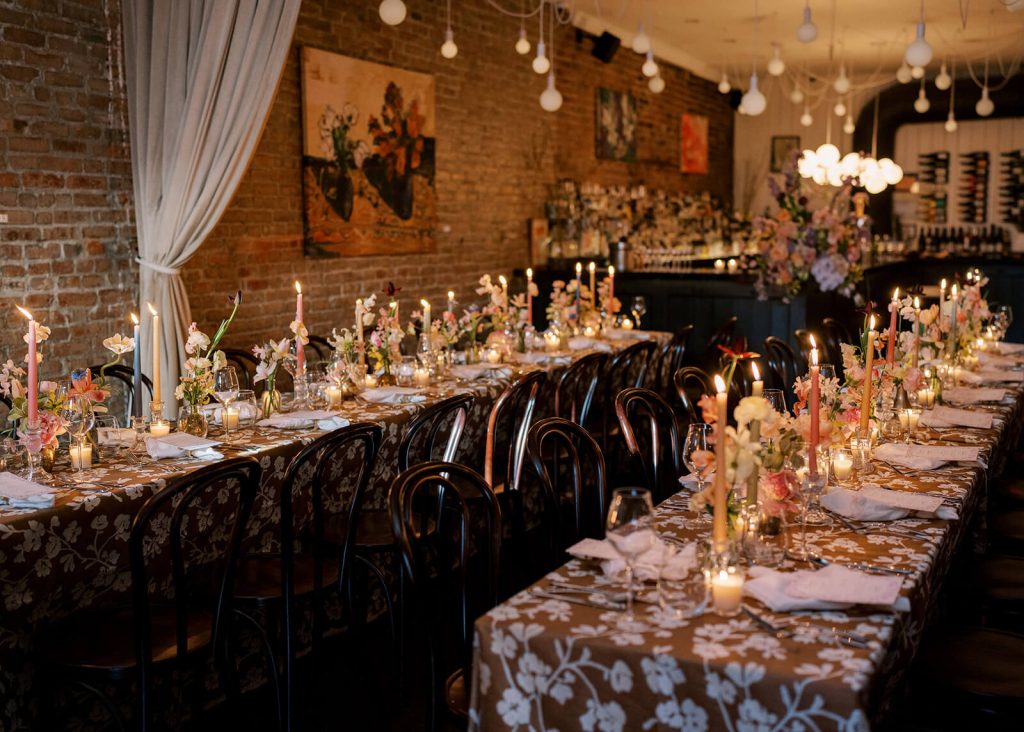
Prive in New York, for instance, accommodates up to 55 seated or 75 standing guests and lists a $4,000 minimum spend for the space.
Whole-venue options also mean the search can scale beyond conventional private dining rooms as the guest list grows.
How much does private dining cost?
Minimum spend
A minimum spend means your group agrees to spend a particular amount on food and drinks.
If the minimum spend is £1,000 and the group spends £1,000 on dinner and drinks, you have met the requirement.
This pricing model is extremely common for restaurants and bars because the venue is effectively guaranteeing revenue in exchange for giving your group the space.
Price per person
A venue may instead charge a fixed amount per guest.
That could cover:
- a two- or three-course menu
- sharing dishes
- a tasting menu
- drinks
- service
- a bundled event package
This model makes budgeting much easier when the guest list is reasonably stable.
Hire fee
Some venues charge separately for use of the room.
That fee may be charged alongside food and drink.
It is therefore worth checking what “£300 room hire” actually buys you before assuming one venue is cheaper than another.
Package price
Packages can bundle several elements together, such as the room, menu, drinks and service. They may be priced per person or offered as a fixed package price for the group.
For organisers, packages can make budgeting easier because fewer separate costs need to be pieced together.
What does private dining typically cost in London?
Based on Tagvenue’s London private dining listings in 2026, current prices commonly fall within these ranges:
| Pricing model | Typical range |
| Minimum spend | £600 to £1,500 per event |
| Per person | £45 to £55 |
| Hire fee | £200 to £300 per event |
The average minimum spend is currently around £1,000. Those figures are useful as a starting point, rather than a quote. The date, location, menu, guest numbers and how much of the restaurant you are taking over all affect the final price.
What does private dining typically cost in New York?
Tagvenue’s New York private dining data for 2026 currently shows:
| Pricing model | Typical range |
| Per person | $50 to $95 |
| Minimum spend | $1,300 to $4,500 per event |
| Hire fee | $250 to $3,500 per event |
The current average is around $65 per person. Group size has a noticeable effect too. Tagvenue’s NYC data currently groups smaller spaces at up to 40 guests, medium spaces around 50 to 65 guests and larger private dining options above 85 guests.
How many people can a private dining room hold?
There is no standard capacity. On Tagvenue, you can find everything from rooms for six or twelve people to restaurant spaces accommodating well over 100 guests.
A useful way to think about it is:
| Group size | Spaces worth considering |
| 6 to 12 | Small enclosed private rooms, chef’s tables |
| 13 to 25 | Traditional restaurant PDRs, wine rooms, pub rooms |
| 25 to 50 | Larger dining rooms, semi-private sections, mezzanines |
| 50 to 80 | Private floors, large restaurant rooms, rooftops |
| 80+ | Restaurant buyouts, banquet rooms, large hospitality spaces |
The important thing is to search by seated dining capacity, not simply maximum venue capacity. A room advertised for “50 people” might fit fifty for drinks but only thirty around dining tables. That distinction sounds small until the twenty extra chairs arrive.
What should you ask before booking a private dining room?
Do not stop at “How much does it cost?”
Ask:
- Privacy and capacity: Is the room completely private? What is the maximum seated capacity? Is there a minimum guest count?
- Pricing and food: Is there a minimum spend? Does it include food and drinks? Is a service charge included? Do you choose from a set menu? Can dietary requirements be accommodated? Is there a corkage or cake fee?
- Setup: Can tables be moved? Can everyone sit together? Can you bring a cake? Is there AV for speeches? Can you play your own music?
- Booking terms: Can the venue issue an invoice? What happens if guest numbers change?
Why does privacy matter so much?
Because people mean very different things when they say they want a “private dinner”.
For an anniversary, it might simply mean not being squeezed between other tables.
For a birthday, a curtain or separate section may be enough.
For a client dinner, executive meeting or company event, overheard conversations and restaurant noise can be much bigger concerns.
If privacy matters, check whether the space is fully enclosed, whether other guests or staff pass through it, and how much noise carries from the main restaurant.
What makes Tagvenue the best for private dining?
Tagvenue lets you search for private dining as an event requirement, not just a restaurant reservation.
You can narrow your options by:
- guest capacity
- private or semi-private space
- venue type
- budget
- catering
- alcohol
- wheelchair access
- rooftop or waterfront spaces
- external catering
- facilities
Then, once you find somewhere suitable, you can contact the venue manager directly to discuss the parts that rarely fit neatly inside a filter: dietary requirements, exact table layouts, final numbers, menus, timings, speeches and invoicing.
That is the bit that makes private dining on Tagvenue different from reserving a normal restaurant table.
How does Tagvenue compare with other private dining platforms?
| Platform type | Main strength | Best suited to |
| Tagvenue | Combines restaurant and hospitality inventory with event-space search and comparison. | Private dining where space, food, capacity and event requirements all matter. Venue comparisons. Discovery across UK, US, Australia, Singapore, Ireland, Canada |
| OpenTable or Resy | Restaurant reservations | Standard table bookings |
| Peerspace | Creative and unusual rental spaces | Events where the space itself comes first |
| SquareMeal | Restaurant discovery and dining editorial | Food-led restaurant research, particularly in the UK |
| Eventective | Broad event venue directory | Venue discovery across wider US geographies |
| Direct restaurant search | Full control over which restaurants you contact | Organisers happy to research and compare venues manually |
The difference becomes much clearer when you look at what each platform is actually designed to do.
Tagvenue vs OpenTable and Resy
OpenTable and Resy are primarily restaurant reservation platforms.
That makes them useful when the question is:
“Can I get a table for six on Friday?”
Private dining introduces a different question:
“Which restaurant can give 40 of us our own area, a menu within budget and enough privacy for speeches?”
Tagvenue lets you compare details such as event pricing, room layouts and facilities alongside the restaurant itself.
Use a reservation platform when:
- You need a standard table
- The group is relatively small
- Privacy is not important
- You already know the restaurant
- No special event setup is required
Use Tagvenue when:
- You need a private or semi-private area
- You have a larger group
- You want to compare several restaurants or hospitality spaces
- Minimum spend or package pricing matters
- You have event-specific requirements
- You need to talk to the venue before committing
The dividing line is simple.
Once the meal starts behaving like an event, a venue marketplace becomes more useful.
Tagvenue vs Peerspace
Peerspace overlaps more closely with Tagvenue because both platforms help people find spaces for events.
The main difference is the starting point.
Peerspace has traditionally featured a large selection of creative spaces such as lofts, studios, homes and production spaces.
That works well when the organiser starts with:
“We want this kind of space.”
Then they work out food, drinks, furniture and staffing.
Tagvenue’s hospitality inventory suits a different starting point:
“We need dinner for 50 people.”
Then the organiser searches for a hospitality space capable of delivering it.
Dry-hire spaces can sometimes require separate catering, staffing, furniture or cleaning arrangements.
The difference is therefore not simply conventional versus unusual.
It is:
space first versus hospitality first.
For private dining, hospitality first often makes more sense.
Tagvenue vs SquareMeal
SquareMeal is particularly relevant in the UK because of its strong restaurant and dining coverage.
Its strength lies in restaurant discovery, dining editorial and higher-end hospitality.
That makes it useful when the main question is:
“Where should we eat?”
Tagvenue becomes more relevant when the question changes to:
“Which private dining spaces can actually accommodate our event?”
That brings capacity, privacy, pricing, venue type and event facilities into the decision.
Tagvenue vs Eventective
Eventective is another important alternative, particularly in the USA.
Its strength is geographic breadth and traditional event venue discovery.
Eventective has broad North American coverage, including options outside major city centres, while Tagvenue offers a more self-service marketplace experience for comparing venues.
That means Eventective can make sense where geographic reach is the main consideration.
Tagvenue becomes particularly useful when hospitality inventory and private dining requirements are central to the search.
Tagvenue vs searching for private dining restaurants yourself
You can absolutely find a private dining room without using a marketplace.
Google the restaurants. Open their websites. Find the events pages. Check capacities. Look for PDFs. Email the events teams. Put the prices into a spreadsheet.
The issue is not that this method does not work.
It is that you have to rebuild the comparison yourself.
One restaurant quotes minimum spend. Another quotes per head. One gives seated capacity. Another only gives total venue capacity. Some publish menus. Some ask you to enquire before they show prices.
With a marketplace, much of that information already sits in a comparable format.
For somebody sourcing one restaurant, the difference might not matter much.
For somebody comparing ten, it matters a lot.
What kinds of private dining venues can you find on Tagvenue?
Private dining does not have to mean a white tablecloth room at the back of a restaurant.
Alongside conventional restaurant spaces, Tagvenue listings can include:
- Wine cellars and vaults
- Rooftops and penthouses
- Speakeasies and cocktail lounges
- Breweries and distilleries
- Glasshouses and orangeries
- Restaurant buyouts
Private dining in the UK: Types of Spaces
In the UK, private dining often extends beyond conventional restaurant rooms.
- Historic pub function rooms are common, particularly upstairs dining areas with their own bar.
- Older cities also offer wine cellars, vaults and underground rooms.
- Glasshouses and orangeries add another option for daytime meals, weddings and seasonal events.
Private dining in the USA: Types of Spaces
In the US, private dining options can also include more informal and unconventional spaces.
These can include:
- Speakeasies
- Hidden lounges
- Rooftops
- Penthouses
- Breweries
- Distilleries
This gives organisers more choice than simply comparing restaurants by cuisine.
What dining styles can private dining venues support?
Private dining also does not have to mean everyone sitting around one table for three courses.
Formal seated dining
Useful for:
- Client entertainment
- Corporate dinners
- Anniversaries
- Milestone celebrations
- Wedding events
Shared or family style dining
Useful for:
- Birthdays
- Informal company dinners
- Family gatherings
- Mediterranean, Middle Eastern or Asian banquet-style dining or sharing menus
Standing food and drinks
Canapés, drinks and food stations may suit:
- Networking events
- Company socials
- Receptions
- Larger celebrations
What occasions work well for private dining?
Private dining is better thought of as an event format than an occasion.
People use it for:
- birthday dinners
- anniversaries
- engagement dinners
- rehearsal dinners
- client entertainment
- team dinners
- company celebrations
- leaving parties
- family gatherings
- small wedding meals
- Christmas dinners
The event changes. The central requirement does not.
You want the group eating together, with enough control over the room, menu, price and guest experience.
That is also why the same private dining search can serve both corporate organisers and somebody trying to organise their dad’s 60th.
How far ahead should you book private dining?
Tagvenue booking data shows a median booking lead time of 51 days and a median group size of 50.
So for a typical group dinner, around six to eight weeks is a useful starting point.
Book earlier for:
- larger groups
- Friday and Saturday evenings
- December events
- rehearsal dinners and weddings
- popular restaurants
- dates where you need complete exclusivity
Smaller weekday dinners naturally give you more room to manoeuvre.
So, what is the best platform for private dining venues?
If you simply need a normal restaurant table, a reservation app may be enough.
If you want an empty or highly customisable space and plan to organise catering separately, a general venue marketplace may make sense.
Tagvenue is particularly useful when you need to compare private dining rooms as both restaurants and event spaces., You can search by the details that actually decide whether group dining works: seated capacity, room type, privacy, food and drinks, price, minimum spend and facilities.
And that is really the difference.
Private dining stops being “Where should we eat?” and becomes:
Where can all of us eat together, in the right space, for the right price, without the organiser spending three days chasing restaurants?
That is the problem a good private dining platform should solve.
Related articles
See all