What Is Event Management? The Only Guide You Need in 2026


Event management. It sounds like adult babysitting, but with a run sheet. And, yes, sometimes it means sprinting around fixing seating plans, chasing suppliers, calming stressed stakeholders, and making sure the CEO’s mic doesn’t cut out mid-sentence.
But it’s also a serious discipline: part project management, part hospitality, part creative direction, and part crisis control.
And although Tagvenue is a venue marketplace, it operates inside the event management ecosystem. Every event needs a space, and venue sourcing is one of the most time-intensive stages in the entire process. We’ll come back to that at the right moment.
Let’s dive in.
What Exactly is Event Management?
Event management is the end-to-end discipline of turning an event goal into a structured, measurable real-world experience. It covers strategy (why the event exists), operations (how it runs), the supplier ecosystem (who delivers each component), and measurement (what success actually looks like).
The Events Industry Council defines an event as “an organised occasion such as a meeting, convention, exhibition, special event, gala dinner, etc.”
Event management is everything required to deliver that organised occasion on time, on budget, and in a way people genuinely value.
And yes, it’s a big deal. According to Grand View Research, the global event management market was valued at $1,160.4B in 2024, and is projected to reach $2,089.6B by 2033, growing at a CAGR of 6.7%. That scale explains why structured systems, specialised roles and professional tools, now dominate the industry.
The Core Pillars of Event Management
A practical way to understand event management is through four core pillars. These form the foundation for turning ideas into successful outcomes.
| Pillar | What it includes | What good looks like |
| Purpose | Objectives, audience, success metrics, constraints | Anyone can explain the event goal in one sentence |
| Plan | Timeline, budget, suppliers, staffing, approvals | Decisions are faster because constraints are clear |
| Production | Setup, AV, catering, guest flow, signage, safety | The experience feels effortless to attendees even if it wasn’t |
| Proof | Feedback, ROI, learnings, follow-ups, reporting | Next time is easier and measurably better |
Event management is what transforms an event from a nice idea into a controlled outcome.
The Event Management Process: Step by Step
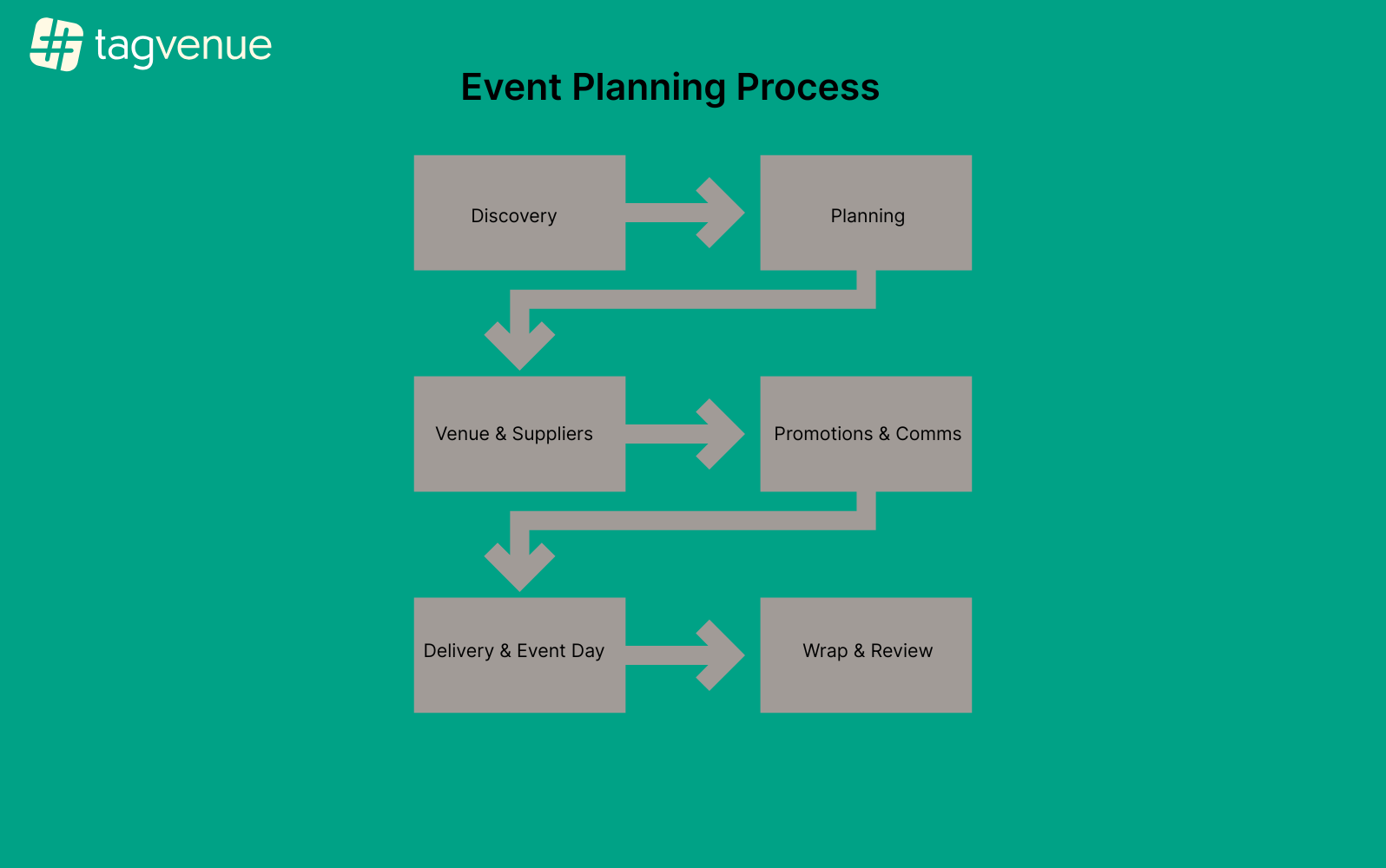
Most event teams follow a lifecycle that builds on those pillars:
Discovery → Planning → Venue & supplier sourcing → Promotion & communications → Delivery → Post-event review
You can name the stages however you want but the point is that each phase produces decisions and documentation that make the next phase possible. Here’s how each process works:
1) Discovery: Strategy and Direction
Discovery is where you clarify what you are building and what you are not building. This stage prevents the classic “We planned a conference… but priced it like a pizza party” situation.
Corporate example:
A SaaS company running a customer event to reduce churn and expand accounts will prioritise relationship-building formats with roundtables, workshops, and small-group demos over big-stage hype. Your success metrics might include renewal conversations booked, product adoption intent, or pipeline influenced.
Private example:
If your goal for a 30th birthday is genuine mingling, you’ll choose a venue with natural flow, a strong bar setup, and maybe an activity anchor such as a DJ, karaoke room, or games area, not a rigid sit-down layout.
Key tasks
- Define the event goal in plain English. This becomes your brief to stakeholders and suppliers, avoiding mismatched expectations.
- Define your audience and a realistic attendance range. Your headcount range influences venue size, catering style, staffing ratios, and even whether you need registration/ticketing.
- Choose a format (in-person / hybrid / virtual). Teams go hybrid or virtual when reach matters more than room energy, think distributed teams, multi-city audiences, limited travel budgets, or when content needs to live online after the event.
- Set guardrails early (budget, date window, location, must-haves). Constraints aren’t restrictive, they make things clearer and easier to manage. Without them, every decision becomes a debate, and venue research becomes a never-ending scroll-fest.
2) Planning: experience design and operational planning
Planning maps the experience from first invite to the final guest departure.
Key tasks
- Build a detailed run-of-show and production schedule. Not just timings but also owners, cues, dependencies, and buffers for delays.
- Confirm budget lines with real quotes and assumptions. Lock in what’s included versus optional upgrades such as service charges, staffing, corkage, security, late licence fees, or cleaning—aka the sneaky stuff.
- Create a stakeholder approval path and internal alignment schedule. Define who signs off what, by when, and how updates are shared. Make sure that weekly check-ins become daily as the delivery date approaches.
- Write and use your risk plan. Weather disruptions, speaker delays, tech failure, supplier no-shows, and crowd flow pinch points. A written contingency plan turns a crisis into a manageable issue.
3) Venue and supplier sourcing
Here’s the truth: you can’t finalise layout, timings, catering approach, accessibility, or AV requirements until the venue is confirmed. Venue selection is the backbone of logistics, experience, and budget.
Venue sourcing checklist – Before browsing, clarify:
| Category | Questions to answer |
| Capacity & layout | Seated or standing? Breakouts? Stage? Dance floor? Storage? |
| Location | Commute time, parking, public transport, nearby hotels |
| Budget | Hire fee, minimum spend, packages, service charges, hidden costs |
| Amenities | AV, Wi-Fi, green room, loading access, furniture, climate control |
| Catering | In-house vs external, dietary handling, timings, service style |
| Rules | Noise limits, curfew, age restrictions, insurance requirements |
| Accessibility | Step-free access, lifts, toilets, hearing loop, clear routes |
| Availability | Preferred dates + realistic Plan B dates |
Why venue sourcing often slows planning
- Discovery overload: too many options, too little structure, too many open tabs.
- Inconsistent information: hidden pricing and unclear capacities.
- Slow responses: you lose days just verifying basics.
- Back-and-forth fatigue: the same questions repeated across multiple venues.
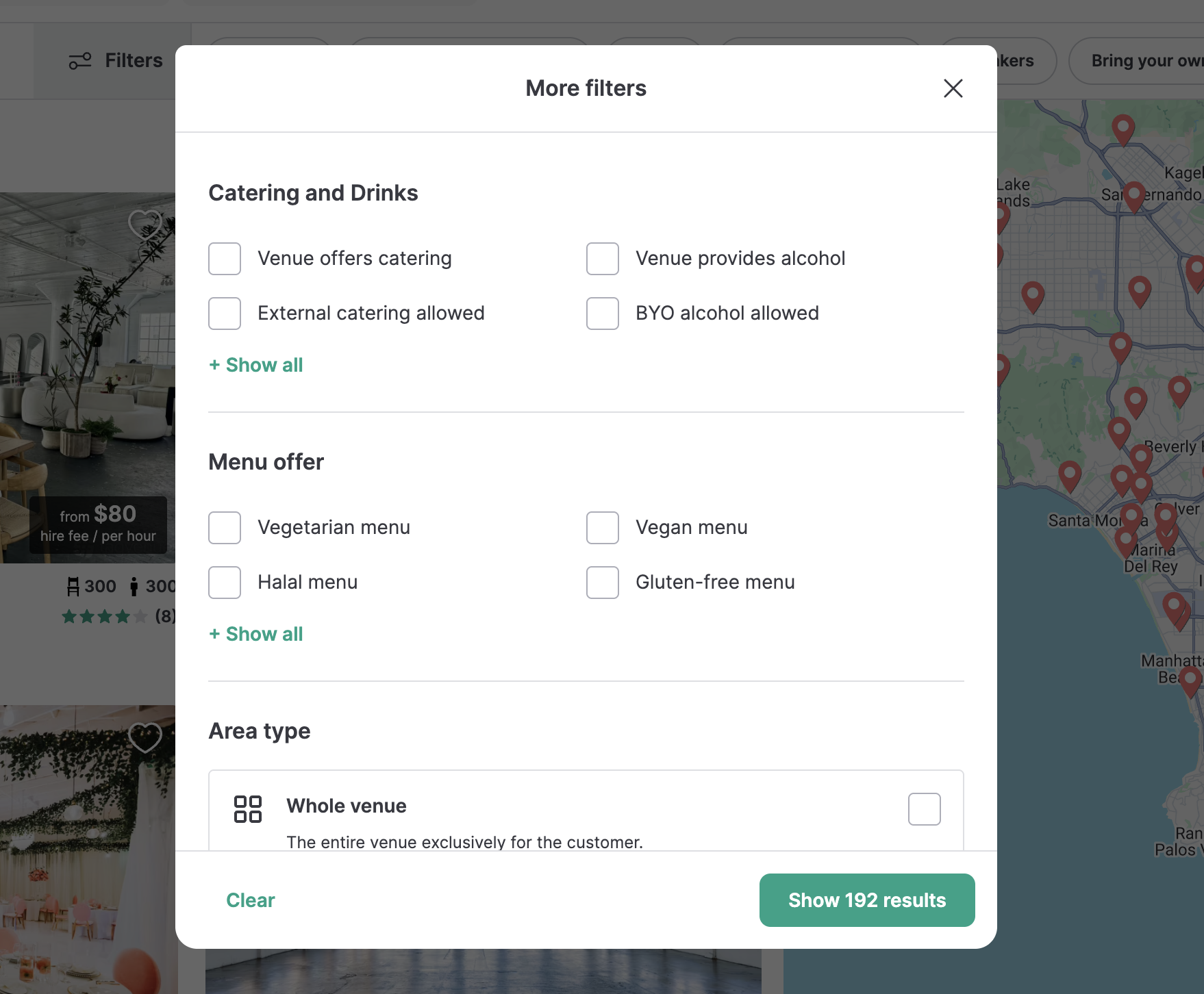
This is the point where a venue marketplace reduces friction by shortening the time from requirements → shortlist → replies → decision.
How Tagvenue Supports the Event Management Process
Tagvenue’ helps planners move from “we need a space” to “venue confirmed,” with fewer delays.
The platform lists 20,000+ venues across the UK, Ireland, Australia, Singapore, Canada, and the US, which matters if you plan multi-city events or work across regions.
Event Process Map and Where Tagvenue Helps Most
Discovery → Planning → Venue sourcing (Tagvenue accelerates this) → Supplier booking → Promotion → Delivery → Review
Common venue-sourcing friction vs. How Tagvenue reduces it:
| Common venue-sourcing friction | How Tagvenue reduces it |
| Limited visibility of suitable venues | Wider visibility across venue types and cities |
| Unclear logistics (AV, access, rules, capacity) | Consistent structured listings that follow the same format, making it easier to compare features |
| Slow communication cycles | Venues are expected to reply within 24–48 hours, and enquiries expire after 72 hours if unanswered |
| Difficulty judging reliability | Quality control and performance signals like #Supervenue |
| Messy comparisons across venues | Shortlists and standardised data make it easier to compare price, inclusions, restrictions, and availability |
Now that you understand what event management truly entails, let’s explore the key skills that set great event managers apart, from strong negotiation abilities to resilience under pressure, plus communication, organization, and quick problem-solving.
Skills Every Efficient Event Manager Needs
Event management rewards structured thinkers who stay calm when plans inevitably shift.
| Skill | What it looks like in practice |
| Planning & prioritisation | Clear dependencies, owners, and realistic deadlines |
| Communication | Briefs that remove ambiguity |
| Budget control | Active tracking of committed vs projected spend |
| Negotiation | Smarter packages, better inclusions, fewer add-ons |
| Problem-solving | Fast decisions without spreading panic |
| Leadership | Vendors and teams aligned around shared outcomes |
| Guest empathy | Flow designed around people, not just logistics |
| Tech confidence | Registration, comms, floorplans, analytics, run sheets |
| Risk & safety mindset | Contingencies, crowd management, escalation paths |
The Efficient Event Manager’s Toolkit
Instead of a vague list, here’s a simple operating system that actually works:
- One master timeline with internal deadlines earlier than external ones. If a venue needs final numbers 7 days out, your internal deadline is 10 days out.
- One source of truth. Use a single project document or tool that holds the latest brief, supplier contacts, run sheet versions, floorplans, and approvals.
- One live budget tracker Separate committed costs from estimates and actual spend. Keep contingency clearly ring-fenced.
- One communication rhythm. Weekly check-ins during early planning. Twice-weekly as delivery approaches. Daily in the final stretch. Every meeting should capture decisions and blockers.
- One venue sourcing system. Requirements → shortlist → consistent enquiries → comparison grid → decision.
Venue sourcing is where time mysteriously vanishes. Treat it as its own structured process.
A Practical Venue-Finding Workflow (that won’t eat your week)
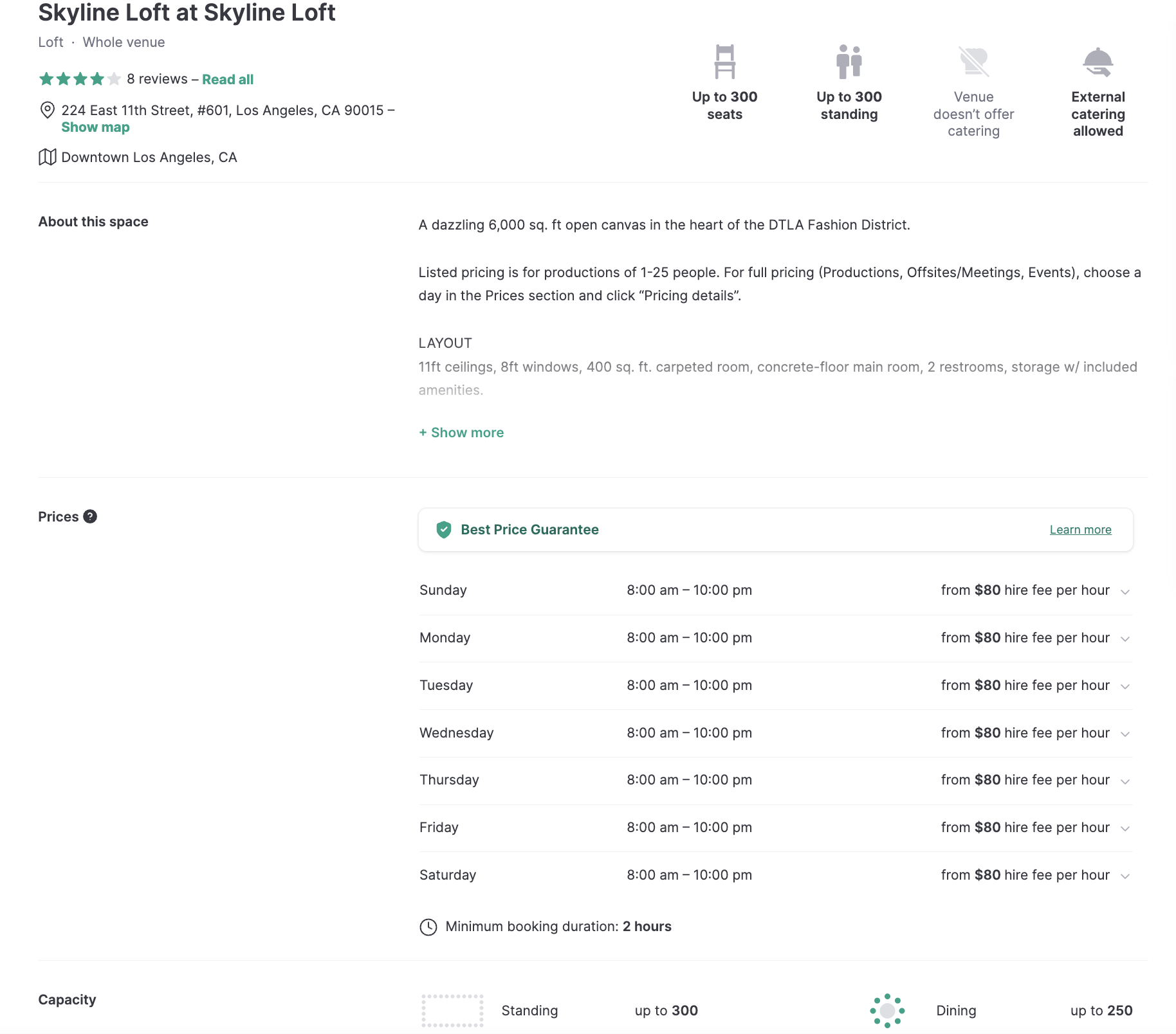
Need to sort out the venue finding issue? Whether you use Tagvenue or not, this approach keeps things tight. Platforms simply make steps two to four faster.
- Write a venue brief. Define capacity range, format, date window, budget model, must-haves, and deal-breakers.
- Filter first. Browse second. Start with non-negotiables such as capacity, location, budget style, and accessibility needs.
- Shortlist 5–8 venues max. Decision fatigue is real. 15 “maybes” is how nothing gets booked.
- Send one consistent enquiry script to every venue. Same questions. Same structure. Clean comparisons.
- Ask about: availability, full pricing, inclusions, service charge, staffing, AV/Wi-Fi, access/load-in, curfew/noise rules, and deposit/cancellation terms.
- Compare in a simple grid: total cost estimate, inclusions, restrictions, response speed, and fit.
- Secure the date before over planning. Place a hold or confirm contract early.
- Lock layout and operations. Once the venue is confirmed, everything else accelerates: catering numbers, run-of-show, signage, staffing, supplier timings.
What’s different about event management in 2026?
Several shifts are now standard practice:
- In-person is thriving but expectations are higher. Bizzabo reports strong attendee belief in the networking value of in-person conferences. In-person events are thriving in 2026 due to strong attendee belief in their superior networking value, but expectations have risen significantly for more intentional, high-quality, and facilitated connections rather than passive interactions.
- Sustainability has moved from nice-to-have to a measurable strategy. IMEX, an event management company in the UK has also been publishing detailed sustainability reporting, showing that sustainability will be highly valued by event planners in 2026 and beyond.
- Accessibility is now a requirement. Step-free routes, seating layouts, signage clarity, and sensory considerations are planned from the start, not added in the final week.
- Data governance matters more. Event registration using CRM tools and attendee comms will require consent. Data storage, and vendor handling, especially across multiple platforms will require strict compliance in 2026.
- Speed wins. Stakeholders expect shorter planning cycles and faster venue decisions, which makes structured sourcing and quick replies a competitive advantage.
Wrapping It Up: Make Your Next Event Unforgettable and On Time, On Budget
Event management isn’t just logistics and run sheets but the art of turning goals into experiences people remember, relationships that strengthen, and results that show up in the metrics.
In 2026, the industry keeps growing with projections pointing to a multi-trillion-dollar space, but the winners will be those who plan intentionally: clear purpose and processes, smart tools for bottlenecks like venue sourcing, and an eye on emerging trends around speed, sustainability, accessibility, and real ROI.
You’ve got the framework here, from discovery to delivery, the pillars that hold it all up, the skills that separate chaos from calm, and practical workflows that actually save time.
The good news? You don’t have to do it alone. Platforms like Tagvenue cut through the venue-sourcing fog so you can focus on what really matters: creating moments that matter.
So whether it’s a corporate summit, a milestone celebration, or your next big activation, start with clarity, build with structure, and lean on the right tools.
Your events deserve to be effortless for attendees and exceptional for outcomes. Ready to knock venue sourcing off your stress list?
Related:
The Winning Guide to Venue Pricing: What Every NYC Venue Owner Needs to Know
How to Price Your Venue: A Practical Tagvenue Guide for Small Businesses
8 Top Marketing Ideas for Your Meeting Room in 2026
How to Increase Event Space Visibility Through a Venue Marketplace – The Tagvenue Way
Marketing Ideas for Your Event Space: Practical Strategies to Attract More Bookings
FAQs
1) What’s the difference between event management and event planning?
Event planning is the design and preparation work (concept, suppliers, timeline). Event management covers the full lifecycle, including on-the-day delivery, stakeholder coordination, and post-event evaluation. In practice, many roles overlap.
2) What are the main stages of event management?
Discovery → Planning → Venue & suppliers → Promotion & Communications → Delivery
3) What skills matter most for an event manager?
Organisation, communication, budgeting, problem-solving, negotiation, and calm decision-making under pressure. Add technical confidence and you become unstoppable.
4) How do I finalise a venue faster without making a rushed choice?
Get crystal clear on requirements, shortlist fewer venues, send consistent questions, and compare like-for-like. A dedicated venue finder like Tagvenue helps because listings are structured, searchable, and you can contact venue managers directly.
Related articles
See all
How to Price Your Venue: A Practical Tagvenue Guide for Small Businesses

How to Increase Event Space Visibility Through a Venue Marketplace – The Tagvenue Way