How to Market Your Event Space: 14 Strategies for More Bookings




The best way to market an event space is to make it easy to discover, easy to understand, and easy to book. Start with a clear target audience and offer, then strengthen your website, local search presence, venue listings, visual content, reviews, and enquiry follow-up.
You do not need to use every marketing channel at once. Fix the points where potential clients are dropping out, measure the result, and build from there.
- What should you prioritise first?
- Why is event venue marketing different from ordinary hospitality marketing?
- 1. Who is your ideal venue client?
- 2. How do you turn venue features into a clear offer?
- 3. What should an event venue website include?
- 4. How can local clients find your venue on Google?
- 5. Should you list your venue on a marketplace?
- 6. Which photos and videos help market an event space?
- 7. How should venues use reviews and social proof?
- 8. Which social media platforms work best for venue marketing?
- 10. How can partnerships and open houses generate venue leads?
- 11. When should an event venue use paid advertising?
- 12. How quickly should a venue respond to an enquiry?
- 13. How can you get repeat venue bookings and referrals?
- 14. How do you measure whether venue marketing is working?
- Venue Marketing Ideas by Event Space Type
- A 30-day event venue marketing plan
- Conclusion: Market the Possibilities, Not Just the Space
- FAQ
What should you prioritise first?
If you want more venue bookings, work through these priorities in order:
- Define the event types and clients you want to attract.
- Package the space around those use cases.
- Make your website and venue listings answer key booking questions.
- Improve local discovery through Google and venue marketplaces.
- Show the space with strong photos, video, floor plans, and real setups.
- Build trust with reviews and useful content.
- Respond quickly and follow up consistently.
- Track which channels produce qualified enquiries and confirmed bookings.
This order matters. Paid ads or frequent social posts will not fix an unclear offer, missing prices, weak images, or a slow enquiry process.
Claim Your Spot & Boost Bookings
Highlight what makes your space stand out, drive qualified leads, and turn interest into confirmed bookings.
Why is event venue marketing different from ordinary hospitality marketing?
Event planners compare spaces against a detailed brief, not just a general impression. They need to know quickly whether your venue suits their event type, guest count, budget, layout, location, and practical requirements.
A restaurant guest might choose somewhere after walking past it or checking a menu. A venue booker is more likely to compare several options and ask:
- Can this space host my type of event?
- Will the layout work for my guest count?
- What is included in the price?
- Is the date available?
- Can the venue accommodate catering, AV, accessibility, or licensing needs?
- What is the next step: an enquiry, a quote, or a viewing?
Successful venue marketing answers those questions before the planner has to ask. Your job is not only to promote the room. It is to reduce uncertainty from discovery to confirmed booking.
1. Who is your ideal venue client?
Your ideal client is the type of booker whose event fits your space, operations, pricing, and most profitable dates. Define that client before choosing marketing channels or creating content.
Start with your venue’s strongest use cases. A private dining room might suit corporate dinners, milestone birthdays, and small wedding receptions. A warehouse may work for product launches, filming, networking events, and standing receptions.
For each priority audience, note:
- Event type and typical guest count
- Budget or pricing model
- Preferred days and booking lead time
- Essential requirements, such as AV, catering, privacy, accessibility, or late access
- The reason your space is a better fit than nearby alternatives
Focus first on two or three audiences you can serve well. You can broaden the positioning later without making the message vague.
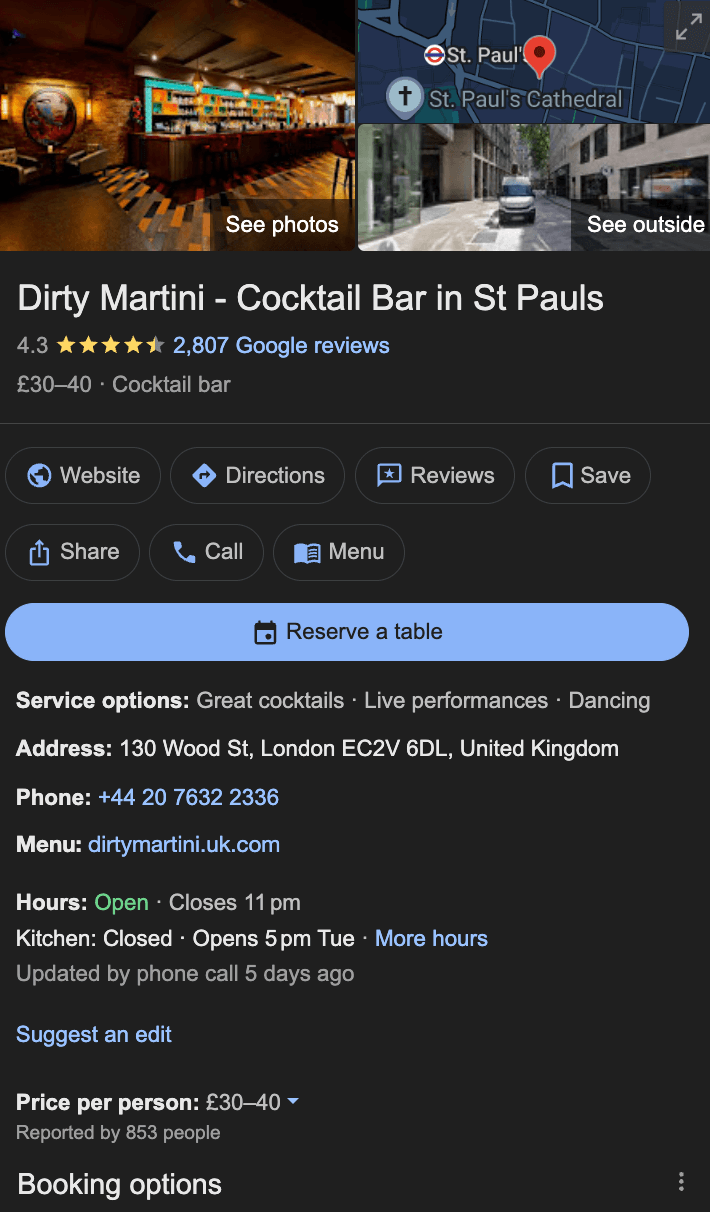
This is one of the simplest but most overlooked venue marketing tools, especially for those new to the market:
A fully optimised Google Business Profile:
- Improves local visibility
- Builds trust quickly
- Often becomes the first impression of your venue
Venues like Dirty Martini, use their profiles to clearly show opening hours, menus, service options, photos, and seasonal offers, making it easier for potential bookers to choose them quickly.
What to prioritise:
- Fill out every detail (address, hours, contact info)
- Upload high-quality photos of your space
- Update seasonally (Christmas hours, summer terraces, refurbishments)
- Respond to reviews, especially the negative ones
For many planners, this attention to detail is often the difference between being shortlisted or skipped, particularly for restaurants and bars.
2. How do you turn venue features into a clear offer?
Turn features into an offer by explaining what clients can do in the space, what is included, and why the package makes planning easier. Specific use cases are more persuasive than a long list of adjectives.
Instead of writing:
Stylish private room with a projector and flexible furniture.
Try:
A private meeting room for up to 30 guests, with flexible theatre, boardroom, and workshop layouts. Projector, Wi-Fi, furniture, and tea and coffee are included in the day rate.
Create packages for the event types you want to fill. These could include:
- A weekday meeting package with room hire, AV, and refreshments
- A birthday package with food, drinks, staffing, and optional entertainment
- A wedding reception package with catering, furniture, setup time, and coordination
- A production package with power information, access times, parking, and equipment options
Show starting prices or an indicative range where possible, and state what is included. If demand changes across the week or year, use peak and off-peak offers instead of discounting every date. Tagvenue’s practical venue pricing guide explains the main pricing models and how to protect your margin.
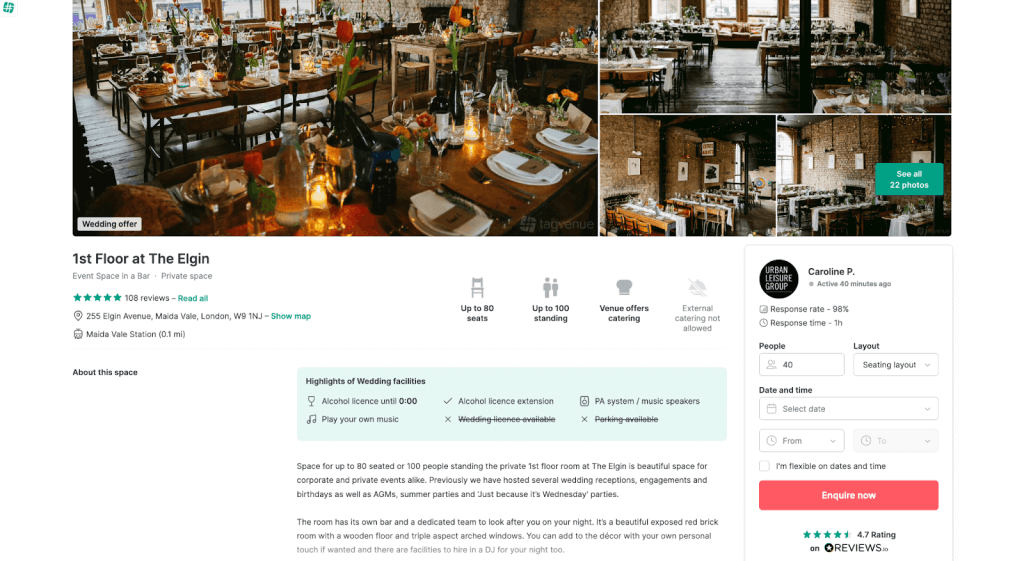
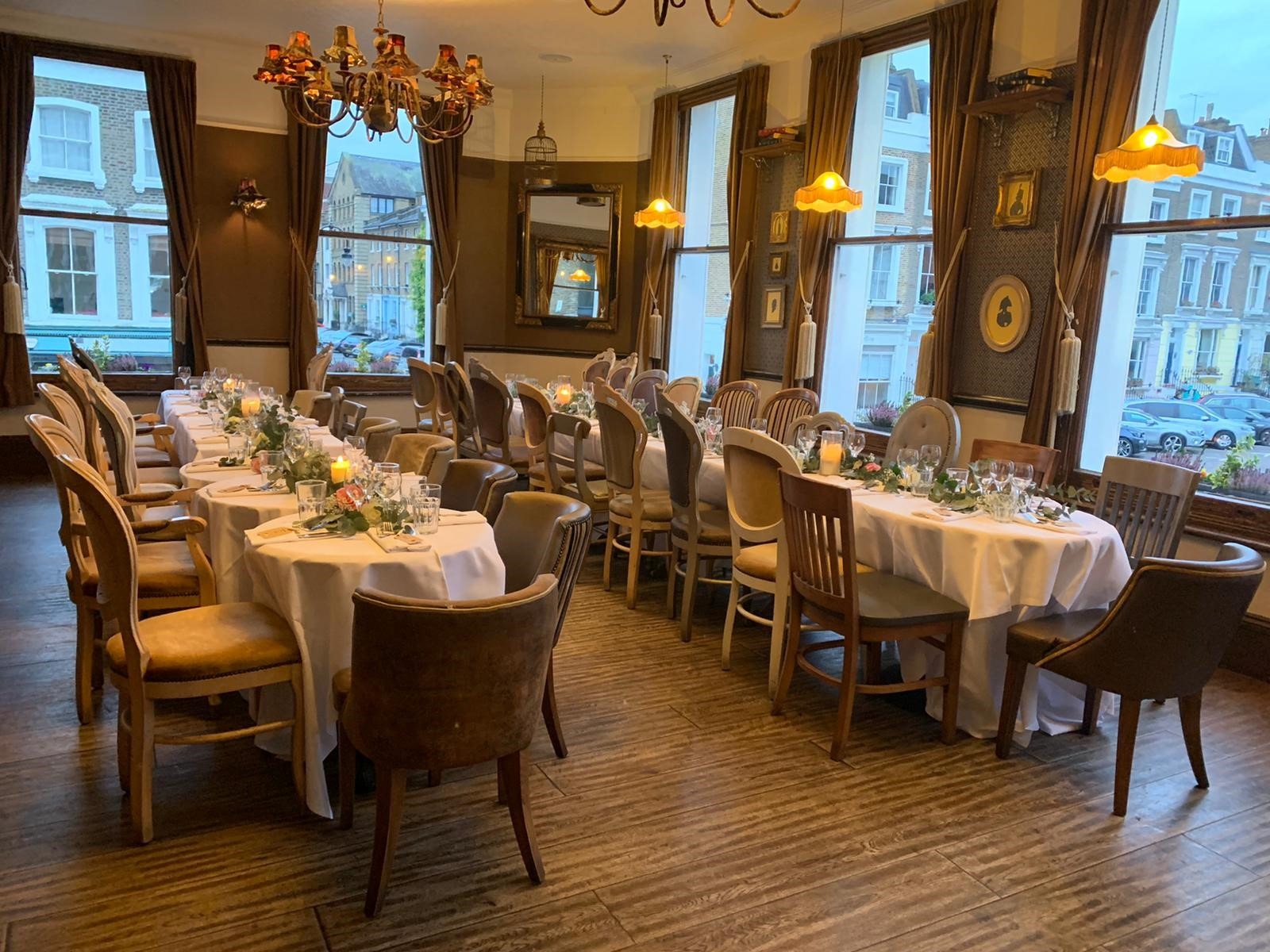
Venue: 1st Floor at The Elgin
3. What should an event venue website include?
An event venue website should help a planner decide whether to enquire. It needs clear event pages, capacities, layouts, indicative pricing, inclusions, strong visuals, practical details, and an obvious call to action.
At minimum, include:
- Event types the space can host
- Seated and standing capacities for each layout
- Hire fee, minimum spend, per-person rate, or starting price
- What is included and which add-ons cost extra
- Catering, drinks, AV, furniture, accessibility, parking, transport, and licensing details
- High-quality photos of empty and event-ready setups
- A floor plan or virtual walkthrough when layout is important
- Reviews or short client testimonials
- A clear action such as Request a quote, Check availability, or Book a viewing
Create a separate page for each important combination of event type and location, rather than asking one generic page to rank and convert for everything. For example, a venue could have distinct pages for corporate meetings, private dining, and wedding receptions.
Keep every page usable on mobile. Test the enquiry form yourself and remove fields that are not needed for the first response. A planner should not have to download a brochure to discover basic capacity or pricing information.
4. How can local clients find your venue on Google?
Claim and complete your Google Business Profile, then keep its information, photos, and reviews current. This gives nearby planners a reliable source for your location, opening hours, contact details, and recent activity.
Prioritise the following:
- Use the same venue name, address, phone number, and website across listings.
- Select the most accurate primary and secondary categories.
- Add current interior, exterior, entrance, and event-setup photos.
- Keep hours and seasonal information up to date.
- Link to the most relevant enquiry or event page.
- Ask clients for honest reviews after events and respond professionally.
- Answer recurring questions in your website copy and profile information.
Local search works best when the website supports the profile. Mention the venue’s area naturally, describe nearby transport or landmarks, and create useful pages for the event types people search for in that location.
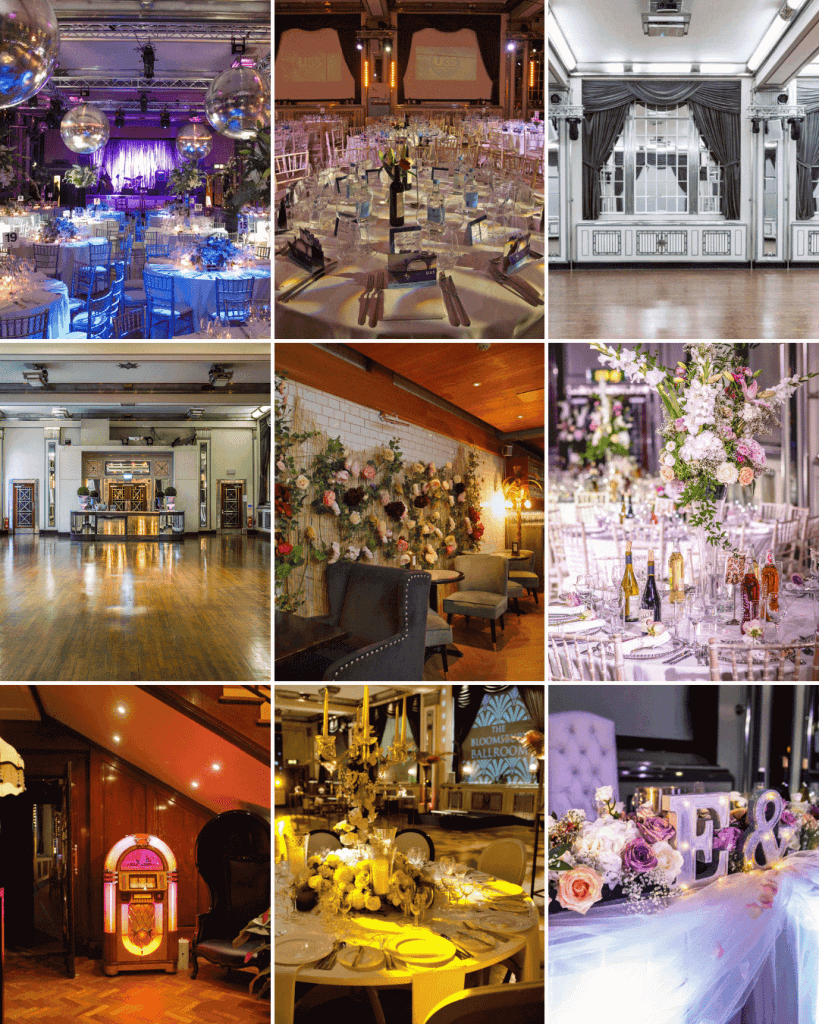
Add a high number of quality images to show your space and the range of events it can host. Venue: The Bloomsbury Ballroom
5. Should you list your venue on a marketplace?
Yes. A venue marketplace can put your space in front of planners who are already comparing options by location, capacity, price, layout, and event type. It complements your website by adding another route to discovery and enquiry.
Tagvenue has over 22,000 verified venues across more than 40 cities. Venue managers can list for free and pay commission only on confirmed bookings.
To make a marketplace listing useful:
- Complete every relevant field and filter.
- List each genuinely hireable space separately when appropriate.
- Select every event category the space can realistically support.
- State capacities by layout, not one maximum figure.
- Explain pricing, minimum spends, hire periods, and inclusions.
- Add photos of different setups, not several versions of the same view.
- Keep availability and seasonal information current.
- Respond to enquiries promptly and clearly.
Read how venue marketplaces improve event-space visibility for a fuller breakdown, or use this step-by-step guide to optimising a Tagvenue description when refreshing an existing listing.
6. Which photos and videos help market an event space?
The most useful venue visuals show scale, layout, atmosphere, access, and versatility. A planner should be able to understand the space both empty and set up for real events.
Build a core visual library with:
- Wide shots from each corner of the main space
- Seated, standing, theatre, classroom, and boardroom layouts where relevant
- Daytime and evening lighting
- Entrance, toilets, outdoor areas, breakout spaces, and accessibility features
- Close-ups of distinctive details
- Real event photos, with the client’s and photographer’s permission
- A short walkthrough from entrance to main event area
- A simple floor plan with measurements and capacities
Short-form video is useful for discovery, but clarity matters more than a trend. Add captions, name the event setup, and end with one next step. A 20-second walkthrough titled 30-person workshop setup in Shoreditch is more useful than a generic montage.
Refresh your visual library whenever the layout, decor, menu, equipment, or outdoor areas change. The goal is to help different bookers see their event in the space.
7. How should venues use reviews and social proof?
Ask for a review soon after each event, respond to feedback, and reuse approved testimonials across your website, listings, proposals, and social channels. Reviews reduce perceived risk when a planner is comparing similar spaces.
A simple process is enough:
- Send a thank-you message within one or two days.
- Ask for feedback with one direct review link.
- Request permission before using a quote, photo, or video in marketing.
- Reply to positive and negative reviews in a calm, specific way.
- Record recurring feedback and use it to improve the offer.
The most helpful testimonials mention the event type, the problem the venue solved, and the experience of working with the team. A detailed comment about a smooth room turnaround or reliable AV is more informative than Lovely venue.
8. Which social media platforms work best for venue marketing?
Use the platforms where your target bookers already research and share events. Instagram and TikTok suit visual celebrations and transformations, while LinkedIn is often more relevant for meetings, conferences, launches, and corporate hospitality.
You do not need to post everywhere. Choose one primary platform and publish content that answers booking questions:
- Before-and-after room transformations
- A complete setup for a specific guest count
- Short venue walkthroughs
- Menu, drinks, or package highlights
- Supplier spotlights
- Event recaps with permission
- Common planning questions answered by the venue team
- Last-minute or off-peak availability
Turn one event into several useful assets: a walkthrough, a carousel of the setup, a supplier post, a client quote, and a short case study. Always link or direct people to the relevant event page or listing rather than a generic homepage.
More Enquiries, More Revenue
Gain instant exposure to event organizers, showcase your unique venue, and watch bookings grow. Your next event is waiting
9. What content should an event venue publish?
Publish content that answers the questions clients ask before enquiring. Useful local and event-specific content can support search visibility, sales conversations, and social media without becoming generic blog filler.
Good topics include:
- How many guests fit each layout?
- What does a private event package include?
- How does a ceremony-to-reception turnaround work?
- What AV is available for hybrid meetings?
- Which transport, parking, or accommodation options are nearby?
- How can clients decorate the space?
- What happens during a venue viewing?
- How far ahead should clients book popular dates?
Use real examples from your venue. Add original photos, layouts, sample schedules, menus, or expert advice from your team. Answer the question in the first paragraph, then give enough detail for the reader to act.
10. How can partnerships and open houses generate venue leads?
Partnerships and open houses help planners experience the space and can create referrals from trusted local suppliers. Focus on collaborators who serve the same audience without offering the same service.
Potential partners include:
- Event planners and production agencies
- Caterers, florists, photographers, DJs, bands, and celebrants
- Hotels, coworking spaces, local businesses, and visitor organisations
- Universities, professional associations, and community groups
Make the partnership concrete. Create a preferred-supplier guide, a joint package, a styled shoot, or a referral arrangement with clear terms.
For an open house, stage the venue for the audience you want to attract. Show a meeting layout to corporate planners or a ceremony and reception flow to wedding clients. Offer short tours, sample food or drinks where appropriate, and a simple way to request a quote afterwards.
11. When should an event venue use paid advertising?
Use paid advertising after your landing page, offer, visuals, and enquiry tracking are ready. Ads can increase qualified traffic, but they are unlikely to solve a weak conversion path.
Start with one audience and one outcome:
- Search ads for high-intent local queries such as corporate event venue in [city]
- Social ads for visually led packages, new spaces, or seasonal events
- Retargeting for people who viewed a key page but did not enquire, where consent and platform rules allow
Send each ad to the most relevant page, not the homepage. Match the message, photo, event type, location, and offer. Track enquiries and confirmed bookings rather than clicks alone.
Test one meaningful variable at a time, such as the audience, headline, visual, offer, or landing page. Pause campaigns that produce poor-fit enquiries, even if their click cost looks attractive.
12. How quickly should a venue respond to an enquiry?
Respond as quickly as your team can provide a useful answer, ideally while the planner is still comparing options. The first reply should confirm what you know, answer the main questions, and make the next step easy.
Use a response template without making the message feel automated. Include:
- Confirmation that you received the enquiry
- Availability, or when you will confirm it
- Relevant capacity and package information
- An indicative price or quote timeline
- Answers to the client’s stated requirements
- One next action, such as a call, viewing, or provisional hold
Set up instant acknowledgements outside working hours, then follow with a personal reply. Track every enquiry by source, status, next action, and owner. A light follow-up sequence can remind interested clients about the venue, answer common questions, and share a relevant event example.
If enquiries are arriving but not converting, use Tagvenue’s guide to why venues are not getting booked and how to fix the friction.
13. How can you get repeat venue bookings and referrals?
Stay useful after the event. A timely follow-up, relevant future offer, and easy referral route can turn a successful booking into a longer relationship.
Try:
- Asking corporate clients about recurring meetings, team events, or annual dates
- Sending seasonal availability only to clients who have agreed to receive marketing
- Offering a relevant add-on or package for a future event
- Giving previous clients early access to popular dates
- Creating a clear referral offer for clients or supplier partners
- Recording preferences so returning clients do not have to repeat the brief
Segment communication by event type. A quarterly corporate update and a wedding anniversary message serve different needs; one generic newsletter is less likely to feel relevant.
14. How do you measure whether venue marketing is working?
Measure the full path from discovery to booking. The most useful channel is not necessarily the one with the most impressions or followers; it is the one that produces suitable enquiries and profitable confirmed events.
Track these metrics each month:
- Listing or landing-page views
- Enquiries by source and event type
- Percentage of enquiries that meet your criteria
- Response time
- Viewings or calls booked
- Quotes sent
- Confirmed bookings
- Enquiry-to-booking conversion rate
- Revenue and estimated margin by channel or event type
- Reasons bookings were lost
Use a consistent source field in your enquiry form or tracker. Review the data by event type and day of the week, because a channel that fills Tuesday meetings may behave very differently from one that sells Saturday parties.
When a date pattern is the problem, see how to fill quiet weekday slots at your venue. For Tagvenue-specific improvements, the guide on how to get more bookings on Tagvenue provides a focused checklist.
Venue Marketing Ideas by Event Space Type
Every venue is unique: its layout, decor, location, and amenities determine which marketing angles resonate most. Platforms like Tagvenue let you tailor listings using filters (e.g., minimum spend for pubs, AV tech for meetings, or event planning for weddings), and boost visibility to help event planners find suitable spaces faster. Let’s take a look at how you can make your event venue stand out.
Restaurants & Bar
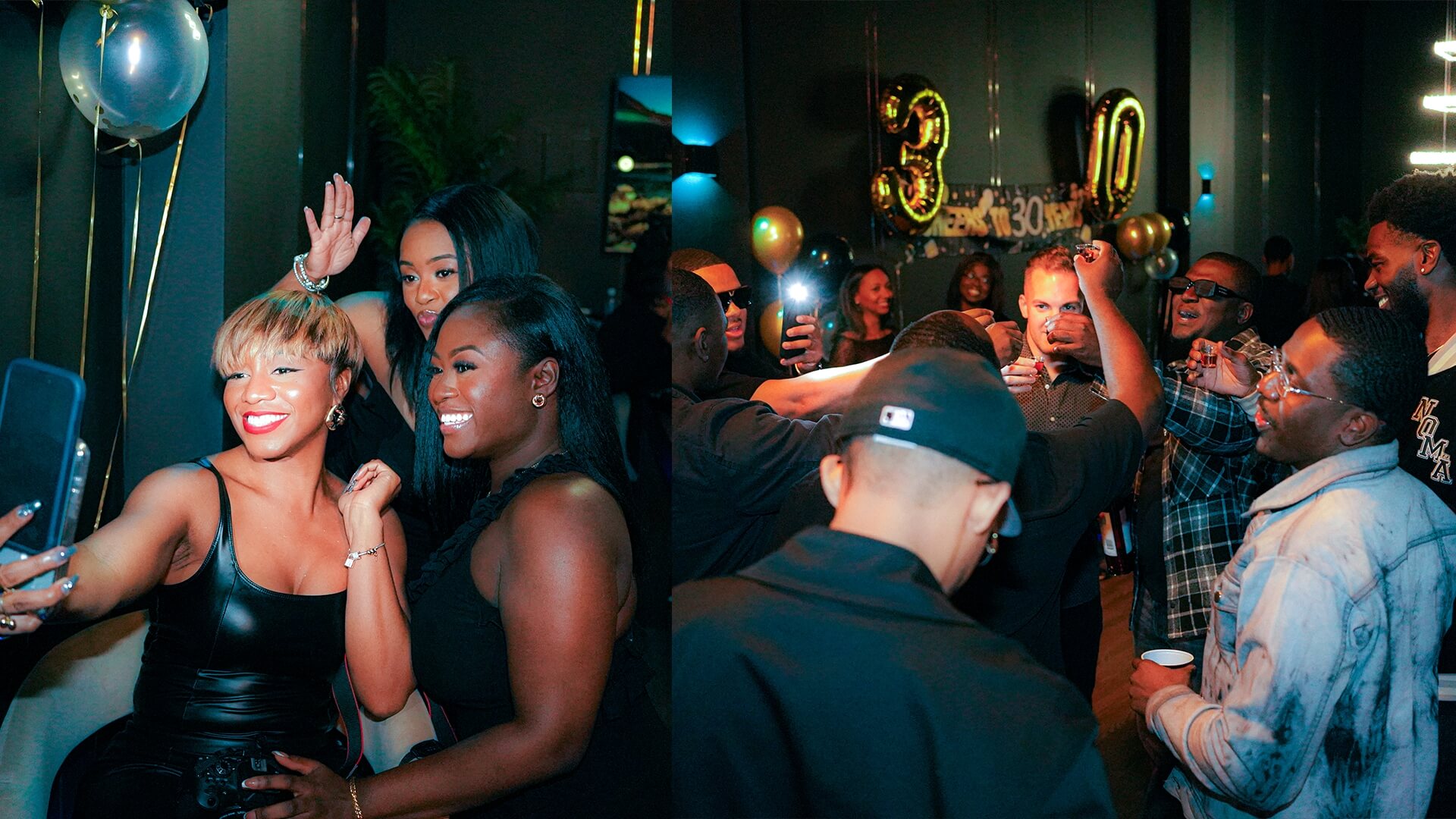
Show private areas, minimum spends, group menus, drinks packages, exclusive-hire options, and the transition from normal service to an event setup. Target birthdays, private dining, corporate drinks, and seasonal parties with separate offers.
Meeting Rooms
Prioritise reliable Wi-Fi, AV, acoustics, natural light, accessibility, transport, breakout space, hybrid-event options, and day delegate packages. Use LinkedIn, local search, corporate partnerships, and direct follow-up for recurring bookings.
Private Properties and outdoor spaces
Explain access, parking, neighbours, weather alternatives, noise or timing restrictions, furniture, power, toilets, and setup rules. Show how the space works for intimate celebrations, shoots, workshops, or receptions without implying that every event type is permitted.
Wedding Venues
Show the complete guest journey: arrival, ceremony, drinks, meal, entertainment, and weather backup. Use real weddings and styled shoots to demonstrate different seasons and aesthetics, with permission from clients and suppliers.
Gig Venues
Lead with capacity, stage dimensions, acoustics, sound and lighting equipment, licensing, curfew, loading access, dressing rooms, and technical contacts. Build relationships with promoters, artists, agencies, and local music communities.
Birthday & Baby Shower Venues
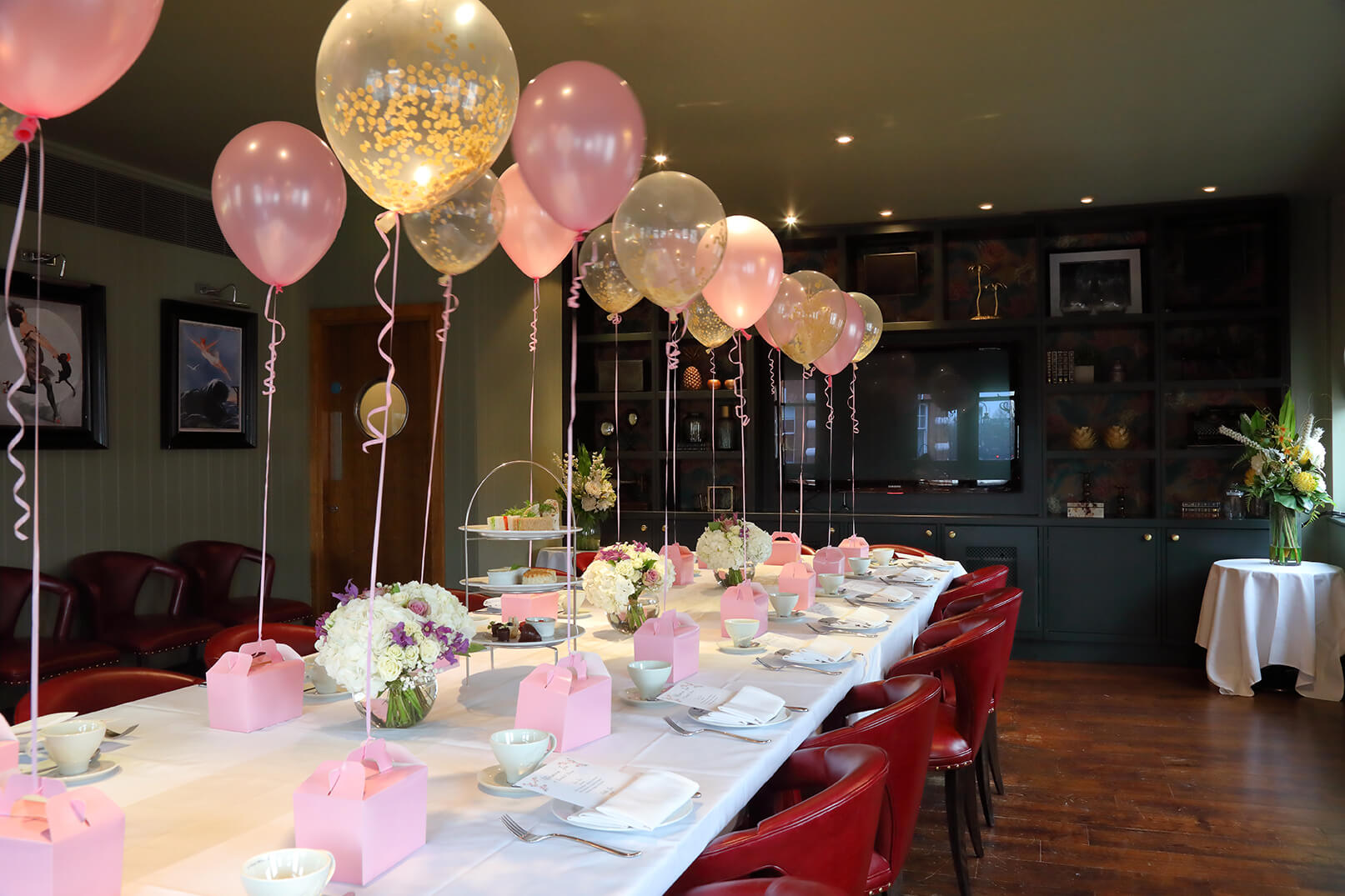
Highlight private-hire options, family-friendly layouts, decoration rules, food and drink packages, accessibility, and easy setup. Photos should show warmth and flexibility without making the space look suitable for only one theme.
If your space can serve several of these audiences, read how to position a venue for multiple event types without making the offer confusing.
A 30-day event venue marketing plan
You can improve venue marketing in one month by fixing the booking foundations first, then adding promotion and measurement.
Week 1: Clarify the offer
- Choose two or three priority event types.
- Define capacities, pricing, inclusions, and best-fit dates for each.
- Write a one-sentence value proposition for each audience.
- Identify the biggest current gap in the booking journey.
Week 2: Improve discovery and conversion
- Update the website’s event pages and calls to action.
- Complete the Google Business Profile.
- Refresh marketplace categories, filters, prices, and descriptions.
- Test every enquiry form and response notification.
Week 3: Build proof and reach
- Upload a balanced set of venue and event-setup photos.
- Record one clear walkthrough video.
- Ask recent clients for reviews.
- Contact five relevant supplier or planner partners.
Week 4: Promote and measure
- Publish one useful venue-specific guide or event case study.
- Turn it into several social posts.
- Test one tightly targeted paid campaign if tracking is ready.
- Review enquiry sources, quality, response time, and next actions.
At the end of the month, keep the activities that produced qualified conversations. Improve or stop the ones that generated attention without booking intent.
Conclusion: Market the Possibilities, Not Just the Space
Market the event, not just the room
The strongest event venue marketing helps clients picture a successful event and understand how to make it happen. Clear positioning, useful details, strong visuals, visible proof, and prompt follow-up do more than attract attention; they make the next decision easier.
Start with the weakest point in your current booking journey. Improve one stage, measure it, and move to the next. When your website, marketplace listing, content, and sales process tell the same clear story, more of the right planners can find your space and enquire with confidence.
Start Growing Bookings Today
Showcase your unique space, attract serious inquiries, and fill your calendar faster.
FAQ
What is the best way to market an event venue?
The best approach combines a clear offer, local search visibility, a decision-ready website or marketplace listing, strong photos and reviews, and fast enquiry follow-up. Start with the booking journey before spending on promotion.
How can I market an event space on a small budget?
Complete your Google Business Profile and venue listings, improve existing photos and descriptions, ask clients for reviews, publish real event setups, and build local supplier partnerships. These actions mainly require time and consistency rather than a large media budget.
Should an event venue use social media or Google Ads?
Use social media to show the experience and Google Ads to capture active local demand. Choose the channel that matches your audience, and only invest once you have a relevant landing page and a way to track enquiries and bookings.
How often should venue marketing content be updated?
Update prices, availability, hours, packages, and operational details whenever they change. Review core pages, listings, photos, and seasonal offers at least quarterly so planners are not making decisions from outdated information.
What information makes a venue listing more likely to generate a qualified enquiry?
Include event suitability, capacities by layout, pricing guidance, inclusions, amenities, accessibility, location details, strong photos, and a clear next step. The listing should help unsuitable clients self-select out and suitable clients enquire confidently.
How do I know which marketing channel brings venue bookings?
Record the source of every enquiry and follow it through viewings, quotes, confirmed bookings, revenue, and margin. Compare channels by qualified bookings, not just clicks, impressions, or follower growth.
Related articles
See all