How to Price a Venue in NYC – An Easy Guide for Business Owners




As with any active market, pricing benchmarks should be reviewed every 6 to 12 months to ensure they continue to reflect demand, costs, and booking behavior.
Pricing an event space in New York City isn’t about picking a number that sounds reasonable. It’s about revenue strategy.
The event venue industry has a high barrier to entry, largely because of capital. Based on Tagvenue data, startup costs for event venues typically range between $50,000 and $150,000, driven by real estate, licensing, staffing, and setup costs, especially in desirable NYC locations. Once operational, however, there’s effectively no ceiling on what a venue can earn if pricing, positioning, and demand are aligned.
On average, venue owners take home 10–20% profit, while high-demand venues in strong locations can reach margins of 40–60%. In New York, the difference between average and exceptional performance is rarely décor or square footage, it’s how the space is priced, packaged, and sold.
Pricing mistakes are amplified in NYC:
- Underprice, and you quietly lose thousands in missed revenue.
- Overprice, and enquiries disappear instantly in a city with endless alternatives.
This guide explains how NYC event pricing actually works, what drives rates up or down, and how to build a pricing structure that protects margin without slowing bookings.
Tired of looking up for venue data?
On Tagvenue, you can compare pricing structure for venues like yours and gain visibility to boost sales.
- How Venue Pricing Works in NYC
- Start With Revenue Logic, Not Venue Type
- Location in NYC: Pricing Is Really About Opportunity Cost
- Event Space Costs in NYC: Realistic Benchmarks (2026)
- Capacity, Duration & Operational Pressure Matter More Than Size
- Transparency: Why Clear Pricing Converts Faster
- What Every NYC Venue Pricing Template Should Include
- Common Pricing Mistakes NYC Venues Should Avoid
- Dynamic Pricing in NYC: How to Adjust Rates for Demand
- Using Packages Strategically
- Borough Pricing Logic
- Profitability by Venue Type
- How to Review and Adjust Your Pricing
- How Tagvenue Supports Pricing, Marketing & Selling
- Final Thoughts
How Venue Pricing Works in NYC
New York City isn’t one market, it’s dozens of micro-markets operating side by side. Venue pricing here is shaped by factors such as:
- location and neighbourhood
- day and time of the booking
- event type and demand
- what revenue the event replaces
- how the venue earns money
As a result, successful NYC venues rarely rely on one static rate. Instead, pricing reflects who is booking, when they’re booking, and what revenue that booking replaces.
This is why copying a competitor’s rate card rarely works. Two venues can look similar online but still need very different pricing strategies because their operating costs, demand patterns and revenue models may be different.
Platforms like Tagvenue can help owners compare how similar venues structure and present their pricing, giving them a market reference point rather than relying on guesswork.
Start With Revenue Logic, Not Venue Type
One of the most common pricing mistakes venue owners make is pricing purely by category: bar, restaurant, wedding venue, meeting room, and so on.
In NYC, pricing works best when it starts with how the space earns money during an event, then follows up by choosing a pricing model that best reflects that venue.
Three Revenue Models for NYC Venues
| Revenue mode | How revenue is generated | Common venue types | Best-fit pricing models |
| Spend-driven | Guest spend over time | Bars, restaurants, lounges | Minimum spend, hybrid |
| Time-driven | Time booked | Meeting rooms, studios, rehearsal spaces | Hourly, half-day, day rates |
| Experience-driven | Clients pay for the space or a defined event experience | Wedding venues, milestone venues, raw event spaces | Flat rental fees, packages, per-person pricing |
This framework helps avoid underpricing based on venue type alone. A restaurant hosting a Saturday night buyout should not be priced like a weekday meeting room, even if the spaces are similar, because the two bookings replace very different revenue..
Location in NYC: Pricing Is Really About Opportunity Cost
Location affects pricing everywhere, but in NYC, it also determines what revenue you may be giving up by hosting a private event.
In NYC, a four-hour Friday-evening booking, for example, may replace dinner service, bar revenue or several smaller bookings. That is why peak evenings, weekends and full buyouts often justify higher rates than quieter weekday or daytime slots.
| Borough | Pricing characteristics |
| Manhattan | Firmer pricing, driven by high demand, strong weekday and corporate business, and the revenue displaced by private events. |
| Brooklyn | Wide pricing range, with strong wedding and social-event demand and greater seasonal variation. |
| Queens | More value-driven, with accessibility and transport connections influencing what clients are willing to pay. |
| Bronx | More community-driven, with repeat local bookings and greater pricing flexibility. |
| Staten Island | More destination-led, with full-day and larger social-event bookings playing a bigger role. |
Peak Friday and Saturday bookings, full buyouts and evening events can command considerably higher pricing than weekday or daytime equivalents. Off-peak pricing, meanwhile, can help fill quieter periods without reducing the value of peak dates.
The key is not to apply one NYC-wide rate card, but to price according to local demand, your venue’s normal revenue pattern and the opportunity cost of each booking.
Tagvenue data shows how much timing can affect pricing:
Off-peak pricing can help fill quieter weekday and afternoon slots, while peak pricing should reflect the revenue the venue gives up to host the event.
Weekend and evening events frequently carry premiums of 20–50% or more over weekdays.
Restaurant and bar buyouts on peak Friday and Saturday nights can command minimum spends of $16,000–$30,000+, compared with around $6,000–$15,000 for weekday or daytime bookings.
Event Space Costs in NYC: Realistic Benchmarks (2026)
While pricing varies widely, most NYC venues fall into predictable ranges.
Typical Hourly Rates by Venue Type
| Venue Type | Typical Hourly Range |
| Community & basic spaces | $50–$175 |
| Mid-range event spaces | $175–$550 |
| Banquet halls & hotels | $600–$1,800 |
| Luxury, rooftop, exclusive venues | $1,800–$5,500+ |
Minimum booking durations (3–5 hours) are common and significantly impact total revenue.
Flat Event Pricing (Instead of Hourly)
Flat pricing is increasingly popular in NYC because it reduces negotiation friction and aligns better with experience-driven bookings.
| Venue Type | Typical Flat Event Pricing | Best Use Case |
| Bars & Pubs | $1,500-$6,000 | Evening buyouts, social events |
| Restaurants | $2,000-$8,000 | Dining-led partial or full buyouts |
| Meeting Rooms | $500-$3,000 | Half-day / full-day corporate bookings |
| Mid-size Banquet Halls | $3,000-$8,000 | Weddings, milestone events |
| Wedding Venues (avg.) | ~$13,000 | Full-day, experience-driven |
| Luxury Wedding Venues | $18,000-$45,000 | Premium dates & demand |
Flat pricing works particularly well when your clients value certainty more than flexibility.
Done scrolling through NYC venue prices?
Optimize yours to attract more inquiries from local planners and corporate clients. Turn more leads into confirmed events.
Capacity, Duration & Operational Pressure Matter More Than Size
In NYC, capacity alone rarely determines price.
What matters more is:
- how long the space is blocked
- whether walk-in trade is restricted
- how much staffing and coordination the event requires
| Guest Count | Typical Total Pricing |
| 20-75 guests | $200–$2,000 |
| 76-200 guests | $2,500–$8,000 |
| 200+ guests | $5,000–$25,000+ |
A 40-person weekday meeting and a 40-person Saturday night party may require completely different pricing, even in the same room.
Transparency: Why Clear Pricing Converts Faster
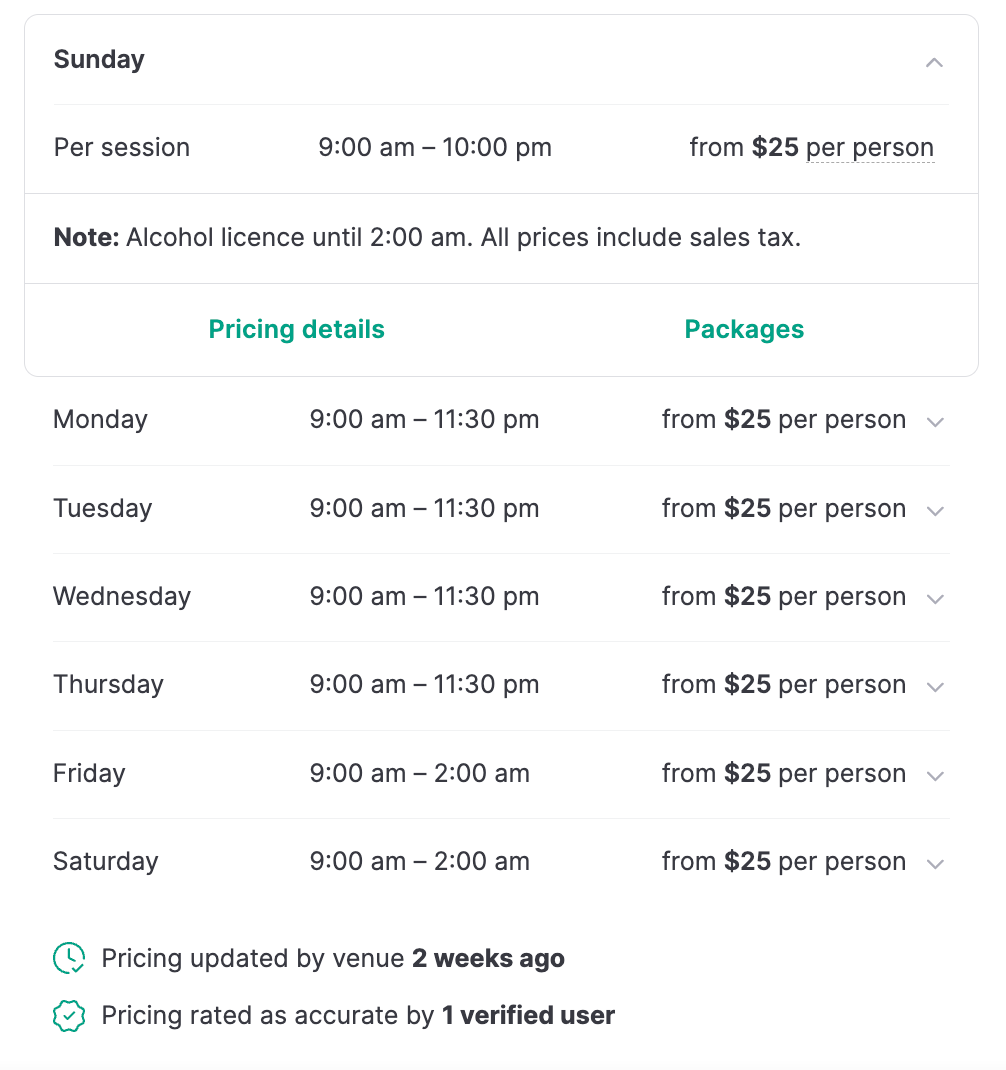
Make it clear what your headline price includes — and what costs extra. Transparent pricing helps planners assess whether your venue fits their budget before they enquire and reduces unnecessary back-and-forth later.
Common charges to clarify include:
- service charges (15–23%)
- minimum spend requirements
- setup and breakdown fees
- security and staffing
- AV, Wi-Fi, and equipment
- peak-season surcharges
Where possible, separate what’s included from optional or additional charges so clients can understand the likely total cost of their event.
Clear pricing also helps attract better-fit enquiries: planners can rule a venue in or out earlier rather than discovering important costs later in the booking process.
What Every NYC Venue Pricing Template Should Include
Your pricing template should make it easy for a planner to understand the base price, what’s included, what costs extra, and how the rate changes for different booking conditions.
Include:
- Pricing model – hire fee, minimum spend, per-person or hybrid
- Minimum hours and overtime rules
- What’s included – such as furniture, AV, staffing or setup
- Peak vs off-peak pricing
- Deposit and cancellation policy
- Clear add-ons – including any optional or additional charges
The goal is to answer the most important pricing questions before the first reply, so planners can quickly tell whether the venue fits their needs and budget.
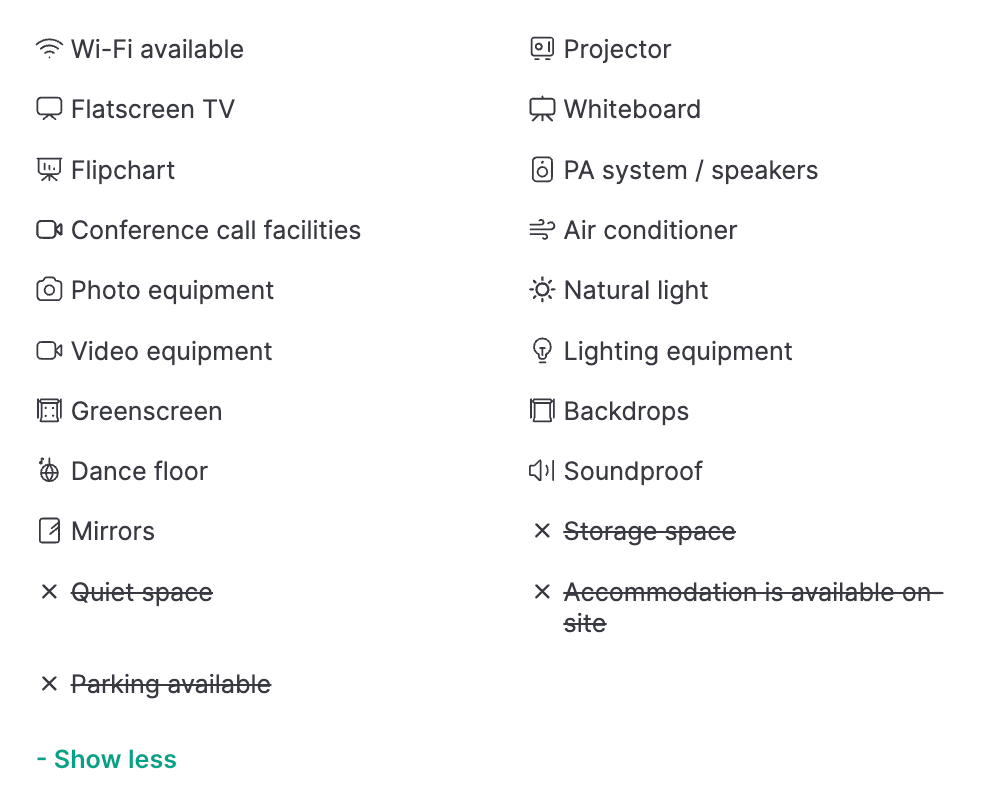
Venues with clear pricing structures consistently receive more qualified enquiries because planners can immediately tell whether the venue fits their needs and budget.
Common Pricing Mistakes NYC Venues Should Avoid
The biggest pricing mistakes usually come from setting rates without considering costs, displacement, demand or how clearly the final price is communicated.
| Pricing mistake | Why it matters | What to do instead |
| Underpricing to fill the calendar | Low rates can erode margin and leave revenue on the table, particularly for high-demand dates. | Set a minimum viable rate based on your costs and margin, then adjust for demand. |
| Ignoring displacement cost | A peak-time private booking may replace restaurant covers, bar revenue or other bookings. | Factor in what the space would otherwise earn before discounting a high-demand slot. |
| Overcomplicating pricing | Too many tiers, add-ons or unclear rules make it harder for planners to understand the total cost. | Use a simple structure with clear minimums, packages and inclusions. |
| Not reviewing rates regularly | Demand, costs and booking patterns change over time. | Review your venue’s performance regularly and adjust where the data supports it. |
| Charging the same for peak and off-peak dates | A uniform rate ignores differences in demand and opportunity cost. | Use different pricing for peak evenings, weekends and quieter periods. |
| Leaving additional charges unclear | Unexpected fees for overtime, cleaning, AV, setup or staffing can create friction later in the booking process. | Show inclusions and add-ons clearly from the start. |
| Setting minimum spends too low for larger groups | A minimum that doesn’t reflect likely guest spend can leave the venue under-recovering costs. | Align minimum spend with realistic capacity, spend and operating costs. |
The most successful venues revisit pricing often and adjust based on performance data rather than instinct alone.
Dynamic Pricing in NYC: How to Adjust Rates for Demand
Dynamic pricing means charging different rates based on when and how the venue is booked, rather than using one fixed price all year.
Key factors include:
- Day of week – peak Friday and Saturday bookings can justify higher rates than quieter weekdays.
- Seasonality – demand varies throughout the year, so peak periods can support firmer pricing while slower periods may benefit from incentives.
- Time of day – daytime corporate bookings and evening social events often have different demand and opportunity costs.
- Lead time – short-notice and high-demand bookings may warrant different pricing from dates booked well in advance.
- Event type – a private buyout, wedding or corporate meeting can place very different demands on the same space.
The goal is not to change prices constantly, but to match your rates to demand and the value of the slot being booked.
NYC venues that use dynamic pricing don’t necessarily book more events — they earn more per event.
Using Packages Strategically
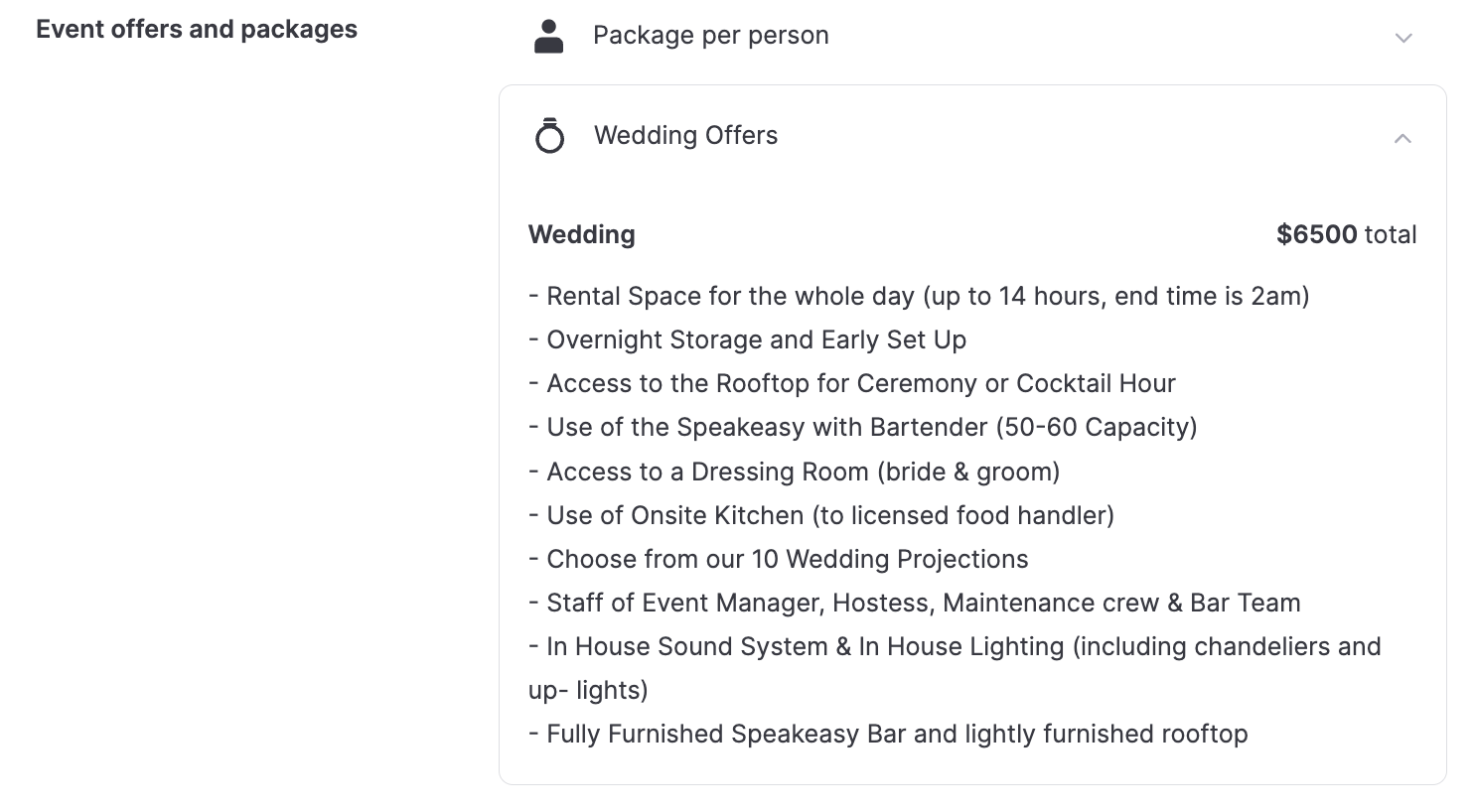
Packages can make pricing easier to understand while giving venues more predictable revenue. They work best when the offer has a clear duration, clear inclusions and a defined level of staffing or service.
Packages are particularly useful when:
- Demand is time-sensitive
- Clients value clarity over flexibility
- You want to make costs easier to compare
- You want more predictable revenue from a booking
A strong package might combine:
- fixed event duration
- defined inclusions
- predictable staffing
- clearly priced optional extras
The aim is not necessarily to discount the venue, but to bundle the offer in a way that makes the total value and cost easier for planners to understand.
Borough Pricing Logic
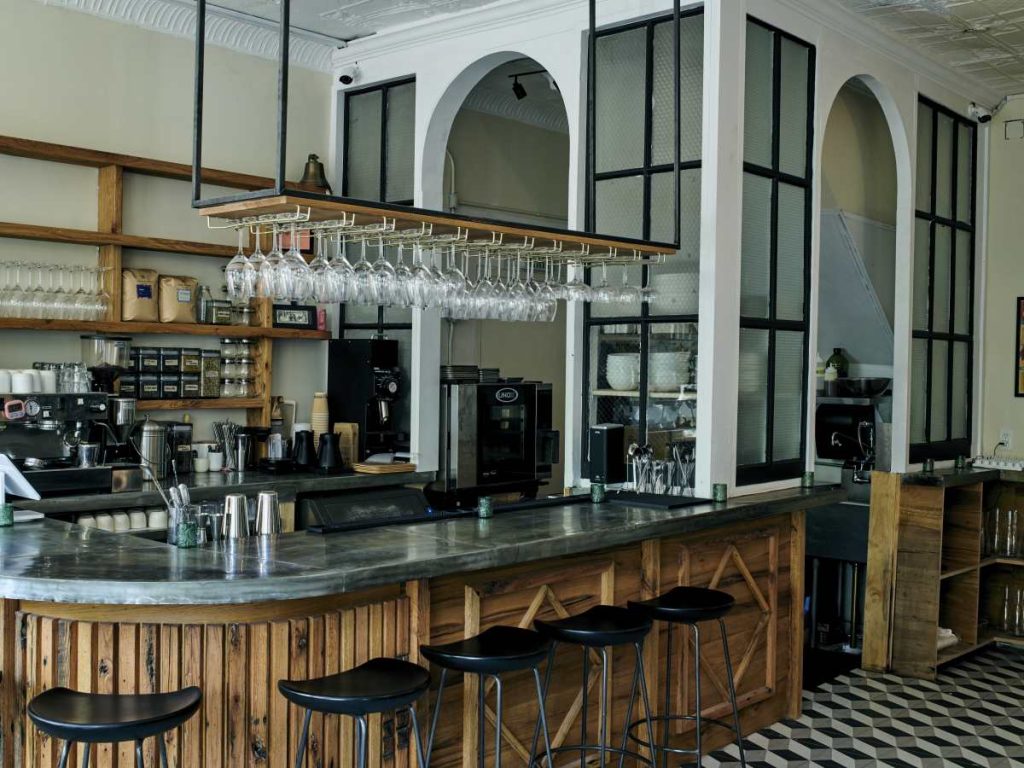
Event pricing in New York City varies significantly by borough, driven by differences in demand, accessibility, and the type of events each area attracts. While Manhattan often commands firmer pricing due to opportunity cost and corporate demand, other boroughs allow for more flexibility and value-driven pricing. Understanding these dynamics helps venues align their rates with realistic revenue potential rather than applying a one-size-fits-all approach.
| Borough | Pricing Characteristics |
| Manhattan | Firmer pricing, strong weekday demand |
| Brooklyn | Wide range, strong weddings & socials |
| Queens | Value-driven, accessibility matters |
| Bronx | Community-driven, repeat local bookings |
| Staten Island | Destination events, full-day pricing |
Profitability by Venue Type
Not all venue types generate revenue in the same way. Profitability depends on how events are priced, how long spaces are occupied, and how much operational effort each booking requires. The table below highlights how different venue types typically perform in New York City, based on demand patterns and pricing structures rather than size or aesthetics alone.
| Venue Type | Profit Potential | Why |
| Wedding Venues | Very high | High tolerance for flat fees |
| Restaurants | High (when optimised) | Spend-driven upside |
| Bars & Clubs | Medium-high | Volume + minimum spend |
| Conference Venues | Medium | Predictable, capped upside |
| Community Spaces | Lower | Price-sensitive demand |
How to Review and Adjust Your Pricing
Review your pricing regularly against your own booking performance, not just market averages. Broad NYC benchmarks can be revisited every 6–12 months, while your own venue’s pricing should be checked more frequently as demand, conversion and booking patterns change.
Rather than relying on instinct, look for patterns across different dates, times and event types.
| Signal | What it may mean | What to consider |
| Dates are filling very quickly | You may be underpriced for that slot | Test a modest increase on comparable dates |
| Lots of enquiries but low conversion | Price, structure or what’s included may not match expectations | Review your pricing clarity and how the offer compares with similar venues |
| The same items are frequently negotiated | A particular fee may feel too high or unclear | Reassess that charge or consider bundling it into the main price |
| The same event type keeps booking at the same rate | You may have found a stable price point — or be leaving margin on the table | Benchmark that rate against comparable venues before deciding whether to adjust it |
Pricing should evolve with performance. The goal is to make gradual changes based on evidence rather than waiting until a rate card is obviously outdated.
As with any active market, pricing benchmarks should be reviewed every 6 to 12 months to ensure they continue to reflect demand, costs, and booking behavior.
How Tagvenue Supports Pricing, Marketing & Selling
Clear pricing, packages and inclusions make it easier for planners to understand your offer and decide whether your venue fits their needs. Tagvenue gives venue owners a place to present that information alongside photos, facilities and other booking details.
Venue owners can use Tagvenue to:
- Increase visibility among people actively searching for venues
- Compare how similar venues present and structure their pricing
- Show pricing, packages and inclusions clearly
- Attract enquiries from planners whose requirements and budgets are a better match
This helps connect your pricing strategy with how the venue is actually marketed and sold.
Final Thoughts
In New York City, pricing isn’t a one-time decision – it’s a core part of how your venue operates and grows. The best-performing venues aren’t the cheapest or the flashiest; they’re the ones whose pricing smartly reflects:
- how the space earns revenue
- what each booking replaces or displaces
- the costs and target margin
- when demand is strongest
- what clients genuinely value
Clear, well-structured pricing helps planners understand your offer and makes it easier to attract enquiries that are a good fit for your venue.
Review your rates regularly, use market benchmarks as a reference, and adjust your pricing based on how your own venue performs over time.
Get your NYC venue discovered by event planners
Set smart, competitive pricing on Tagvenue, benchmark against top Manhattan and Brooklyn venues, list for free, and watch bookings and profits soar.
Related articles
See all