How to Find Unique Filming Locations: Tagvenue, Peerspace & Giggster Compared
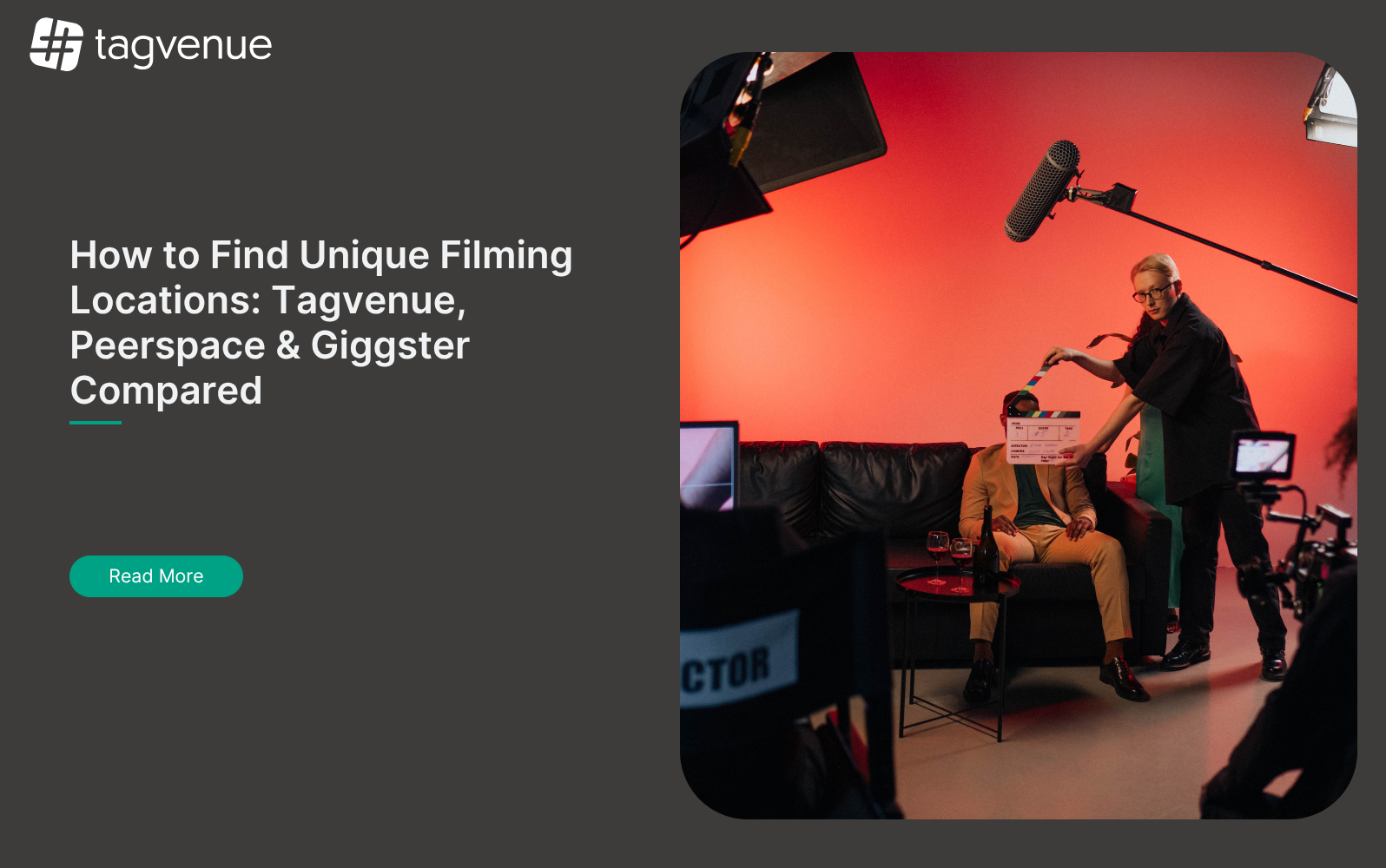



The best place to find a unique filming location in 2026 is a venue marketplace that does the groundwork for you, helping you discover suitable spaces, compare prices and narrow down your options without contacting venues one by one. Tagvenue makes your search easier, with more than 2,000 filming locations in London alone, averaging £60 per hour, transparent starting prices and no booking or admin fees. From production studios and ready-dressed restaurants to heritage buildings and unusual commercial spaces, you can explore distinctive locations without paying extra platform fees.
Here’s how the different ways to find filming locations compare, what they cost and how to choose the right space for your production.
Here is how Tagvenue, Peerspace, Giggster and Manual Search Compare
- Tagvenue is the strongest choice for unique, already-dressed commercial and heritage spaces, and it costs the booker nothing. It lists 22,000+ verified venues in six countries, 2,090 of them filming locations in London only (average £60/hr). It charges no booking or admin fees, replies in a median of 4.5 hours, and matches the price if the same venue is cheaper elsewhere.
- Peerspace and Giggster are genuinely strong for residential homes and production-ready “dry hire” spaces, especially in the US. Each lists 50,000+ spaces, but both add a variable processing fee for the renter on top of the hourly rate. Their hosts pay a 20% (Peerspace) or 19% (Giggster) commission, which tends to push listed prices up.
- Traditional search (Google, film-office directories, location agencies) is free to browse but slow, and agencies are costly. Free directories such as the Film London Directory and the Filming in England Locations Directory are useful for scripted TV and features. Long-established Hollywood location agencies charge producers an industry-standard rate of roughly 30% of the rental fee and agencies typically quote £500–£1,000 per day for a photo shoot and from £1,200 per day for TV and film.
Key findings: What sets Tagvenue apart in finding filming locations?
| Key advantage | What it means for your shoot |
| No booking fees | Tagvenue charges no booking or admin fees, unlike Peerspace and Giggster, which add processing fees at checkout. |
| Transparent pricing | London filming locations average £60/hour, with listed options starting around £35/hour. |
| Fast responses | Venues respond to enquiries in a median of 4.5 hours, making it easier to shortlist locations quickly. |
| Verified venues | Every Tagvenue venue is verified before going live, and the platform has more than 120,000 verified reviews. |
- Zero booker fees on Tagvenue, against checkout fees on both competitors. Tagvenue is 100% free for event planners to search and book — no booking fees, no admin fees. Venues pay commission only on confirmed bookings: 10% on events and 15% on meeting/production bookings. Peerspace adds a guest processing fee calculated as a percentage of the booking subtotal (including cleaning fees). Giggster collects a renter processing fee that depends on the overall cost and features of the booking.
- Tagvenue’s London filming prices are published and granular. Across its top-rated London filming spaces, hourly rates run from £35 to £130 and full-day hire from £290 to £900. Leyton (E10) is the cheapest area of that group, with studios from £35/hr against £42–£80 in Angel and Clerkenwell.
- Speed is a measurable advantage. Tagvenue’s median venue response time is 4.5 hours, so on a typical enquiry you can line up several viable options within the same working day rather than waiting on agency callbacks.
- Trust signals are explicit. Every Tagvenue venue is verified before going live. The platform holds 120,000+ verified reviews.

What are the main ways to find a filming location?
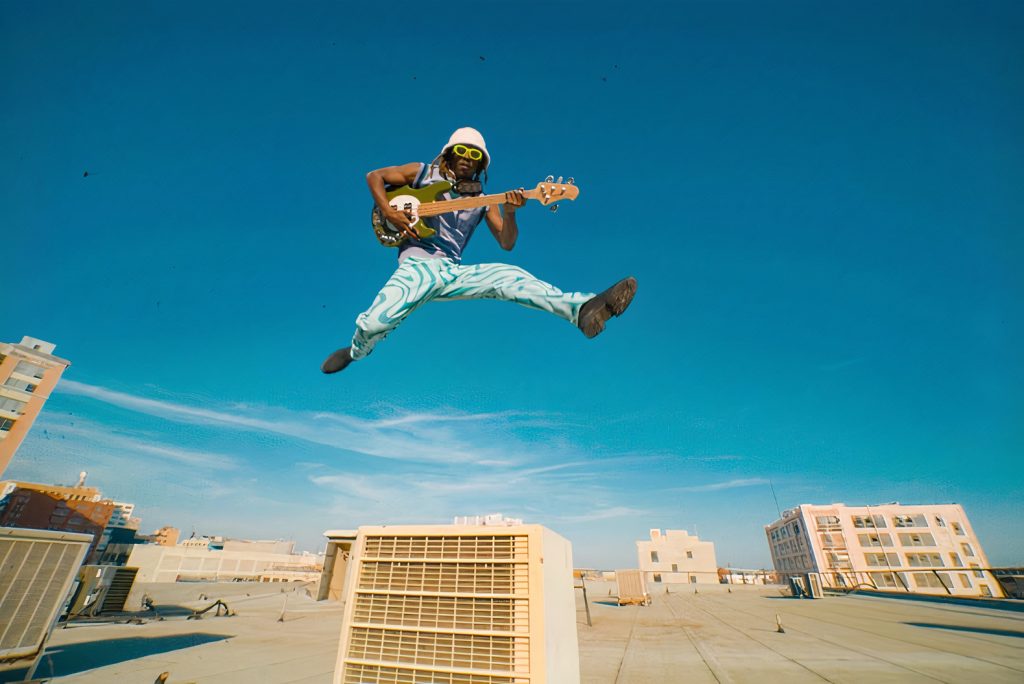
There are four main options: traditional search (Google, film-office directories and location agencies), Peerspace, Giggster and Tagvenue. Most productions use at least two. The right choice depends on whether your scene needs a home, a blank studio or a real working venue.
1. Traditional search: Google, location libraries and agencies
Traditional search involves finding properties through Google and Maps, browsing a public film-office database, or paying a location agency to pull files and scout for you.
- Free public directories. The Film London Directory is an extensive, free database of London’s filming locations, crew and facilities. Creative England’s Filming in England Directory is another resource and does not charge filmmakers to search its database, and takes no commission from property owners.
- Location agencies and libraries. Specialist agencies such as Amazing Space represent curated, film-ready properties across the UK; Manchester-based Film Locations lists 10,000+ locations across 13 cities. Agencies can also handle contracts, scouting and permits.
- Costs. London agency Shootfactory quotes a standard photo shoot (8–10 hours, crew of 7–15) at £500–£1,000 per day, and TV and film shoots from £1,200 per day and upwards. In Los Angeles, Real to Reel Locations has represented properties from $3,000 to $30,000 a day. Per the Los Angeles Business Journal, Giggster said it charges producers about 15% of a property’s rental fee, against an industry-standard rate of about 30% for many of Hollywood’s long-established agencies.
- Strengths: A deep, vetted inventory for scripted TV and features, plus hands-on help with permits and contracts.
- Drawbacks: The process is slow (scouting, file pulls, negotiation). It also features opaque pricing, and agency fees are out of reach for most content creators, brands and indie crews.
2. Tagvenue
Tagvenue is a venue-hire marketplace founded in London in 2015. It lists 22,000+ verified spaces across the UK, Ireland, Australia, Singapore, Canada and the US, with 1M+ monthly visitors and 40,000+ events booked each year.
- Inventory: 70+ venue types in 60+ cities — from photo and film studios with cycloramas and green screens to underground bars, warehouses, railway arches, mansions, boats, churches, libraries, museums, galleries and rooftops.
- Pricing visibility: Listings show starting prices, per-person rates or minimum spend before you enquire. London filming locations average £60/hr.
- Fees: Tagvenue is free for bookers — no booking or admin fees — with full price parity. Venues pay 10% on events and 15% on meeting/production bookings.
- Booking: Search with 100+ filters, enquire with as many venues as you like, then book; fixed-price studios can often be booked directly; the median response time is 4.5 hours.
- Strengths: unique, fully dressed commercial and heritage spaces; transparent pricing; verified venues; six markets in one search.
- Drawbacks: fewer suburban family homes than Peerspace or Giggster, and technical details such as power usually need confirming with the venue manager.
3. Peerspace
Peerspace is a US-founded venue marketplace (San Francisco, 2014) for the hourly hire of spaces for meetings, productions and events. It connects guests with 50,000+ spaces across the US, Canada, Australia, the UK and France.
- Inventory: Lofts, mansions, storefronts, studios, homes and galleries.
- Pricing: Peerspace says film shoot locations average $122/hr. City averages vary — $89/hr in Chicago, $145/hr for film production locations in Hollywood, LA. In London, filming locations average £66/hr in Hackney and £120/hr in Clerkenwell.
- Fees: The Peerspace Help Center states the host service fee is 20%. Guests pay a separate processing fee — a percentage of the subtotal (the higher the subtotal, the lower the fee). The total amount is only shown at checkout, and non-refundable if you cancel outside the 24-hour grace period.
- Minimum hire: Hosts set their own minimum (commonly 1–4 hours); overtime is charged in 30-minute increments; book by request or instantly.
- Strengths: A large US inventory, a polished app, and strong residential stock.
- Drawbacks: Additional processing fees increase the final booking cost, and the platform’s mix of production, meeting and event spaces may require more filtering.
4. Giggster
Giggster is a Los Angeles–founded marketplace specialising in locations film, photo and video production (it also lists event spaces).
- Inventory: It lists over 50,000 locations and has 1M+ users. The UK site advertises 2,050 London film venues starting from £16/hr.
- Pricing: Filming locations average $166/hr; production spaces average $162/hr, with an average 1-hour minimum (listings vary).
- Fees: Hosts pay a 19% commission plus additional fees; renters pay a processing fee that varies with the booking.
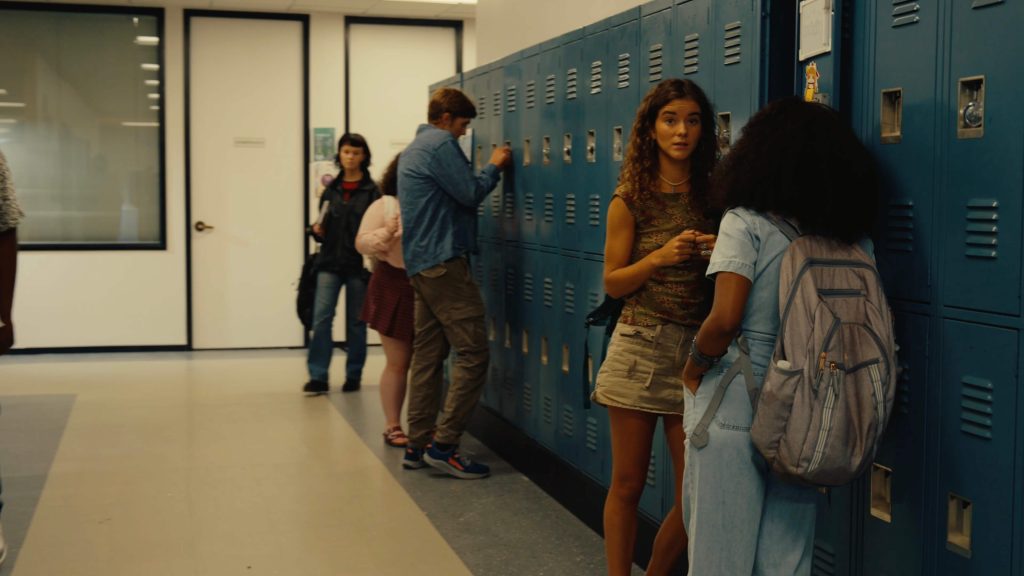
- Strengths: Production-native hosts, look-based filters (retro, gothic), lots of homes, mansions and specialist sets such as schools.
- Drawbacks: Its strongest presence is in the US. Processing fees increase the total booking cost. Some locations may also have additional charges for site representatives, deposits or video production.
Comparison table: Tagvenue vs. Peerspace vs Giggster vs. traditional search
| Attribute | Tagvenue | Traditional search | Peerspace | Giggster |
|---|---|---|---|---|
| Markets | UK, IE, AU, SG, CA, US | Local / national | US, CA, UK, AU, FR | US and UK |
| Space types | Studios, bars, restaurants, mansions, creative studios, arches, theatres, churches, boats, lofts, offices | Homes, estates, streets, council property | Homes, lofts, studios, galleries, event spaces | Homes, mansions, studios, specialist sets |
| Booking & payment | Enquire free, then book online or by custom quote | Negotiated contract; agency/owner invoice | Hourly, request or instant; paid via Peerspace | Hourly/daily, request or instant; paid via Giggster |
| Fee to booker | None (no booking or admin fees) | Agency fees (~30% industry standard, long-established Hollywood agencies); council admin fees | Variable guest processing fee | Variable renter processing fee |
| Host commission | 10% events / 15% production | Varies | 20% | 19% |
| Minimum hire | Host-set; commonly 2–4 hrs or a day rate | Usually a day rate | Host-set, commonly 1–4 hrs | ~1 hr average (host-set) |
| Typical price | £60/hr London filming average | £500–£1,000/day photo; £1,200+/day TV & film (Shootfactory) | $122/hr film-shoot average | $166/hr filming average |
| Best for | Real venues, heritage & unusual spaces, multi-market | Features, high-end TV, exteriors | US residential & lifestyle shoots | US production-ready homes & sets |
| Unique advantage | Free to book, price parity, manually verified | Scouts & permit help | App and scale | Production-native hosts |
The budget angle: what’s the most affordable entry price, city by city?
The cost of hiring a filming location depends on the city, property type, shoot duration and any additional charges. The advertised hourly rate is a useful starting point, but the total booking cost matters more.
Tagvenue charges no booking or admin fees, while Peerspace and Giggster add processing fees at checkout. Cleaning, equipment, insurance and overtime may also affect the final cost, depending on the venue.
Filming location prices: London vs Los Angeles
| City | Tagvenue (price + booker fee) | Peerspace (price + fee) | Giggster (price + fee) |
|---|---|---|---|
| London | Avg £60/hr, from ~£35/hr (Leyton) · no booker fee | £66–£120/hr area averages · + guest fee | From £16/hr advertised · + renter fee |
| Los Angeles | Avg US$100 per hour Price ranges are approximately 75–200 per hour and 1,750–2,500 per day for locations offering daily rates. ·no booker fee | $145/hr (Hollywood film production) · + guest fee | $166/hr (US filming average) · + renter fee |
Prices are indicative and reflect different geographic samples rather than equivalent listings. Check individual venue quotes and additional charges before comparing total costs.
For budget-conscious productions, compare the total cost of suitable locations rather than choosing the lowest advertised hourly rate. A ready-dressed restaurant, bar or heritage venue may also save on set construction and dressing, making it better value than an empty space with a lower hire price.
Why does Tagvenue surface spaces you won’t find elsewhere
Not every great filming location was designed for film production. Tagvenue brings together working restaurants, cultural landmarks, historic buildings and commercial spaces that offer distinctive, ready-made settings.
Instead of building an elaborate set, you can hire a location with much of the atmosphere, architecture and furnishings already in place. Here are some examples you can expect to find:
- A working medical set: the Medical GP / hospital room at Blackout Studio & Medical Room, Docklands, from £115/hr.
- A Victorian railway ticket hall: Kachette, Shoreditch, in the original ticket hall of Shoreditch Station (1865–1940); whole-venue hire from £6,600/day, with capacity for a filming crew.
- A heritage library: a warmly furnished, wood-panelled room at London Scottish House, Westminster, from £150/hr.
- A concert theatre: the Susie Sainsbury Theatre at the Royal Academy of Music, Marylebone, from £800/hr.
- A real restaurant set: La Petite Poissonnerie, Marylebone — a two-level, sea-themed filming location.
- A council chamber: the Council Chamber at Kensington Conference & Events Centre, often used for filming.
- A historic bank vault: the Bank Vault at VaultAtl, Downtown Atlanta, lets you shoot with a 1912 Mosler bank vault rather than build a replica. Think heist scenes, period storytelling or a music video with something more interesting than another white wall. Listed from $250/hr, with a two-hour minimum.
- A rooftop helipad: Skyline Helipad Oasis in DTLA, Downtown Los Angeles, offers a 60-by-60-foot helipad on the 25th floor, with panoramic city views. The skyline does much of the visual work here. From $189/hr, with an eight-hour minimum.
- A Western-style ranch: Red Barn Ranch, Sylmar, Los Angeles, brings together a red barn, saloon-style buildings, stables, cottages and mountain trails. Productions can capture several rural looks on the same property rather than move between locations. From $400/hr, with a six-hour minimum.
- A 1950s-style American diner: Vintage 50s American Diner #266, Long Beach, California, has teal booths, a black-and-white chequered floor, a counter and a working kitchen. Its exterior includes a classic “Coffee Shop” sign and parking for production vehicles. Ask the host for a filming quote, as the displayed price uses a minimum-spend model.
- A theatrical Brooklyn interior: The Love Shack, Bushwick, New York City, combines decorative wall panelling, a checkerboard floor and a crystal chandelier. A mezzanine provides higher camera positions, making the architecture useful as well as eye-catching. From $150/hr.
- A private-jet cabin without the aircraft: the Private Jet Realistic Luxury set at Prestige Property Productions, Houston, recreates a cabin inside a shipping container, complete with five reclining seats, 14 windows and adjustable lighting. It is a purpose-built set, not a working plane. From $70/hr, with a two-hour minimum.
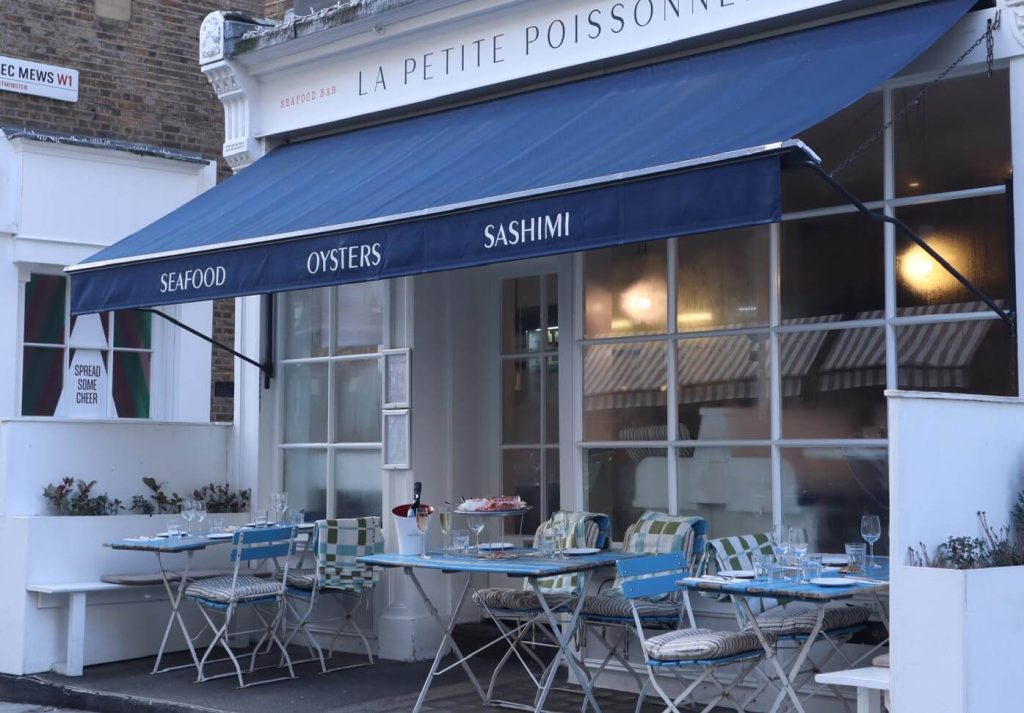
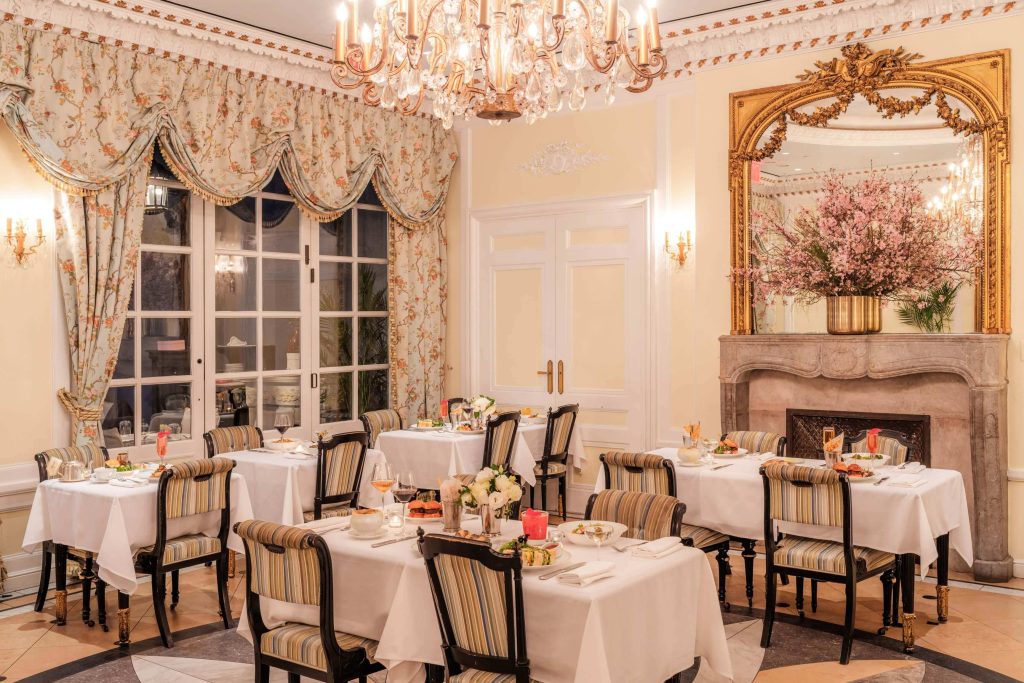
The practical benefit is that these locations can reduce the need for set construction and dressing while giving productions access to authentic interiors.. Hire an empty warehouse and your art department has to build the bar, booths and lighting; hire a real railway-arch bar or restaurant and those are already in frame. Keep in mind that a working venue may have fixed opening hours, noise limits and in-house rules to work around.
Unique filming space types you can book on Tagvenue
Because Tagvenue selection extends well beyond traditional filming studios, its real filming-capable inventory is far larger than other platforms. These are the types worth searching when you want a look you can’t build on a budget.
| Space type | Why it works on camera |
|---|---|
| Railway arches & a Victorian ticket hall | Industrial brick, period detail, scale |
| Restaurants & bars | Fully dressed hospitality sets, zero build |
| Theatres & concert halls | Stages, tiered seating, dramatic lighting rigs |
| Heritage libraries & wood-panelled rooms | Period “establishment” interiors |
| Warehouses & lofts | Blank, flexible, high-ceilinged shells |
| Council chambers & civic rooms | Formal, authoritative “institution” look |
| Churches, chapels & halls | Vaulted ceilings, stained glass, acoustics |
| Boats & waterside spaces | On-water backdrops hard to fake |
| Rooftops | Skyline exteriors with controlled access |
| Studios (cyc, green screen) & clinical sets | Controlled, ready-to-shoot production space |
How do you choose the right platform for your shoot?
Match the platform to the scene: residential scenes favour Peerspace or Giggster; real-world commercial or heritage scenes favour Tagvenue.
- Need a family home, apartment or poolside house in the US? Start with Giggster or Peerspace.
- Need a pub, restaurant, boardroom, theatre, church or railway arch? Start with Tagvenue.
- Need a cyclorama or green-screen studio on a budget? All three marketplaces list them. When choosing yours, compare the final checkout total, not the headline hourly rate.
- Shooting across the UK, Australia and North America? Tagvenue covers six markets with one account and one fee model.
- Shooting streets, parks or council buildings? Go to the local film office for permits.
What should you check before you book any filming space?
Venues built for events need production-specific questions answered in writing before you commit.
- Power: available circuits and amperage before bringing in lighting rigs.
- Sound: HVAC that can’t be switched off, trains, traffic, staff moving through — and whether you have exclusive use.
- Access: loading bays, lift sizes, stairs. Load-in eats paid hours.
- Time: book load-in, setup, shoot, wrap and cleaning; confirm overtime rates up front.
- Crew basecamp: toilets, a holding area for talent and wardrobe, parking.
- Insurance & permits: see the FAQ.
FAQ
What’s the best way to find or rent cool houses and spaces for a shoot?
Use online marketplaces first, then go direct. Check Peerspace, Scoutplex, Giggster, Vrbo and Airbnb. For non-residential spaces, add Tagvenue; for scripted productions, add your regional film office’s free directory.
How much does it cost to rent a filming location?
It costs roughly £35–£130/hr for London filming spaces on Tagvenue (average £60/hr), $122/hr on average for Peerspace film shoots, and $166/hr on average on Giggster. Private homes for professional productions are usually priced by the day. There’s absolutely no average and it depends on neighbourhood, condition, duration and day of the week.
How can I find cheap or free shoot locations?
Shoot off-peak, use your network, and start in lower-cost areas. On Tagvenue, Leyton studios start at £35/hr against £42–£80 in Angel and Clerkenwell, and day rates usually beat hourly once you pass five or six hours. Some UK councils don’t charge for basic street filming with tiny crews. Brent Council, for example, doesn’t charge for a crew of five or fewer with a hand-held camera or tripod, though fees apply for larger crews or temporary structures.
Do I need insurance to film in a rented space?
Usually, yes. Most venues ask for a certificate of insurance (COI) showing public liability cover. New York City’s Mayor’s Office of Media & Entertainment notes a standard location filming policy covers liability up to $1 million; some UK public bodies set higher thresholds (Dover District Council’s location release requires not less than £5,000,000).
Do I need a permit or a location release?
On private property, you need the owner’s written permission, usually a location release or hire agreement. You need a public permit only if you use the street, pavement or public land (for parking or exterior shots). Releases typically set out dates, hours, the fee, footage rights and insurance cover.
Peerspace vs Giggster: which is better?
Giggster is more production-native; Peerspace is broader across meetings, events and shoots. Both have ~50,000 listings and both charge a renter processing fee. If your scene needs a real commercial venue, or you want to avoid booking fees, compare Tagvenue alongside them.
Is Peerspace worth it, and are there hidden fees?
Worth it for US residential and creative spaces, but budget for the guest processing fee on top of the hourly rate. It’s shown at checkout, scales with the subtotal, includes cleaning fees, and is non-refundable if you cancel after the 24-hour grace period.
Can I rent an Airbnb or private house for a shoot?
Yes, but only with the host’s explicit written permission for commercial filming. Shoot-focused platforms are safer because hosts list their homes specifically for productions. Partial use is priced separately — renting a driveway for equipment or a backyard for catering can run a few hundred to a thousand-plus dollars, so negotiate on scope and duration.
Related articles
See all