Event Booking Trends Report: What’s Changing for Planners and Venue Finders in 2026



The events industry in 2026 is not slowing down but it is changing direction. Whether you are a corporate team planning a quarterly offsite, a private host organizing a milestone birthday or wedding reception, or a professional event planner managing multiple client briefs, the way people think about live gatherings is shifting. Budgets are under sharper scrutiny. Attendees and guests expect real value, not just a good-looking room. And increasingly, the events that succeed are the ones designed around genuine human connection rather than scale.
The era of booking a large venue, filling it with people, and calling it a success is fading fast. What matters now is whether the experience gives people something worth remembering and coming back for.
At Tagvenue, we work with thousands of corporate clients and private hosts across six countries, and we see these event booking patterns play out daily in the types of venues being booked, the questions people are asking, and the way both professional budgets and personal celebrations are being planned. This article draws on the latest industry research from Freeman, Bizzabo, PCMA, and Amex GBT, combined with first-hand insights from our leadership team, to map out the trends that matter most in 2026.
| Key Takeaways Events must deliver real impact for businesses and for people. The “wow” factor alone is no longer enough. For corporate organisers, success is measured in leads, relationships, and measurable outcomes. For private hosts, what matters is guests feeling the event was worth their time, that they connected, celebrated, and were genuinely looked after. Cost pressure is driving smarter planning across the board. Corporate budgets are scrutinised more closely, and private hosts are more intentional about where they spend. Nearly half of industry professionals say they feel both excited and concerned about the year ahead (PCMA/Convene, 2025). Micro events are on the rise. 63% of planners report growing demand for intimate gatherings of 20–100 attendees. This trend applies well beyond the corporate world; private dinners, small wedding receptions, curated birthday celebrations, and close-knit community events are all growing as hosts prioritize depth over headcount. Personalisation must be practical, not decorative. The winning approach saves attendees and guests time through better navigation at large events, or through thoughtful touches at private gatherings that show the host knows their audience. AI is an operational tool, not a headline. 95% of event teams anticipate increased AI usage, but the focus is on efficiency, such as faster venue search, smarter recommendations, and better post-event follow-up. Smaller, more frequent formats are gaining ground. Corporate roadshows, local meetups, and intimate private events all reflect the same shift: people want gatherings where they can actually talk to each other, hear each other, and leave with something meaningful. |
The Shift From Spectacle to Substance
One of the clearest trends in 2026 is the move away from events designed primarily to impress and towards events designed to perform. This does not mean events should be bland or uninspiring, far from it. It means the visual impact, the energy, and the production quality must serve a clearly defined goal rather than existing as goals in themselves.
Freeman’s 2025 Trends Report, based on feedback from more than 2,600 attendees and organisers, highlights a telling gap: organisers tend to invest heavily in atmosphere and entertainment, while attendees arrive looking for concrete value – knowledge, connections, product discovery, and solutions to real problems.
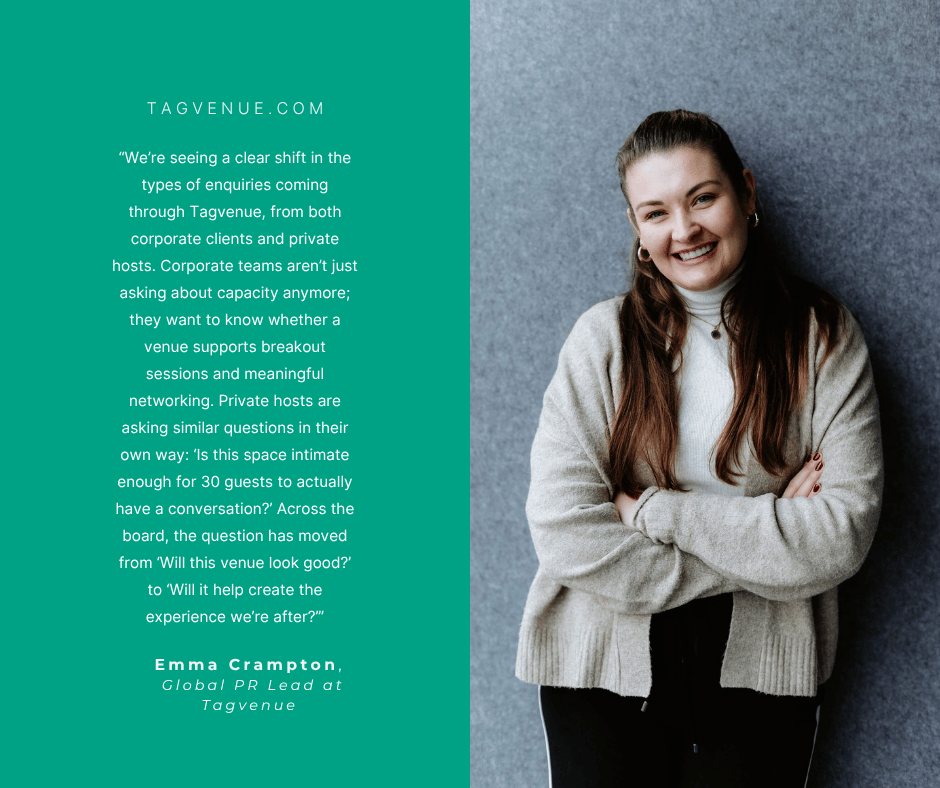
Emma Crampton, Global PR Lead at Tagvenue, sees this reflected in booking patterns across the platform, from corporate offsites to private celebrations:
For organisers and hosts alike, this is actually encouraging news. A better event does not have to mean a more expensive one. When the flow of the event – or the agenda and venue layout – is designed to guide people naturally towards a goal, even simple setups can outperform costly decor that looks impressive but adds little value.
Micro Events and the Rise of Regional Formats
Large-scale conferences are not disappearing, but smaller, more focused event formats are playing an increasingly important role in 2026. According to Hilton’s industry outlook, 63% of planners are seeing rising demand for intimate events of 20–100 attendees that prioritize deeper engagement over sheer numbers.
The logic is straightforward and it applies to both professional and personal events. Smaller gatherings allow people to have real conversations rather than being lost in a crowd. For corporate teams, this means a higher proportion of meaningful interactions per event, which translates directly into measurable outcomes. For private hosts, it means guests who actually connect with each other or a dinner party where everyone talks rather than a reception where nobody knows who to approach.
This shift is clear in action: a private dining room for 20 where every guest is part of the conversation; a workshop space for 50 where every attendee walks away with something useful; a curated birthday celebration where the host can genuinely spend time with every person in the room.
On the corporate side, we are also seeing a shift towards regional roadshows and what the industry calls “hub-and-spoke” models. Instead of flying hundreds of people to a single city-wide conference, organisations are running smaller events across multiple locations – North America, Europe, APAC – using local venues such as meeting rooms, theatres, museums, and specialised workshop spaces. These “mini-wide” meetings, typically for 800–1,500 attendees, use two or three hotels alongside alternative spaces for breakout sessions.
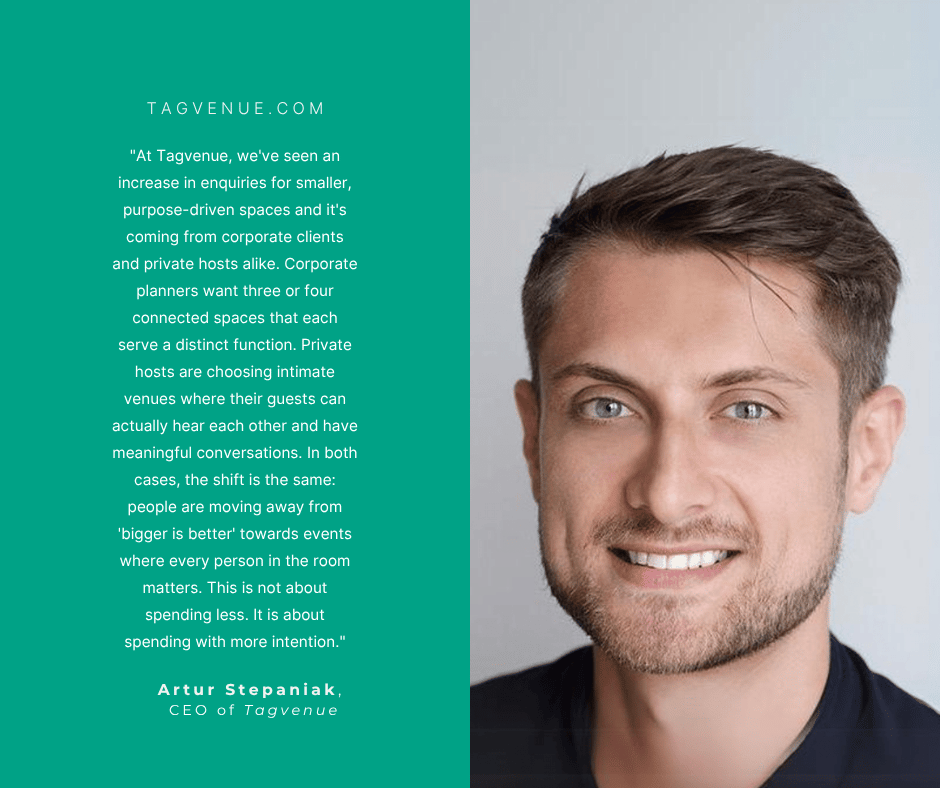
Artur Stepaniak, CEO of Tagvenue, has watched this trend accelerate over the past 18 months across both sides of the platform:
Many organizations now combine a flagship annual conference with a series of smaller events throughout the year – roadshows, local meetups, and field events that sustain engagement and genuinely support business goals. For private hosts, a similar pattern is emerging: instead of one enormous celebration, some are spreading celebrations across multiple smaller gatherings – a rehearsal dinner, a main event, a post-event brunch, each in a different venue suited to the occasion.
Memorable Moments Over Maximum Attractions
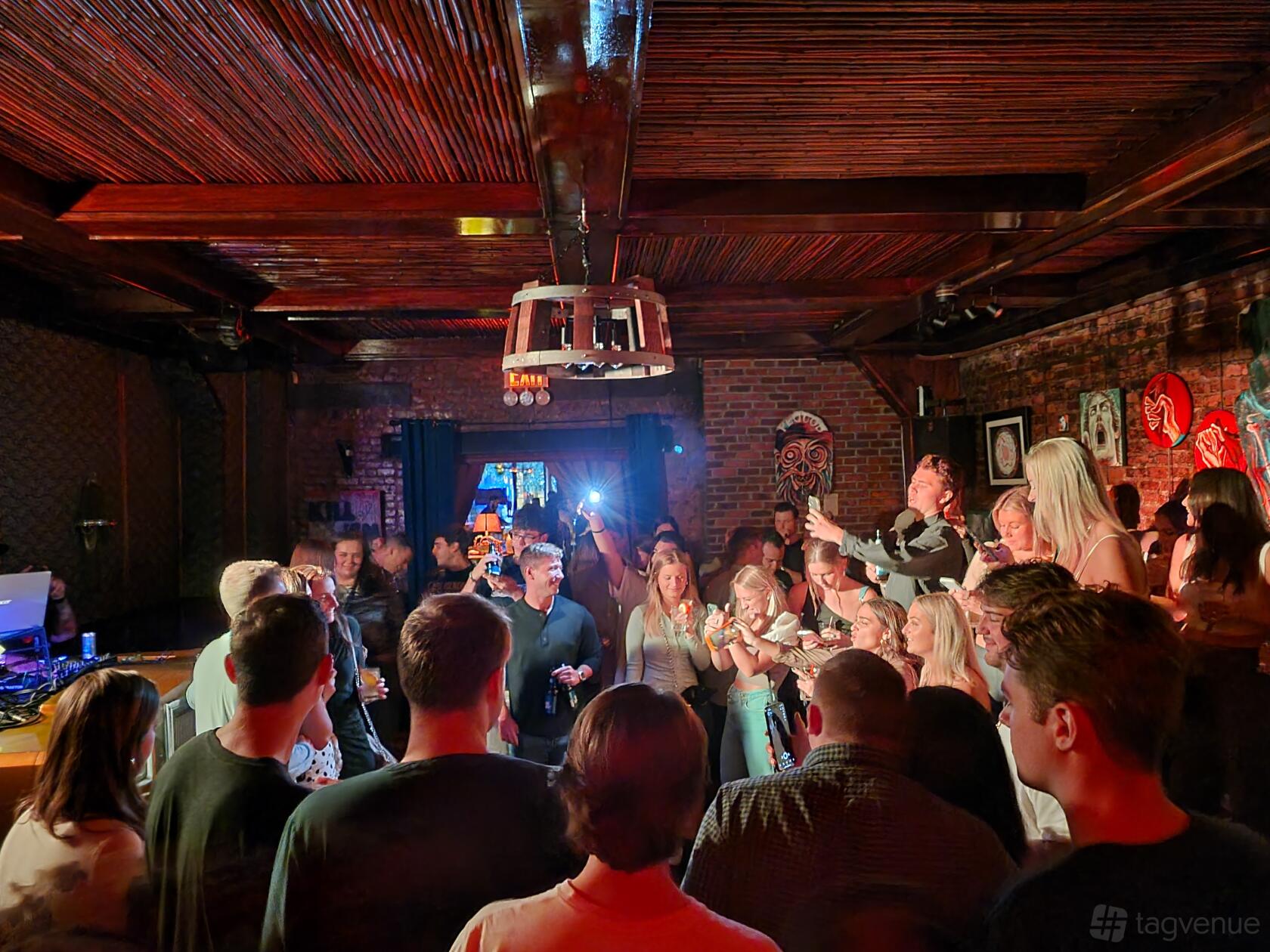
That same shift towards smaller, more intentional events is also changing how organizers think about impact.
Freeman’s research reveals a striking statistic: attendees who experience one clear, personally meaningful moment during an event are up to 85% more likely to attend the next edition. Yet only 40% of attendees say they actually experienced such a moment while 78% of organisers believe they delivered one.
That gap matters. In a year where budgets are under pressure and repeat attendance is one of the safest returns on investment, designing a few genuinely impactful moments is far more valuable than filling the agenda with a long list of events nobody remembers.
Meaningful moments look different for every audience. At a corporate event, it might be hands-on product testing or a useful conversation. At a private dinner, it might be a heartfelt toast everyone can see and hear clearly. At a wedding venue, it might be the first dance in a room that feels exactly right. The point is simple: people should leave the feeling the event was worth their time.
Emma Crampton puts it in practical terms:
Whether it’s a corporate conference or a 40th birthday dinner, the events with the strongest feedback are the ones designed around two or three key moments. A well-chosen venue helps enormously here. The right space naturally creates those moments. A private dining room encourages conversation in a way a cavernous ballroom never will. A rooftop venue at sunset gives your guests a memory they’ll talk about for years. The venue is now an essential part of the experience.
Personalisation That Saves Time, Not Just Looks Good
Once events are judged by their value rather than scale, personalization has to do more than simply look thoughtful.
Personalisation in event marketing has matured significantly. In 2026, the distinction between effective and superficial personalisation is sharper than ever. Customised badges and tailored catering are handled well by most organisers, but Freeman’s research shows that planners struggle far more in the areas that attendees actually care about: navigation, session selection, and meeting the right people.
Bizzabo’s data confirms that attendees’ technology expectations are rising. Many now expect modern tools even at in-person events, not for novelty, but for practical guidance. The winning approach boils down to simple, highly specific prompts: which sessions are right for me, where should I be right now, who is worth talking to.
When attendees receive that kind of support, their comfort and satisfaction increase, and so does their willingness to take action: booking meetings, joining demos, or leaving contact details. Personalization stops being a decorative add-on and starts directly supporting event goals and ROI.
AI: Less Hype, More Operational Impact

That same practical mindset is shaping how planners use technology.
Artificial intelligence in event planning has moved past the hype cycle. In 2026, AI is less about generating headlines and more about reducing workload. Amex GBT’s forecasts show a pragmatic approach among organizers: faster creation of registration pages, smoother pre- and post-event communication, post-event data analysis, and support in reporting and idea generation.
AI is meant to help where tasks were previously manual or extremely time-consuming: site selection, attendee matchmaking, logistics coordination, and real-time schedule optimization.
Emma Crampton sees this playing out in how planners approach the venue search itself:
The planners we work with are increasingly using AI tools to shortlist venues before they even come to Tagvenue. But when it comes to the final decision – the actual booking – they want to speak to a real person at the venue and see real photos of the space. AI is brilliant at narrowing options, but the human element is still what closes the deal. That’s exactly why Tagvenue’s enquiry-based model works so well in this landscape.
Related: Tagvenue Launches Tagvenue PRO, Bringing AI to Help Venues Win More Bookings
Sponsorship Is Becoming Part of the Experience
As events become more purposeful, sponsorship is also moving closer to the attendee experience.
In 2026, sponsors increasingly want to be part of the attendee experience, not just visible in the background, but actively integrated into the moments that people remember and engage with.
The Wall Street Journal reports that brands such as 7-Eleven are shifting budgets from crowded digital channels to live events, which offer real presence, emotional engagement, and opportunities for on-site data collection. The greatest value now lies in the places and moments attendees actually pass through, stop at, and use, such as event entrances, interactive zones, and large spatial elements that naturally capture attention.
Expo Zones With a Clear Purpose
Exhibition spaces are moving away from the traditional row-of-booths model. In 2026, the best-performing expo zones are those designed so attendees immediately know where to go and why. Clear entrances, intuitive navigation, and simple contact formats mean people do not just walk past, they actively engage.
Short demos, quick consultations, and specific activations that let attendees see or test something work far better than long presentations. Thematic zoning, where the expo is divided into testing areas, networking zones, and expert consultation corners, makes conversations more natural and valuable for both attendees and exhibitors.
Sustainability as a Booking Requirement
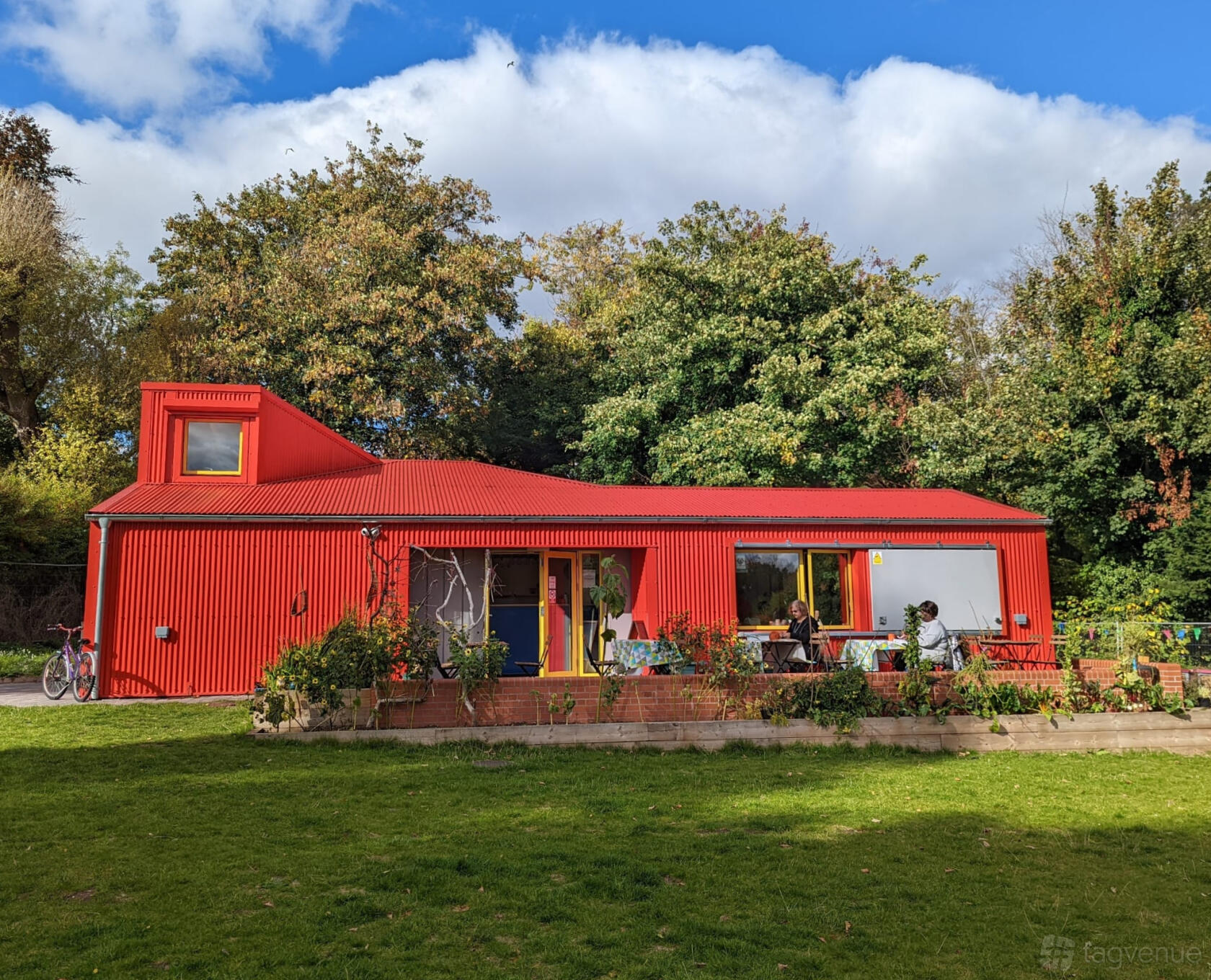
Sustainability is no longer a differentiator, but a baseline expectation.
Planners are increasingly prioritising venues that provide sustainable catering, energy efficiency, and low-carbon travel options. Tightening regulations in Europe, California, Canada, and other key markets require robust measurement and verifiable environmental impact.
For venue finders, this means sustainability credentials and transparent reporting are becoming essential factors in the booking decision, sitting alongside price, location, and capacity.
Related: How to Book a Venue on Tagvenue: A Step-by-Step Guide for Every Event
What This Means for Venue Booking in 2026
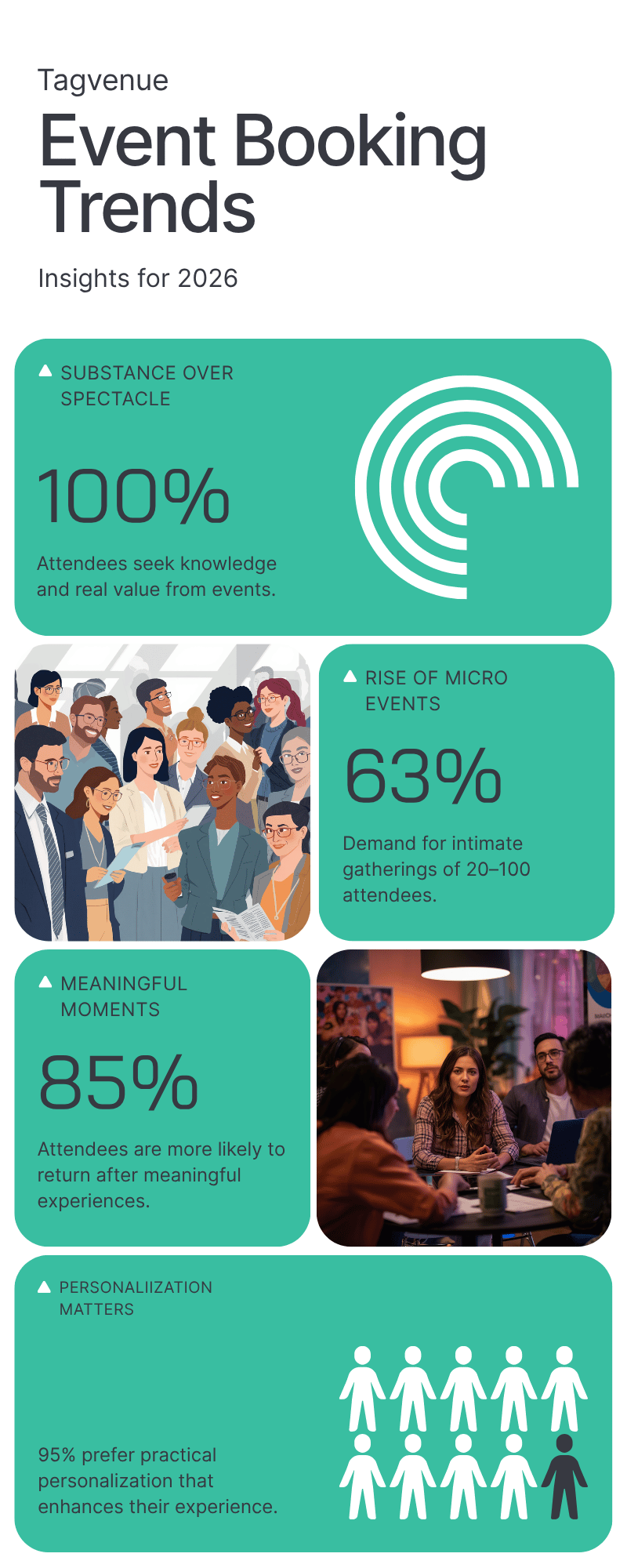
These trends have direct implications for how and where events are booked, whether you are a corporate team, a private host, or a professional event planner. The shift towards micro events means more enquiries for smaller, flexible spaces such as private dining rooms, workshop venues, gallery hire, and party venues, rather than large convention halls or oversized function rooms. Regional roadshows drive corporate demand across multiple cities simultaneously, while private hosts are increasingly searching for unique local spaces.
When events are smaller, more purposeful, and more budget-conscious, details like layout, pricing, location, and flexibility matter earlier in the decision-making process. A venue marketplace like Tagvenue, with over 20,000 verified venues across six countries, smart search filters, and transparent pricing, helps planners compare these details before they enquire. The ability to compare multiple venues side by side, send batch enquiries, and shortlist spaces based on specific requirements is exactly what professional planners and first-time hosts need when the goal is finding a space that genuinely fits their event, not just one that has availability.
The events industry in 2026 is not in retreat. It is evolving, becoming more intentional, more measurable, and more focused on genuine human connection. Whether you are organizing a 2,000-person conference or a dinner for 20, the direction is the same: fewer random choices, more purpose, and events where every person in the room feels like they belong. That is a trend worth getting behind.
Related:
10 Reasons Why Tagvenue Is the Best Choice for Your Next Event
How to Book a Venue on Tagvenue: A Step-by-Step Guide for Every Event
What Is Tagvenue and Why 1M+ Users Book Through It
Top Ideas for Unusual Event Venues in the USA
Top Ideas for Unique Venues and Events in the UK
Last updated: April 2026
Planning a corporate event, a private celebration, or something in between?
Start your search on Tagvenue – it’s free, and you’ll have access to 20,000+ verified spaces across six countries.
Related articles
See all