How to Price Your Venue: A Practical Tagvenue Guide for Small Businesses


Pricing your venue can feel like walking a tightrope in dress shoes. Go too high and enquiries dry up. Go too low and you’re fully booked, yet still wondering where the profit went.
That anxiety is normal. Venue pricing isn’t just a number, it’s your costs, your value, and your demand rolled into one decision. When any of those are ignored, the result is predictable: unprofitable events, awkward negotiations, and a reputation that’s hard to fix later.
Before we get started, here are the common pricing models used across different venue types:
- Hire (Rental) Fee — a fixed rate per hour or day. Most often used for meeting rooms.
- Minimum Spend: a guaranteed amount, usually on food and beverage. Commonly used for bars and restaurants.
- Dry Hire: Space-only pricing with no catering or staff included. Popular for creative events.
- Daily Delegate Rate (DDR): Per-person pricing. Standard for corporate meetings and training.
- Package Pricing: Tiered, all-inclusive offers, typically used for weddings and parties.
- Dynamic Pricing: rates that adjust based on demand.
Our guide is designed to help you learn how to:
- price your venue for profit first
- choose the right pricing model for your space
- use seasonal or dynamic pricing without confusing clients
- stay transparent so planners trust you and book faster
These strategies are built for small businesses that want consistent bookings and healthy margins.
Discover your venue’s potential
Talk to us to learn how you can market your space and increase bookings in just a few steps.
Why venues get pricing wrong and what it costs them
1. They price against competitors, not against value
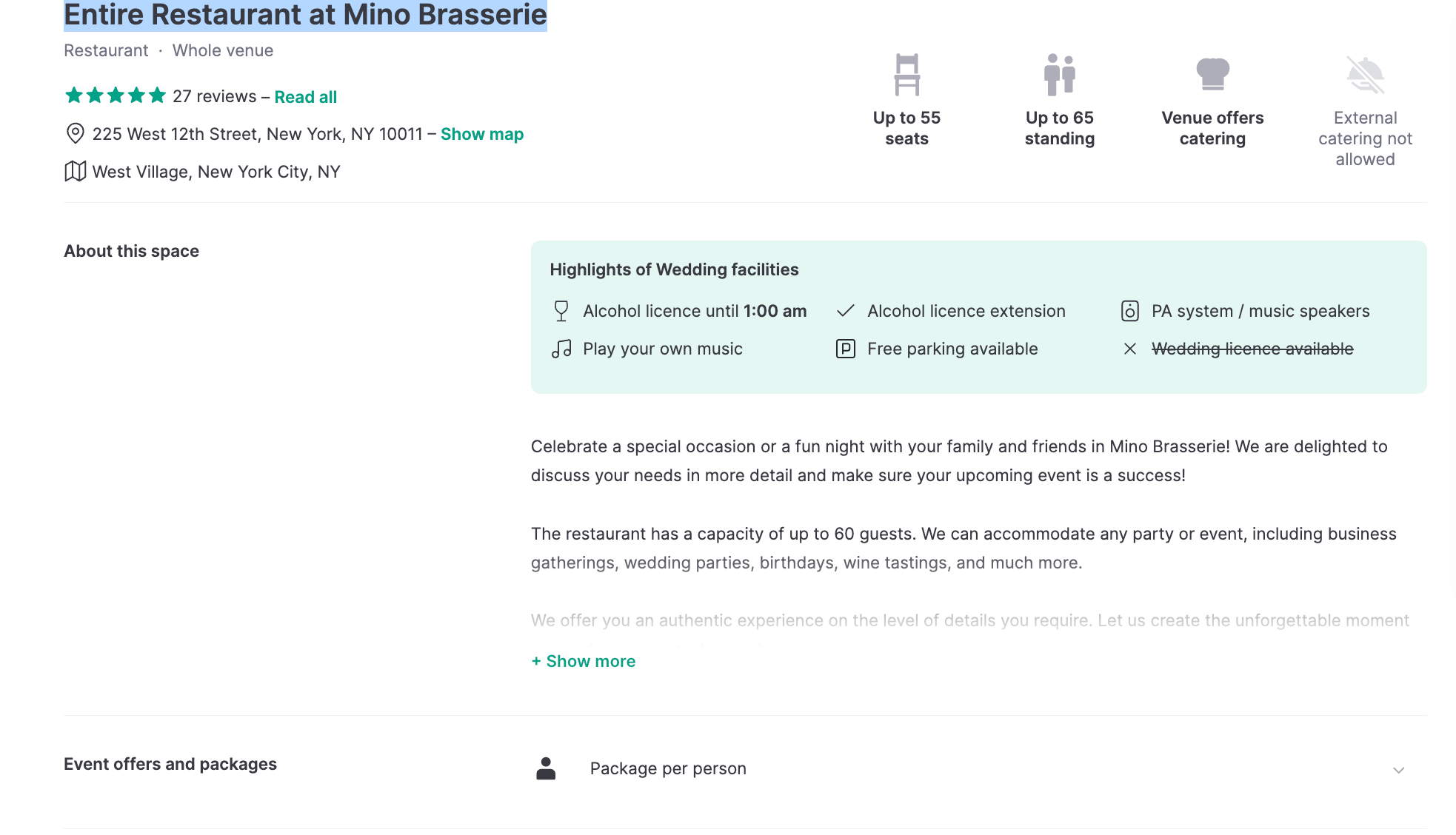
Looking at similar venues is useful, but copying their pricing blindly is not.
Venues often underprice when they overlook what actually makes them easier or better to book, such as:
- walk-to-station convenience or free parking
- exclusive-use layouts aka no shared spaces
- built-in AV, furniture, or on-site staff
- late licences or ceremony permissions
- in-house coordination that saves planners hours
Planners will pay more for venues that reduce friction. If your venue makes their job easier, your pricing should reflect that.
2. They use flat pricing in a non-flat market
A Saturday in peak season is not the same product as a Tuesday in January.
Flat pricing often leads to:
- undercharging on high-demand dates
- overpricing on quieter days
Hospitality revenue management research consistently shows that demand-based pricing outperforms static models by improving yield across the calendar.
3. They underestimate true event costs
Many venues “feel busy” but aren’t profitable because costs aren’t fully mapped.
You need to separate:
- Fixed costs: rent, insurance, licences, baseline utilities
- Variable costs: staffing, cleaning, security, linen, overtime, wear-and-tear
Cost miscalculation is one of the most common reasons small venues struggle to scale sustainably.
4. They hide prices and lose client trust
Modern event planners expect indicative pricing upfront. While bespoke quotes are normal, hidden costs aren’t.
Consumer behaviour research shows that unexpected fees are the number-one reason people abandon purchases online. The same psychology applies to venue booking. Surprises equal risk.
In the US, pricing transparency is also receiving increased regulatory attention. The FTC is cracking down on “drip pricing” and hidden fees in travel and ticketing.
Clear pricing protects both your venue reputation and your conversion rate.
5. They discount reactively instead of strategically
Last-minute discounts can fill gaps, but when they’re unplanned, they train clients to wait.
Revenue management best practice recommends:
- planned off-peak incentives
- value-adds instead of price cuts
- clear rules for when discounts apply
This approach preserves perceived value while still driving demand.
The foundation: price for profit first
Before choosing a pricing model, establish your baseline:
Minimum viable price = event delivery costs + desired profit margin
Most of our small venues target margins of 25–40%, depending on staffing intensity and event complexity.
Crucially, costs should be calculated by event type. A corporate meeting and a birthday party rarely cost the same to deliver.
Pricing models that actually work
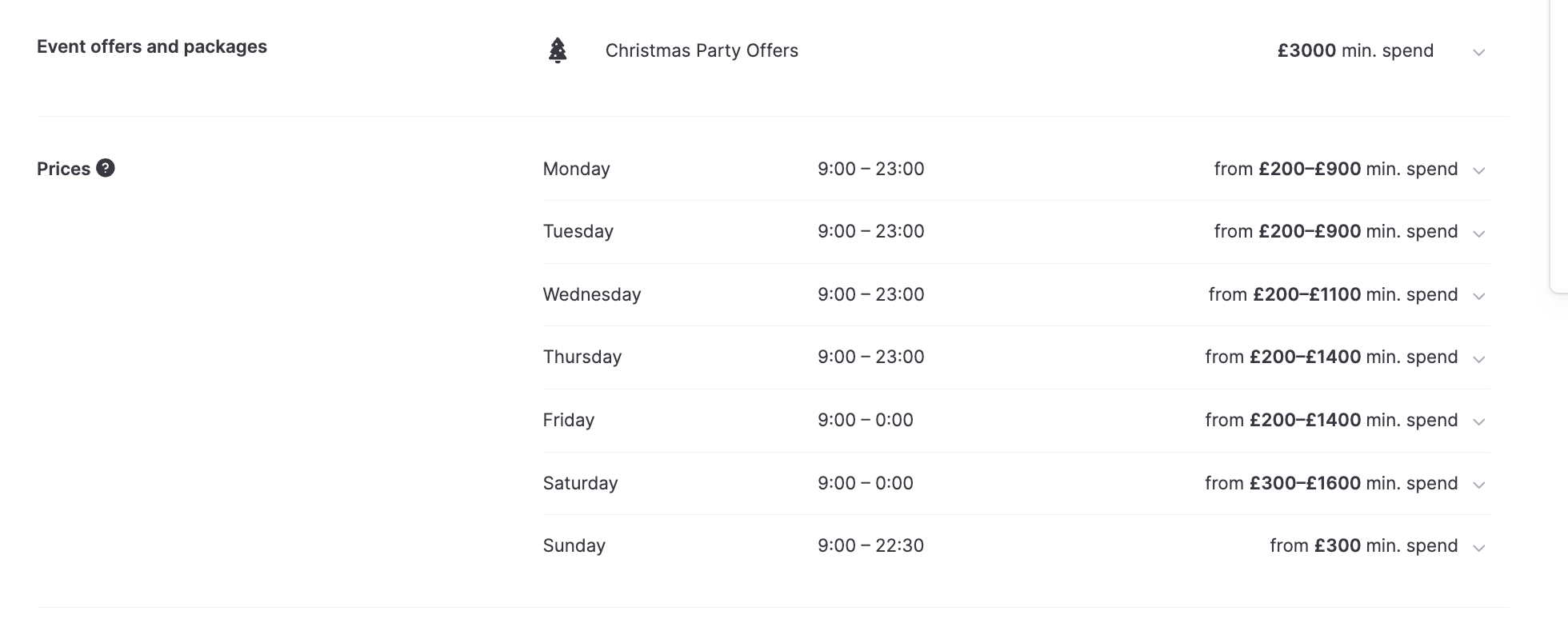
Step 1: Choose your primary pricing model
Pick the model that reflects how your venue earns revenue:
- Hire fee (hour or day): selling time and space
- Minimum spend: selling guaranteed revenue (often food and beverage)
- Dry hire: selling space only
- Day Delegate Rate (DDR): per-person corporate bundles
- Package pricing: bundled experiences for weddings or parties
You can offer more than one, but choose a single default to keep quoting simple.
Step 2: Build your baseline using costs and margin
Your baseline should always:
- cover all costs
- meet your margin target
- feel defensible when explained
If it doesn’t, the issue isn’t demand, it’s structure.
Step 3: Add revenue-positive extras
Limit add-ons to essentials planners expect:
- extra hours
- staffing/security
- AV or technician
- cleaning or late finishes
This prevents undercharging without overwhelming clients.
Step 4: Create two to three packages for common events
Packages reduce decision fatigue and protect margins. Research shows that tiered options consistently increase conversion when they’re clearly differentiated.
Step 5: Set guardrails
Examples include:
- minimum booking length
- peak-date minimum spend
- setup/teardown rules
- cancellation and deposit terms
Guardrails prevent low-value, high-effort bookings.
Event Types and Strategies by Venue Category
| Venue Type | Best-Suited Events | Effective Strategies | Why It Works |
| Meeting Rooms | Corporate meetings, trainings | Hourly rates, DDR bundles, peak/off-peak tiers | Flexibility for short events |
| Wedding Venues | Ceremonies, receptions | Tiered packages, dynamic seasonal pricing, value-adds | Couples seek all-in-one value |
| Bars | Parties, birthdays | Min spend, themed nights, happy hour bundles | Drives food & beverage revenue |
Venues can adjust their pricing according to the types of events and seasonality to attract customers year-round.
Dynamic pricing: seasonal, not chaotic
Dynamic pricing simply means adjusting rates based on real demand signals, a standard practice in hospitality revenue management.
Static pricing misses opportunities. Dynamic pricing, also called demand-based pricing, adjusts rates in response to real market conditions, charging more when demand is high and offering incentives when it’s low.
How it works for venues:
- High-demand periods (peak wedding season Saturdays, holiday parties) → Increase base hire fee or minimum spend by 15–30%.
- Low-demand periods (weekdays, winter) → Lower rates or add value (free hour, AV upgrade, F&B credit) without reducing perceived worth.
- Common triggers: Seasonality, day of week, remaining availability, local events, booking lead time.
Benefits:
- Increased peak-period revenue. Many venues see 10–20%+ uplift during peak seasons.
- Fills quiet dates without permanent discounts.
- Spreads fixed costs across more events.
Dynamic Pricing examples by venue type
| Venue Type | Peak (Summer Saturdays / Holidays) | Off-Peak (Winter Weekdays) | Adjustment Strategy |
| Meeting Rooms | UK: £80–£200/hour or £500–£1,200/day US: $110–$270/hour or $680–$1,630/day | UK: £40–£100/hour or £300–£700/day US: $55–$135/hour or $410–$950/day | Offer DDR (Daily Delegate Rate) discounts |
| Wedding Venues | UK: £5,000–£15,000 hire or £100–£200/pp US: $2,700–$10,900 min spend | UK: £3,000–£10,000 hire or £70–£150/pp US: $4,100–$13,600 hire or $95–$205/pp | Value-add incentives |
| Bars/Private Hire | UK: £2,000–£8,000 min spend US: $2,700–$10,900 min spend | UK: £1,000–£4,000 min spend US: $4,100–$13,600 hire or $95–$205/pp | Themed night packages |
Pricing examples are indicative and shown for both UK and US markets to illustrate common ranges and strategies.
How to implement dynamic pricing
Step 1: Define three seasons
- Peak
- Standard
- Off-peak
Keep it simple.
Step 2: Identify demand triggers
Common triggers include:
- day of week
- seasonality
- local events
- booking lead time
- remaining availability
Step 3: Decide how to adjust
Two proven approaches:
- Price-based: higher peak rates
- Value-based: added perks instead of discounts
Value-adds often protect brand perception more effectively.
Step 4: Communicate clearly
Use “seasonal rates” language. Transparency builds trust.
Step 5: Review quarterly
Data-driven reviews are standard in hospitality and outperform annual-only pricing reviews.
Conclusion: price with confidence, not fear
When costs, value, and demand are aligned, pricing becomes a growth tool, not a source of stress.
Venues that adopt clear pricing models and seasonal strategies earn more, attract better-matched clients, reduce negotiation friction, and build trust faster.
At Tagvenue, we help venue owners, especially small businesses, increase visibility with minimal effort. Listing is free, with no upfront fees. We promote your venue to thousands of planners, manage enquiries, and charge commission only on confirmed bookings. You focus on events — we handle the marketing.
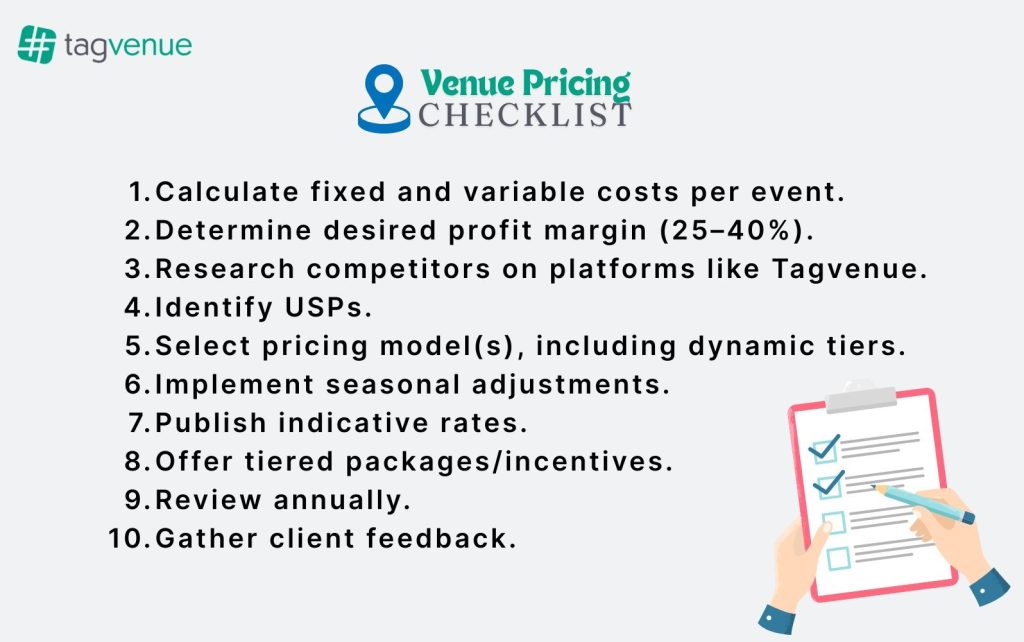
Your Venue Pricing Checklist
Related:
- London Pub & Bar Private Hire Pricing: Smart Strategies for Setting Rates that Attract Bookings
- 11 Venue Management Mistakes That Cost You Time, Money, and Clients
- How to Increase Event Space Visibility Through a Venue Marketplace – The Tagvenue Way
- Marketing Ideas for Your Event Space: Practical Strategies to Attract More Bookings
- The NYC Wedding Venue Marketing Guide: Strategies to Increase Bookings in 2026
- The Winning Guide to Venue Pricing: What Every NYC Venue Owner Needs to Know
Ready to put your pricing to work?
List your venue on Tagvenue and reach planners across the UK, US, and beyond:
Related articles
See all