8 Top Marketing Ideas for Your Meeting Room in 2026


We’ve listed thousands of meeting rooms on Tagvenue, and one pattern appears again and again: some of the highest-earning spaces on the platform aren’t wedding venues or party spaces, they’re meeting rooms.
Across cities and countries, meeting rooms consistently outperform expectations. They fill otherwise quiet weekdays, attract repeat corporate clients, and generate steady income with far less operational complexity than social events.
That’s not by chance.
Meeting rooms perform well because they’re easy to discover, easy to understand and easy to book. Listed on Tagvenue, they benefit from clear pricing, transparent amenities, and direct access to decision-makers, from startups to large corporate teams.
If your meeting room sits empty Monday to Friday, it’s rarely a demand issue. More often, it’s a visibility and positioning problem, and that’s exactly what the right marketplace helps solve.
- Why Meeting Rooms Are a Strong Revenue Opportunity
- 1. Market the Use Case, Not Just the Room
- 2. Show What Corporate Clients Actually Care About
- 3. Use Visuals to Reduce Uncertainty
- 4. Highlight What Makes Your Meeting Room Different
- 5. Use Online Venue Marketplaces to Increase Visibility Where It Matters
- 6. Optimise Your Listing for Corporate Bookers
- 7. Think Beyond One-Off Bookings
- 8. Review, Refine and Adjust
- Final Thought: Treat Your Meeting Room Like a Business Asset
Why Meeting Rooms Are a Strong Revenue Opportunity
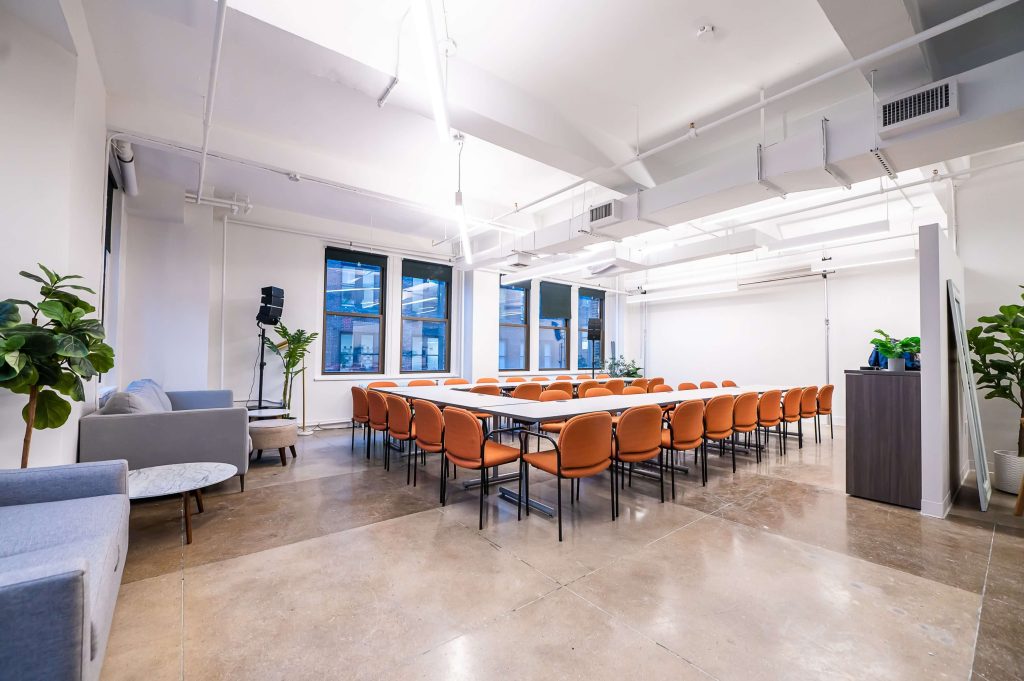
You might assume the demand for meeting rooms is declining, but this is far from being the case.
As remote and hybrid work become standard, teams are meeting in person more intentionally. Microsoft’s Work Trend Index and McKinsey’s workplace studies both highlight the scale of knowledge workers operating in hybrid or fully remote setups and the resulting need for in-person collaboration at key moments. Startups come together for workshops and strategy days, hybrid teams book off-sites to reconnect, and many individuals look for professional spaces to pitch ideas, run training sessions, or host client meetings.
This shift has made meeting rooms one of the most versatile venue types on the market, with steady weekday demand and a wide range of use cases, from creative sessions to formal presentations.
What makes them commercially attractive is not just demand, it’s predictability:
- Bookings are planned in advance
- Budgets are usually approved upfront
- Requirements are clearly defined
For many venues, meeting rooms provide a reliable counterbalance to seasonal or event-led income streams. The challenge isn’t whether they work, it’s making sure the right people can find them and see their value.
Related: How to Price Your Venue: A Practical Tagvenue Guide for Small Businesses
1. Market the Use Case, Not Just the Room
One of the most common mistakes venue managers make is marketing meeting rooms as neutral, generic spaces. Corporate bookers don’t search for “a room”; they search for a solution.
Instead of focusing only on size or décor, position your space around how it’s used:
- Team meetings and off-sites
- Board meetings
- Workshops and training sessions
- Interviews or strategy days
Clear use cases help potential clients quickly understand whether your space fits their needs, which improves enquiry quality and conversion.

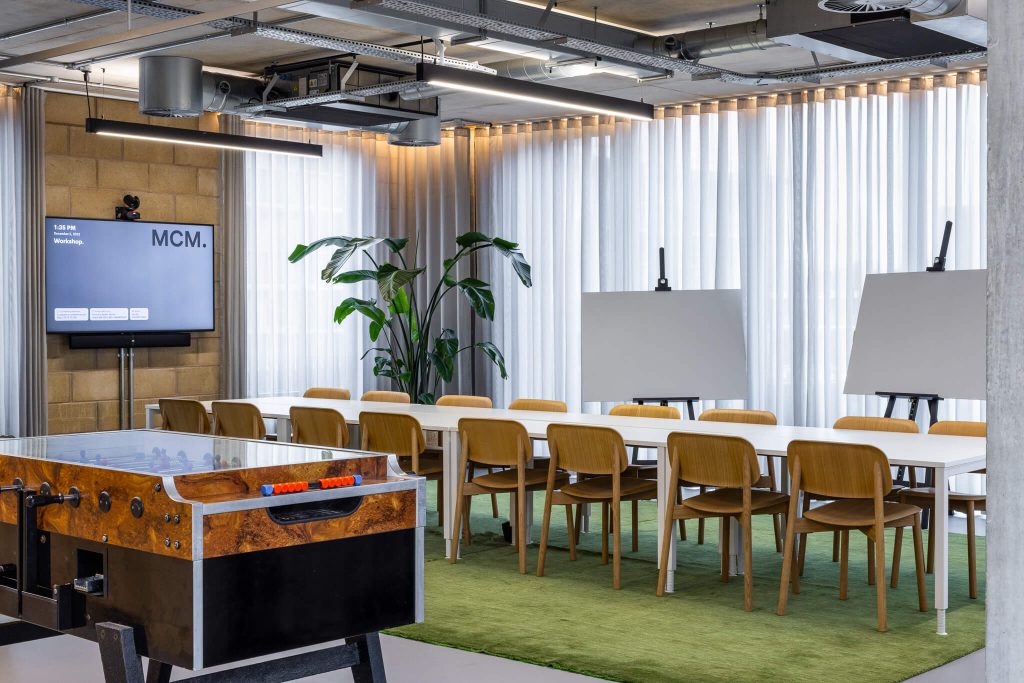
The Workshop Space at The Studios. SE1.
- Interviews require professional, distraction-free environments, which is why smaller meeting rooms are frequently booked for short, focused sessions.
- Team-building sessions often combine structured meetings with informal interaction, driving demand for spaces that feel comfortable, accessible, and easy to reconfigure.
2. Show What Corporate Clients Actually Care About
When choosing a meeting room, corporate bookers tend to prioritise clarity and functionality over aesthetics alone. Your marketing should reflect that.
Make sure your listing clearly highlights:
- Capacity and layout options (boardroom, classroom, theatre, etc.)
- Reliable Wi-Fi and AV equipment
- Natural light or a pleasant working environment
- Accessibility and transport links
- Catering or refreshment options
These details may seem obvious, but they’re often the deciding factor between one venue and another, especially when clients are comparing several options under time pressure.
3. Use Visuals to Reduce Uncertainty
Strong visuals are one of the most effective marketing tools for meeting rooms.
High-performing listings typically show:
- The room set up in different layouts
- Real meetings or workshops in progress
- Close-ups of screens, whiteboards, or conferencing equipment
These images help potential clients picture their own meeting in the space and build confidence before they even enquire. If your venue also hosts social events, make it clear which images show the meeting room setup to avoid confusion.
4. Highlight What Makes Your Meeting Room Different
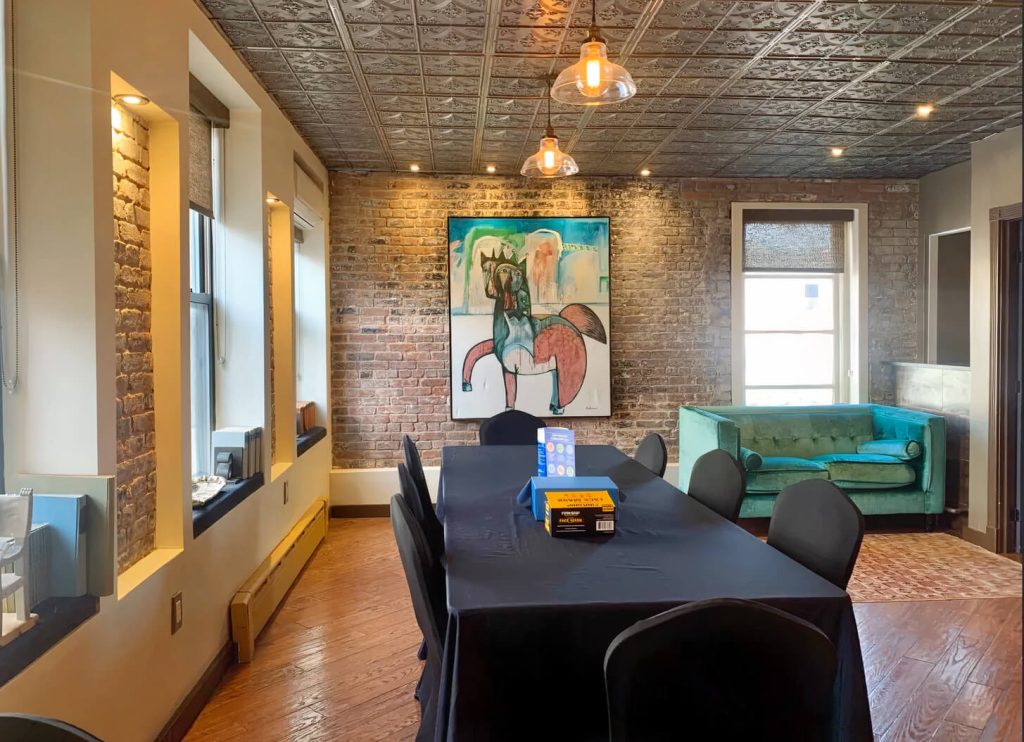
In competitive markets, small differentiators matter.
This might be:
- A view or standout location
- A quieter environment away from busy streets
- On-site catering or coffee service
- Flexible half-day or full-day booking options
Rather than listing features in isolation, explain why they matter. A view can make long meetings more engaging. On-site refreshments reduce interruptions. Quiet surroundings support focus and productivity. Make Pricing Easy to Understand
On Tagvenue, meeting rooms in major cities are typically priced at around $120 per hour. Even with modest utilisation, booked for just three hours a day, three days a week, a room at that rate generates over $56,000 in annual revenue.
For many venues, this income comes from time slots that would otherwise sit unused, turning quiet weekdays into a reliable revenue stream.
Clear pricing is a major trust signal for corporate clients, and meeting rooms tend to perform best when pricing is:
- Structured (hourly, half-day, or full-day)
- Transparent about what’s included
- Flexible for longer or repeat bookings
Unclear pricing often leads to unnecessary back-and-forth, which can cause clients to drop off. Clear rates position your venue as professional and organised.
Related: Why Every Coffee Shop Should Have a Meeting Room
5. Use Online Venue Marketplaces to Increase Visibility Where It Matters
Even well-equipped meeting rooms struggle if they’re not visible to the right audience.
Listing your space on a dedicated venue marketplace helps you:
- Reach clients actively searching for meeting rooms
- Appear in search results filtered by capacity, layout, and amenities
- Benchmark your offering against similar venues
- Attract enquiries that match your space and pricing
Venues that clearly position their meeting rooms on marketplaces like Tagvenue often see the same pattern: more weekday enquiries, shorter decision cycles, and repeat corporate bookings. They are frequently booked by startups, agencies, and corporate teams that prioritise practical, well-presented spaces over bargain deals.
6. Optimise Your Listing for Corporate Bookers
Meeting room listings that perform well tend to share a few characteristics:
- Concise, practical descriptions
- Clear layouts and capacity information
- Up-to-date availability
- Fast response times
Corporate clients often book under pressure. A well-optimised listing helps them make decisions quickly and makes your venue easier to choose.
7. Think Beyond One-Off Bookings
Meeting rooms are particularly well-suited to repeat business.
Support this in your marketing by:
- Highlighting suitability for recurring meetings
- Emphasising consistency and reliability
- Making rebooking simple
Over time, this can turn individual enquiries into stable, ongoing revenue with minimal extra effort.
8. Review, Refine and Adjust
The best performing meeting rooms pay attention to small signals.
Track which enquiries convert, which layouts are requested most, and which days fill up first. Just as importantly, pay close attention to client feedback and comments. Mentions of Wi-Fi quality, comfort, layout, or ease of access reveal what corporate bookers value most.
Small adjustments, such as updating photos, refining descriptions, or highlighting what guests consistently praise, can have a measurable impact. Reviewing these patterns regularly helps keep your meeting room visible, competitive, and booked.
Final Thought: Treat Your Meeting Room Like a Business Asset
When positioned clearly and supported by the right venue marketplace, meeting rooms become a dependable revenue stream that complements your core business. The most successful venues focus on clarity, professionalism, and visibility, making it easy for corporate clients to understand, trust, and book their space.
With the right approach and the right marketplace, meeting rooms don’t just get booked. They get rebooked.
You might like: