How to Adjust Your Venue Pricing for Peak and Off-Peak Seasons




Most venues lose significant revenue by relying on a flat price list: undercharging for dates everyone wants and overcharging on the dates nobody is asking about. The fix is to stop pricing your venue as a single product and start pricing it as a calendar, with different rates, minimum spends, and packages tuned to the demand each window actually generates.
This article focuses on the practical: how to move from a static price list to a seasonal one without confusing your team, alienating returning clients, or weakening your brand. If you’re still building your underlying pricing model, start with our venue pricing guide for small businesses first; this piece picks up where that one ends.
Map Your Calendar Before You Touch Prices
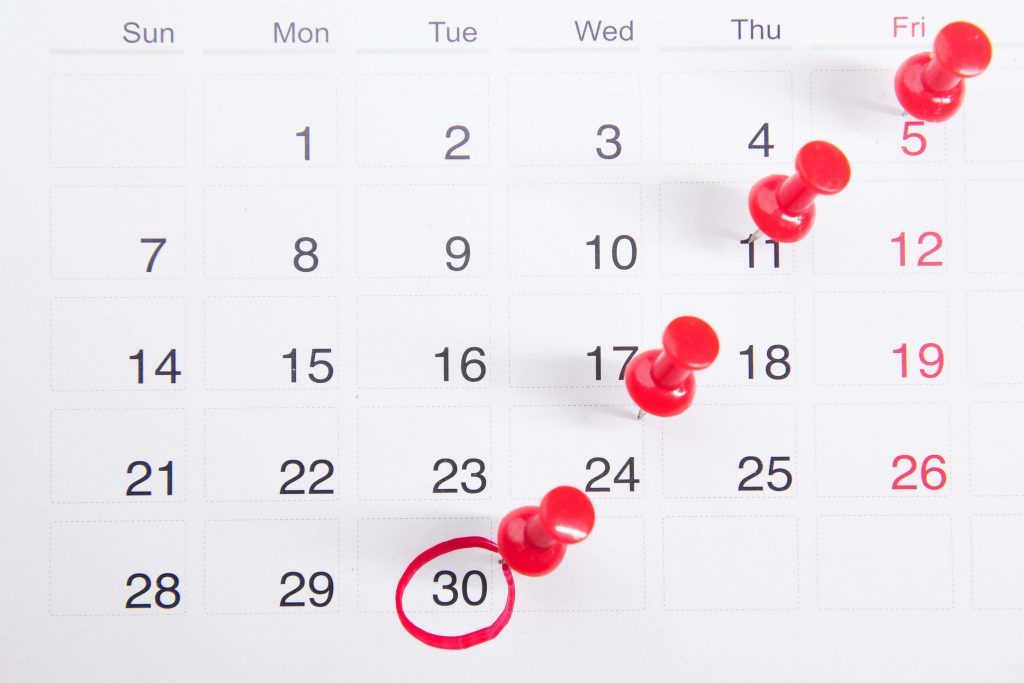
Defining peak, shoulder, and off-peak windows is the foundation of seasonal pricing. If you need help with this, it’s covered in detail in our pricing guide.
A useful seasonal map has at least three layers:
- Macro seasons: three or four blocks across the year, e.g. May–September peak, October–November shoulder, January–February off-peak, and March–April shoulder.
- Demand spikes inside each season: bank holidays, Valentine’s Day, the week before Christmas, your local festival or conference week. These behave nothing like the season around them.
- Day-of-week patterns: even inside peak season, a Tuesday in July is not a Saturday in July.
Without all three layers, you’ll end up applying peak prices to dates that don’t deserve them and missing premium-priced opportunities entirely.
Peak Season: It’s About Floor, Not Ceiling
The standard advice is to “raise rates 15–30% in peak season.” That’s directionally right, but the real lever in peak periods isn’t the headline rate. It’s the floor you set under each booking.
Three mechanics that matter more than a percentage increase:
1. Escalating minimum spends. Instead of one minimum spend across the year, set a peak-season minimum that scales with the desirability of the date. A regular Saturday in July might have a £4,000 food and beverages minimum; the Saturday of the August bank holiday might be £6,500. Clients are more likely to accept higher minimums when the date is clearly limited inventory.
2. Booking-length floors. Peak Saturdays should rarely be sold as four-hour bookings. Require a full-day or full-evening minimum, or sell them only as part of a Friday–Saturday or Saturday–Sunday package. Your most valuable dates should not be treated like ordinary four-hour slots..
3. Event-tier pricing on the top 10–15 dates. Identify the 10–15 dates in your year that genuinely sell themselves and price them as a separate tier, not 15–30% above standard, but 50–200% above. Bank holidays, NYE, Valentine’s Day weekend, the Saturday before Christmas are dates with fewer real substitutes for the client, which makes premium pricing easier to justify.
A note on discipline: in peak season, every discount you give cuts into your annual margin because demand is already at its strongest. If a peak date isn’t selling, the issue is almost never the rate. It could be the listing, the photos, or the visibility. The 11 venue management mistakes guide covers the listing-side fixes in depth.
Shoulder Season: The Trap Nobody Warns You About
Shoulder months — April, October, and early November, are where many venues quietly leak money. The instinct is to treat them as “peak-lite” with a token 5–10% discount. The result: you may discount dates that would have booked at full price while failing to give the bookings that need a real nudge any reason to commit.
A better approach for shoulder periods:
- Hold peak rates on shoulder-season weekends. Demand is often strong enough to support them.
- Discount selectively on shoulder weekdays but only Monday to Wednesday, and only with a clear seasonal label (“Spring midweek rate,” “Autumn corporate package”). Open-ended, unlabelled discounts train clients to wait.
- Push corporate and creative bookings into shoulder windows. This is the sweet spot for away-days, training sessions, and product launches for clients with budget but flexible dates.
Off-Peak: Reposition, Don’t Just Discount
Off-peak strategy is its own discipline, and much of it comes down to audience repositioning. Repositioning your space for weekday and corporate use is addressed in our guide to filling quiet weekday slots at your venue.
For pricing specifically, three mechanics work consistently in deep off-peak months:
1. The fixed-price off-peak package. Replace your standard quote-driven pricing with a single, all-in flat rate for January and February, or whatever your deepest off-peak window is. Bundle the room, basic AV, a simple F&B option, and an extra hour. One price, no negotiation, no quote turnaround. Decision friction drops to near zero, which is exactly what you want when demand is thin.
2. Time-bound value adds, not headline cuts. A 25% reduction signals “this venue is cheap.” A complimentary cocktail reception or upgraded canapé tier worth the same amount signals “this venue is generous.” Same margin hit, very different brand effect.
3. Stackable early-bird windows. Offer a meaningful discount (15–20%) on off-peak dates booked at least six months out, with a smaller 5–10% early-bird inside three to six months. This pulls revenue forward and gives your team a clean forecasting view of the quiet season before it arrives.
When and How to Actually Change the Prices
This is the operational piece most articles skip and the one most likely to cause problems with returning clients and existing enquiries.
A workable rhythm:
- Publish next year’s full seasonal rate card by October. Couples and corporate bookers planning a year out should be quoting against finalised numbers, not estimates.
- Honour the rate that was published when an enquiry was received, not the rate in effect when the contract is signed. This single policy prevents most pricing-related disputes.
- Review and adjust once mid-year, around the start of Q3, based on actual conversion data but only for dates more than 90 days out.
- Track conversion rate by season, not just total bookings. If your off-peak enquiry-to-booking rate is below 25%, your pricing may need work – or your listing is sending the wrong signal see our guide to common venue management mistakes.
Communicate seasonal pricing as “seasonal rates” rather than “discounts” and “surcharges.” The language matters: seasonal rates feel like a fair structure, whereas surcharges feel like a penalty and discounts can feel like a sale.
Why Visibility Matters as Much as Pricing
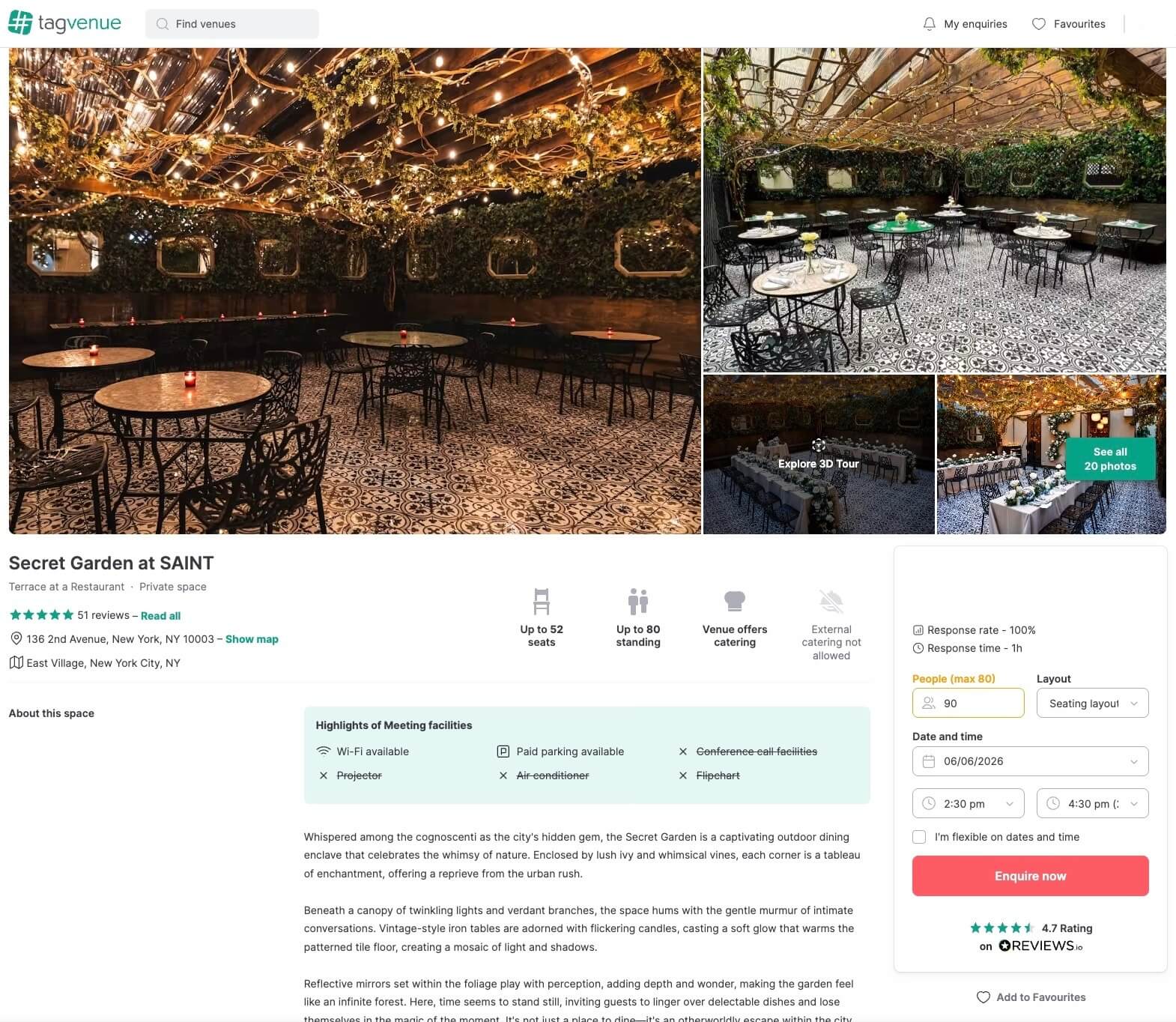
Even the smartest seasonal rate card will not help if planners don’t see your offer at the right moment. Off-peak bookings, in particular, come overwhelmingly from clients who are flexible on date and browsing across multiple venues.
This is the audience that lives on marketplaces like Tagvenue, where filters offer your space the moment someone searches for your capacity, style, or area. Keeping your listing current, with seasonal packages reflected in your live pricing, is what turns a thoughtful rate card into actual bookings on the dates you most need them.
If you’re weighing platforms, our breakdown of why venue owners are choosing Tagvenue over other marketplaces walks through the commission and audience differences.
Summary: Peak vs Shoulder vs Off-Peak
| Lever | Peak | Shoulder | Off-Peak |
| Headline rate | Standard peak rate | Hold peak rate (weekends), modest reduction (midweek) | Flat package or 20–40% below peak |
| Minimum spend | Escalates by date desirability | Standard | Lower or flexible |
| Booking length | Full-day or weekend packages only | Standard | Hourly and half-day allowed |
| Discounting | Avoid entirely | Midweek only, clearly labelled | Time-bound, structured early-birds |
| Communication | “Premium dates” / “event pricing” | “Seasonal rate” | “Off-peak package” — never “sale” |
| Top priority | Protect margin on finite inventory | Avoid unnecessary discounting | Reduce decision friction; reposition audience |
The Takeaway
Seasonal pricing is less about being aggressive in peak and generous in off-peak, and more about being specific. A rate card that distinguishes between a regular Saturday in July, the Saturday of the August bank holiday, a Tuesday in October, and the entirety of January — and prices each one for the demand and audience it actually attracts — will outperform a flat price list every year, without exception.
Get the structure right once, publish it openly, and let your calendar do the selling.
Related articles
See all
What Do Employees Actually Want From a Work Christmas Party in 2026?
Tagvenue Event Planning Index 2026: How the UK, US, Australia and Singapore Are Booking Events