The NYC Wedding Venue Marketing Guide: Strategies to Increase Bookings in 2026

New York weddings aren’t just “a big market.” They’re a $5+ billion industry.
In 2025, couples in New York State hosted around 123,686 weddings, spending an average of $41,091 per wedding, for a total market value of approximately $5.08 billion. If we zoom in on NYC, we see the numbers increase significantly: the average ceremony and reception in New York City reached about $87,700 in early 2025, roughly 56% higher than the US average.
For most couples, the venue is usually the biggest expense. Globally, around 45% of the total budget goes toward the venue, including the space, food, and drink.
Venue pricing covers the cost of renting the space itself—how the venue charges for use of the facility. This is typically an hourly fee, a per-person rate, or a minimum spend, and is often separate from catering, bar service, or other add-ons unless the venue is all-inclusive.
Tagvenue sits directly in the middle of that decision-making process. As of early January 2026, Tagvenue’s NYC data shows the:
Average wedding venue rental cost (often listed as “hire fee” on Tagvenue) is about $450–$500/hour
So yes, demand is there. But couples are more selective than ever. This guide breaks down key market data, marketplace patterns from Tagvenue, and NYC-specific examples to help you:
- Align your pricing and messaging with how couples actually shop
- Position your venue in the right category (all‑in, blank canvas, or buyout)
- Build content and listings that attract the right couples
1. What The 2026 NYC Wedding Buyer Cares About:
The Data Picture: Spend, Size & Priorities
Couples are still spending heavily but they’re spending with intention.
Rather than maximizing guest counts, many couples are choosing nicer food, better design, meaningful locations and simpler planning.
From 2026 trend reports (WedStay, major planners, etc.)
- Micro‑luxury weddings are on the rise
- 40–75 guests
- Higher spend per guest (reaching $800–900 per head at the top end)
- Weekday weddings (Tue–Thu) are increasingly popular, often offering 30–40% venue savings compared to Saturdays.
- Sustainability matters: roughly 72% of couples prioritize climate-conscious choices.
- AI & digital tools are now standard for venue discovery, budgeting and shortlisting.
From a numbers perspective:
- NY Market size: $5.08B, with 123,686 weddings in 2025 (The Wedding Report)
- Average spend: $41,091 per wedding statewide (median ~$19,720 — meaning a big mid‑market segment), with average guest counts between 123–133 guests.(The Wedding Report)
- Ceremony and Reception spend: around $87,700 for ceremony + reception alone, according to The Knot’s 2025 Real Weddings Study.
- Guest Count: Guest lists are shrinking (averaging roughly 95–116 guests depending on the source), as more couples opt for smaller, more intentional celebrations.(The Knot)
How NYC Couples Will Pick Their Wedding Venue in 2026
On marketplaces like Tagvenue, couples very rarely start with a vague idea like “a pretty venue somewhere.” Instead, they begin with clear constraints and specific preferences (such as style or decor). Many have already have a Pinterest board for their wedding, so they know more or less what they are looking for in a venue.
Most couples evaluate venues based on:
- Guest count: 50–80, 100–150, or 200+
- Pricing model: hourly rental, per person, minimum spend
- Location: West Village, Bushwick, Queens, Lower Manhattan
- Venue type: Loft, rooftop, restaurant, ballroom, boat, warehouse
- Experience: Micro wedding, ceremony only, reception only, dinner & dancing
In practice, couples are trying to answer five questions in under 30 seconds:
- Can this venue comfortably fit our guest count?
- What does it cost and how is it priced?
- What’s included and what do we have to handle ourselves?
- Does the style match how we want the day to look and feel?
- Will the logistics be a headache (load‑in, weather, noise, transportation)?
If your website, social channels and marketplace listings don’t answer these questions quickly, couples move on.
2. Use Your Pricing Model as Your Positioning
In NYC, a venue isn’t just a space. Your pricing model (whether hourly rental, per-person, or minimum spend) signals how couples should think about your venue.
On Tagvenue, wedding venues generally fall into three broad categories:
The All‑inclusive Couple
Simplicity + Service
These couples want dinner, drinks and most logistics handled in one place. They tend to gravitate toward per‑person pricing.
These couples are usually:
- Working long hours
- More likely to use planners or AI tools
- Happy to pay more in exchange for fewer decisions
How to market to them
Your messaging should clearly communciate “ease, structure, and predictable costs”:
- Transparent per‑person pricing (e.g., menus from $85–$135 per guest)
- Examples of available wedding packages
- Sample menus, bar tiers, and upgrades (late‑night snacks, champagne towers, etc.)
- Sample timelines: ceremony → cocktails → dinner → dancing
Tagvenue examples:
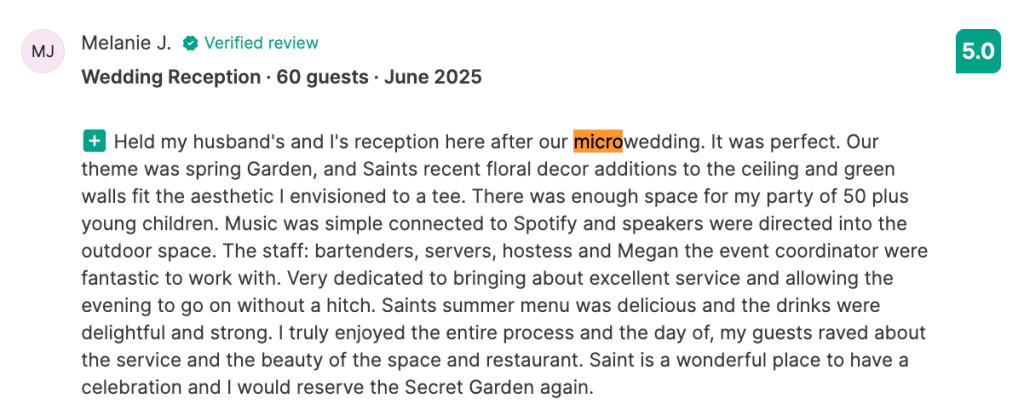
- SAINT – Secret Garden, East Village
- From $50 per person
- Capacity: ~52 seated / 80 standing
2. Mino Brasserie, West Village
- From $105 per person, entire restaurant
- Capacity ~55 guests
3. Da Mikelle Palazzo, Queens – Main Ballroom
- From $70 per person
- Capacity up to 1650 guests
The Blank Canvas Couple
Creative Control
These couples want to build a fully custom experience and will happily coordinate catering, decor and entertainment themselves. They are typically drawn to hourly rental venues.
They care about:
- Creative freedom
- A space they can transform into their ideal setup
- Confidence that NYC logistics won’t kill the vibe or their budget
How to market to them
Focus on flexibility + logistics clarity:
- Clear rental fees, minimum hours and inclusions (e.g., tables, chairs, AV, staff, cleaning)
- Sample floor plans for different setups (ceremony, dinner, dance layouts)
- Load‑in and access details: elevators, access hours, vendor parking
- Neighborhood rules: noise curfews, max music levels, rooftop policies
- Real examples of how other couples have used the space
Tagvenue examples :
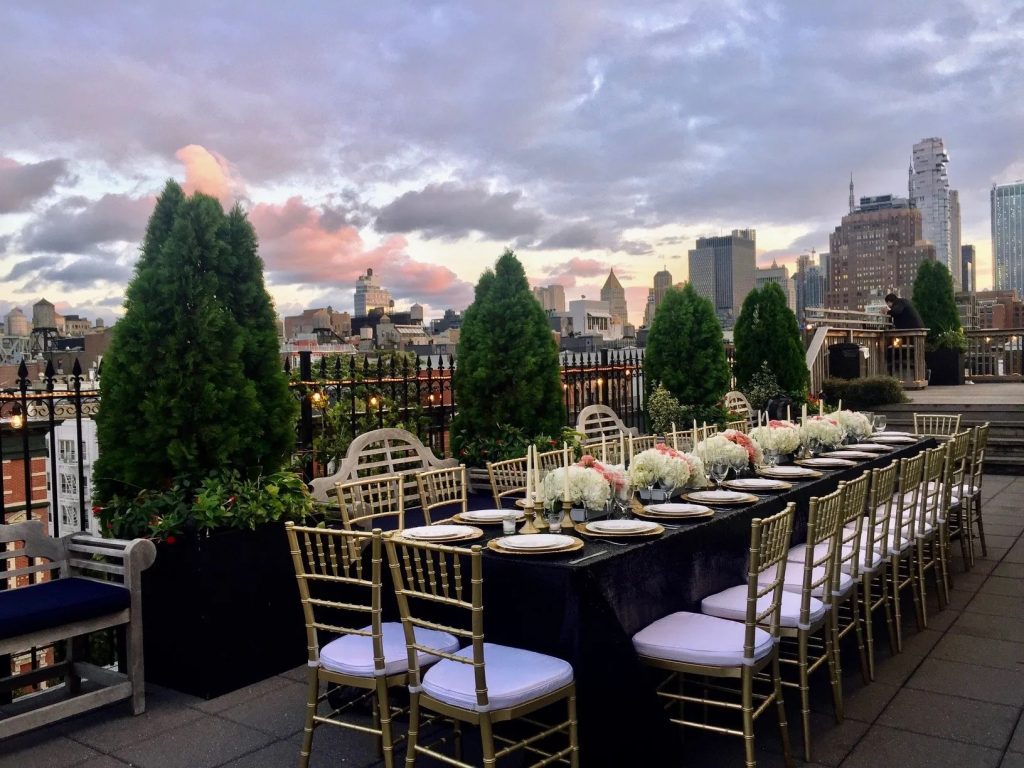
1. Penthouse Six Rooftop, South Village
- About $500/hour
- Capacity: 50 guests
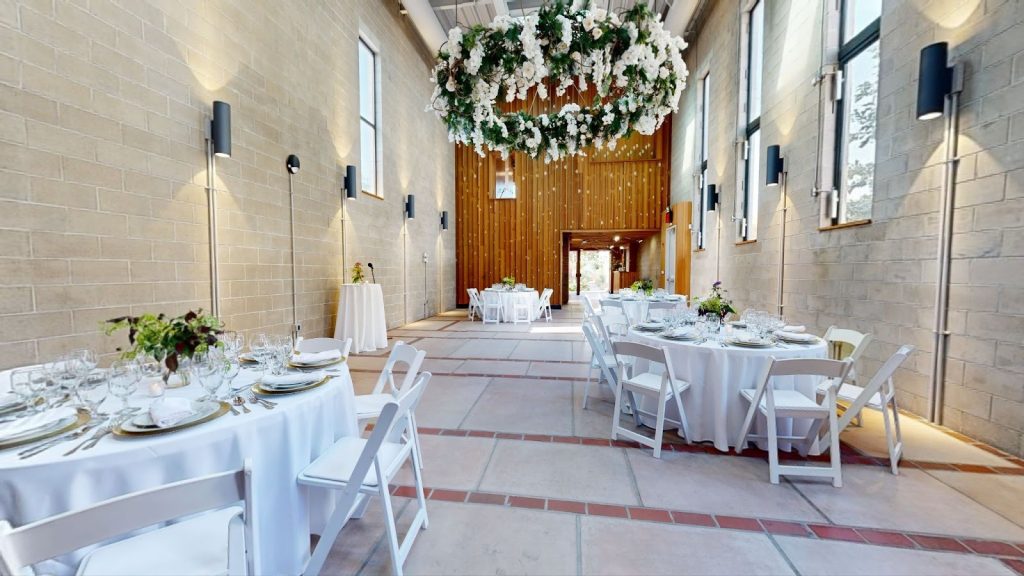
2.The Sixth Floor Loft, Flatiron
- Around $600/hour
- Capacity: 150 standing / 120 seated
3.Home Studios Inc., Flatiron
- From $650/hour
- Capacity: ~200 guests
The Exclusive Buyout Couple
Private, Hosted Experience
These couples come with a “we’re taking the whole place” mindset and typically choose minimum spend venues.
How to market to them
Emphasize certainty + exclusivity:
- Clear minimum spends with plain-language explanations of what they usually include (e.g., $X, which usually includes food, beverage, staff and private use of the venue for Y hours.
- Real-world breakdowns:
- For 80 guests on a Saturday, couples typically pay between $XXk–$YYk depending on bar choices.
- Strong positioning around:
- Privacy (You get the whole venue)
- Hosted service (coordinated service, smooth transitions)
- Defined time windows with clear overtime options
Tagvenue examples:
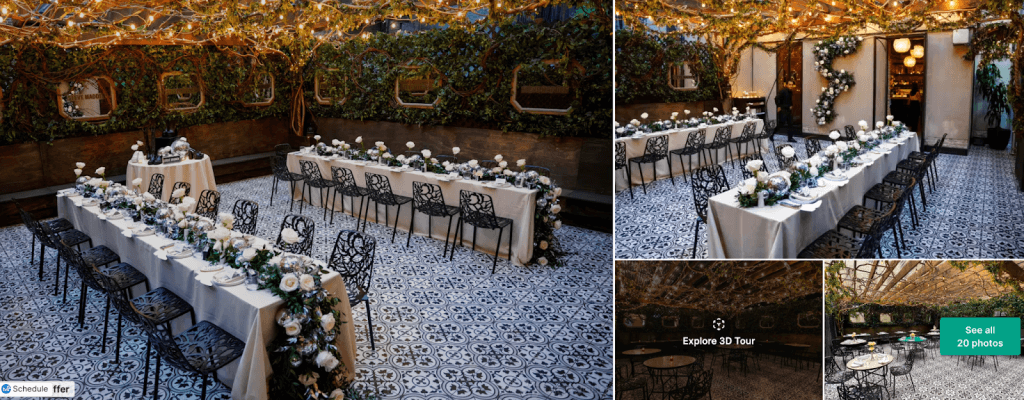
1.Carroll Hall, Bushwick – The Garden
- From $5,500 minimum spend per day
- Capacity: ~100 guests
2.Madeline’s, Greenpoint – Entire Venue
- From $5,000 minimum spend per day
Capacity: ~40 guests
3. TV Eye, Ridgewood
- From $5,000 minimum spend per session
- Capacity: ~100 guests
Why Identifying Your Audience Matters
When your positioning is clear:
- Your website headings become more specific and useful, for example, “All‑inclusive East Village wedding restaurant” versus “Loft rental for custom NYC weddings.”
- Pricing feels intentional and not vague.
- Ads and content match real search intent, for example, “NYC rooftop buyout weddings” versus the generic “beautiful NYC wedding venue”).
The result: Fewer price‑shock conversations and more “this is exactly what we were looking for” emails.
3. Use Wedding Venue Type to Drive your Content + Ad Strategy
Don’t just copy your competitor’s marketing, your venue type should dictate your strategy.
Loft / studio / flexible spaces
Primary hook:
“You can make this space yours.”
What works:
- Short transformation videos on Tiktok, YouTube, Instagram: empty → ceremony → dinner → wedding party
- Blog topics:
- “How to plan a loft wedding in NYC”
- “Loft wedding layouts for 80–120 guests”
- SEO landing pages:
- Loft wedding venue in NYC for 100 guests
- Industrial-chic wedding venue in Brooklyn
Make sure your site shows:
- Multiple layout photos
- Capacity ranges by setup (seated vs standing)
- Real weddings that demonstrate different styles
Rooftops
Rooftops already sell themselves visually. Your job is to remove the risk.
What works:
- A dedicated Weather & Plan B section covering:
- Rain backup options
- Heaters and wind solutions
- Ideal ceremony times for light and photos
- Lighting & view‑timing tips
- Noise restrictions and curfews, critical in Manhattan & Brooklyn
Restaurants & Bars
Here, your competitive edge is flow + food.
What works:
- Strong Google Business Profile with fresh photos, menus, reviews
- Short “wedding flow” reels:
- Arrival drinks at the bar → dinner → speeches → dancing
- Clear answers to:
- Can we have dancing? Where?
- Do you move tables or use a second space?
- Is pricing based on minimum spend or per‑person rates?
Tagvenue data shows that restaurant and per‑person packages in NYC often range from $58–$135 per person for weddings. Use that as a sanity check when pricing and positioning your offer.
Large Ballrooms and Banquet Halls
At this scale, couples care most about competence and quality.
What works:
- Honest capacity guidance (for example: comfortably seats 250 with a dance floor, not 400 tightly packed chairs)
- Clear package inclusions: food, open bar, dessert, decor basics, AV, bridal suite, coat check, parking
- Logistics:
- Parking and public transport access
- Coat storage, accessibility, elevators
- How you manage 200+ guest arrivals and dismissals
You don’t need overly luxurious descriptions. Just communicate “we can absolutely handle 230 family members who love a buffet.”
Micro & Experience-First Venues
The experience is the product
What works:
- Story‑driven descriptions:
- For couples who don’t want a traditional wedding day.
- Sunset ceremony on deck, followed by champagne and city lights.
- Crystal‑clear packages:
- X hours onboard
- Drinks, snacks or simple catering
- Staffing, safety, and route details
- Tie this directly into micro‑luxury trends: fewer guests, elevated everything.
4. Pricing Transparency
You don’t need to publish exact quotes but you do need to:
Set Realistic Expectations
- Per person venue:
“Our 3‑course wedding menus start at $95/person. Most couples spend $10k–$12k for food & beverage for 80 guests with a standard open bar.” - Hire fee venue:
“Rental rates start from $500/hour with a 6‑hour minimum. For a typical 8‑hour wedding (setup + event), couples budget $4k–$7k for space + staff before catering and decor.” - Minimum spend venue:
“Minimum spend starts at $5,500. For 100 guests on a Saturday, couples usually land between $13k–$16k depending on bar and menu choices.”
No one expects an exact quote. They just want to know if they’re in the right ballpark before they commit.
5. Upgrade your core marketing assets
Your Website Should Answer 8 Key Questions Right Away
- Starting price + pricing model (hire fee, per person, or minimum spend)
- Capacity (seated / standing, and the realistic sweet spot)
- What’s included (furniture, AV, staff, linens, glassware, decor basics)
- Minimum hours / minimum spend (and what counts toward it)
- Layout options (ceremony, reception, dancing, outdoor/indoor)
- Vendor rules (BYO, preferred list, in‑house only)
- Alcohol policy (bar packages, corkage, last call)
- Logistics (load‑in/out, elevators, parking, noise curfew, rain plan)
If your enquiry form is the first time someone sees the price, you’re losing a meaningful share of serious couples before they ever hit “Send.”
Visuals: Show the Day, Not Just the Room
Use your site & socials to show:
- Ceremony moments
- Dinner setups at different guest counts
- Dancing shots that show real spacing, so planners can picture DJ placement, dance floor size
- Close‑ups of lighting, tables, and the bar in full swing
You don’t need hundreds of images. You need ~20–30 well chosen visuals that show the whole journey.
Reuse styled shoots and real weddings in :
- Website galleries
- Instagram reels and grid
- Pinterest boards
- Sales PDFs (if you use them)
- Tagvenue listings
Video: The Quiet Salesperson
Attention spans are short. One clear walkthrough video can do more than a 15‑page brochure.
Try ideas like:
- What a $600/hour NYC loft wedding actually looks like
- Our rooftop rain plan in action
- How guests move through our restaurant wedding
Host the full video on your site, then break it into short clips for YouTube, Instagram, and TikTok.
6. Plug into the NYC Wedding Ecosystem: Vendors, Reviews & Referrals
Word of Mouth is not dead, especially in a dense market like NYC. Who recommends you matters almost as much as your own marketing.
Build a Small but Mighty Vendor Circle
Start with 5–10 vendors who:
- Already work in your price range
- Share your aesthetic (industrial‑chic, classic ballroom, boho, etc.)
- Post consistently
- Are enjoyable to work with! You’re going to be in the trenches together.
Collaborate on:
- Seasonal styled shoots
- Mini open houses for couples & planners
- Joint Instagram Lives or TikToks explaining NYC wedding planning topics
7. Make Reviews Part of Your Operations
Reviews = social proof + SEO fuel.
In 2025, US couples hired around 14 vendors, and venues represented one of the largest single costs – about $12,200. That makes reviews on venue platforms especially influential. (The Knot)
A simple review system:
- 48–72 hours after each event, send:
- A thank‑you email
- One or two direct review links (e.g. Google + Tagvenue)
- A short prompt such as: “What did you love about the space and the team on the day?”
Pro Tip: Tagvenue’s Supervenue program rewards venues that consistently deliver great experiences and maintain strong performance metrics. Its both a badge of honor and a conversion boost on your listing.
SAINT – Secret Garden, East Village
How Tagvenue Helps NYC Wedding Venues with Advertising
- Venue pages are updated with real‑time data from bookings, reviews and venue updates. They are also regularly refreshed with up-to-date content.
- Couples can filter by:
- Guest count
- Pricing model
- Neighborhood, venue type, and event type (wedding ceremony, wedding reception)
- Typical NYC price ranges and averages are clearly shown, helping your prices feel grounded and comparable.
For venues:
- No membership fees.
- You only pay a small commission after the event has taken place and the client has paid.
In short, Tagvenue acts as a free extra shop window where you only pay when it works.
How to use Tagvenue Like a Pro:
- Treat your listing like a mini‑website:
- Clear headline
- Pricing model + starting points
- Tight photo set that tells the story end‑to‑end
- FAQs for all the things couples constantly ask about in your inbox
- Use Tagvenue as a testing ground:
- Trial weekday packages in the description
- Add micro‑wedding or elopement dinner packages for 20–40 guests
- Watch:
- Enquiry volume
- Quality of enquiries
- Days of week / seasons that get the most requests
Then reflect those insights in your website and ad copy.
Final thoughts
NYC wedding venues won’t win in 2026 by shouting the loudest but by being the clearest.
When you:
- Anchor your pricing and positioning in real data
- Choose a lane (all‑in, blank canvas, or buyout) and market it clearly
- Show couples exactly how their day will feel in your space
- Plug into platforms where couples are already comparing options like Tagvenue
- And run a simple but consistent plan
Your inbox shifts from “just checking availability” to “We’ve shortlisted three venues and you’re our favorite. Can we come for a tour?”
FAQ
If we use a minimum spend model, how do we avoid scaring couples off?
Don’t hide it, and don’t introduce it without context. Minimum spend makes sense when you explain what it covers and show examples. Add a simple line like:
Minimum spend from $5,500, typically covering food + beverage, staffing, and private use of the space (exact inclusions vary by package).
If we charge a hire fee, what info should we publish to convert more enquiries?
Hire-fee venues perform best when they reduce uncertainty. Alongside your starting rate, clearly show:
1. How many hours are included / minimum booking length
2. What’s included (tables/chairs/AV/cleaning/staffing/security)
3. Vendor rules (BYO catering? preferred vendors?)
4. NYC-specific logistics couples worry: load-in access, elevators, parking, sound limits, and end times
For per-person venues, what do couples want to know beyond the price?
They’re buying simplicity, so show exactly what that simplicity includes. Couples want to know:
1. Menu structure and upgrade options
2. Bar packages and what’s included
3. Private area vs full buyout options
4. How the timeline works (seated dinner vs cocktail-style flow)
5. Per-person pricing converts best when you help couples picture the evening, not just the number.
Should we market weekday weddings in 2026?
Yes. If your venue uses rental fees or minimum spends, weekdays can help fill gaps without undercutting weekend pricing, especially for smaller guest counts and modern wedding formats.
Where should NYC wedding spaces list themselves to get more qualified leads?
A strong strategy includes: your website for brand and SEO, Google Business Profile for local discovery, social for proof and user generated content, and at least one place where couples can compare venues using filters for capacity, location, and pricing style. Listing on Tagvenue supports this mix by helping your venue appear in high-intent searches and by letting couples view your key details quickly—photos, capacities, and whether you charge a rental fee, minimum spend, or per-person rate.