How to Transform Your Venue into a Multi-Purpose Event Space and Boost Revenue


A bar that only sells drinks on Friday nights is underperforming.
So is a café that only serves coffee.
So is a meeting room that only hosts board meetings.
Across Tagvenue, some of the highest-performing venues aren’t bigger or newer. They’re simply positioned differently and marketed accordingly. They understand one thing: A venue isn’t a category. It’s a flexible asset.
The difference between a space that struggles midweek and one that stays consistently booked usually comes down to one thing: how clearly its versatility is communicated.
Related: How to Price Your Venue: A Practical Tagvenue Guide for Small Businesses
The Shift: From Venue Type to Use Case
Think about a bar. On Friday nights, it’s packed. On Tuesday mornings, it’s empty.
Now imagine that same space set up differently:
- Tables rearranged into workshop clusters
- Lights adjusted for daytime clarity
- A screen ready for presentations
Suddenly, it’s not just a bar. It’s a creative workshop venue. A team offsite location. A filming backdrop. Event designers do this constantly. Industry guides and event specialists like Bright Vision Events highlight how easily a blank space can be redefined through layout, lighting, and focal points alone. The space doesn’t change, but the purpose does. The same principle applies to how you position your venue online.
Related:
What Is Event Management? The Only Guide You Need in 2026
How to Increase Event Space Visibility Through a Venue Marketplace – The Tagvenue Way
Example: One Bar, Five Revenue Angles
Take a typical bar with movable furniture, adjustable lighting, and character interiors.
Without renovation, it can host:
| Event Type | Why it Works |
| Workshop | Flexible seating encourages collaboration |
| Team office | Informal atmosphere encourages creativity |
| Production shoot | Textures and lighting add visual depth |
| Networking event | Open layout supports movement and flow |
| Private celebration | Controlled access creates exclusivity |
Nothing structural changes. Only the framing does. And framing changes visibility.
Event transformation specialists often talk about “activating” a space, creating zones, adjusting light, and defining purpose. You don’t need a large-scale production to do this. Small, intentional adjustments can completely shift how perception.
A Real Example: One Venue, Multiple Revenue Paths
The image below shows the same venue positioned across multiple event categories, from weddings and corporate parties to baby showers and bar hires.
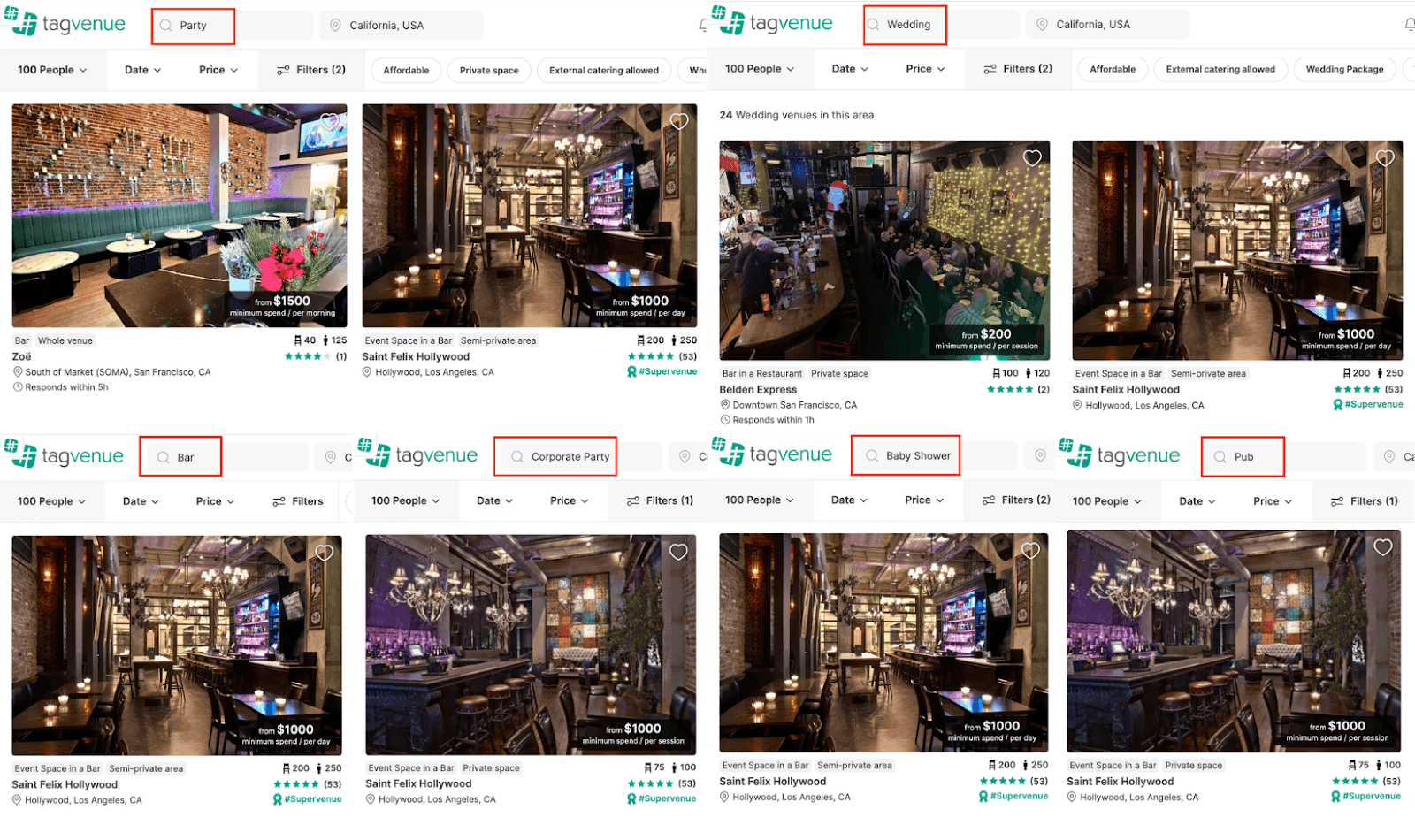
Nothing about the physical space changes. What changes is how it is positioned.
When a venue appears under multiple event categories, it reaches entirely different search intents. A corporate team may discover it in the “corporate party” category. A soon-to-be-married couple may find it under “wedding”. Each category represents a new audience and different revenue potential.
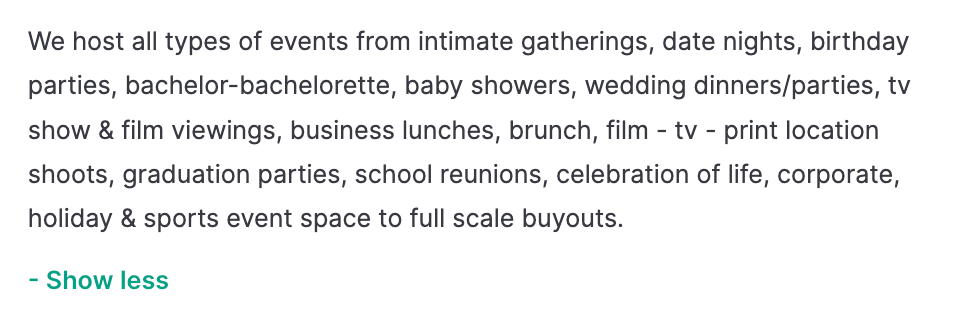
Category placement is only part of the equation. How clearly you communicate versatility in your description matters just as much. Clearly stating the types of events your venue can host helps search engines understand your space and helps potential clients immediately recognise its relevance. If they don’t see their event reflected in your description, they’re less likely to enquire, even if your venue is a perfect fit. A clear example of this approach:
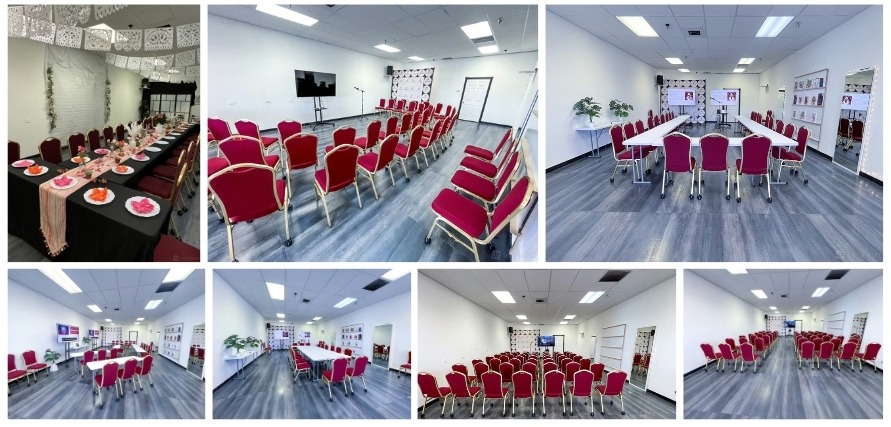
The example below clearly demonstrates how a venue can use its versatility to showcase multiple uses of the same space. By presenting images of different setups and layouts, the venue helps potential clients visualise how the space can adapt to a range of event types, which often translates into more enquiries and, ultimately, more bookings.
Stop Describing. Start Positioning.
Many venue listings focus on what a space has, but clients are usually more interested in what they can do there. Instead of simply listing features such as: “Standing capacity 60. Wooden bar. Exposed brick.” frame your space around its potential: “Ideal for workshops, product launches, and networking events, with flexible layouts and natural focal points.” This approach helps potential clients quickly understand whether your venue actually fits their needs, and makes it easier for them to say yes. What matters is clearly showing those possibilities.
Related: Marketing Ideas for Your Event Space: Practical Strategies to Attract More Bookings
Small Changes. Bigger Appeal
Practical upgrades that increase versatility:
- Movable furniture for quick layout changes
- Layered lighting for different moods
- Neutral walls suitable for filming or branding
- Clear examples of multiple setups in your listing photos
When potential clients see three different configurations of the same space, they stop asking “Can this work?” and start asking “Is it available?”
Remember: Different clients view your venue through different lenses. A production team looks for power supply, quiet access, and strong visual backdrops. A corporate booker searches for layout flexibility, reliable Wi-Fi, privacy, and easy transport links. A private host looks for atmosphere, exclusivity, and flow. One space can satisfy all three if you communicate it properly.
What This Means Financially
Expanding your positioning does more than increase visibility. It increases utilisation. A bar marketed only for weekend parties might fill two nights per week. The same bar positioned for multiple events can generate weekday bookings as well.
Visibility Across Categories Matters
Venue marketplaces that allow listings to appear under multiple event types provide a significant advantage. If your venue can be discovered as:
- A meeting space
- A filming location
- A networking venue
- A private party space
…it reaches entirely different audiences without increasing square footage.
Tagvenue supports this kind of flexible positioning, allowing venues to showcase multiple event formats rather than being confined to a single label, The result is broader visibility and stronger enquiry quality.
Think Beyond the Label
Your venue isn’t limited by what it’s called, it’s limited by how narrowly it’s presented. The most successful venues treat their space as adaptable, capable of shifting format throughout the week without major changes. When clients can clearly see how your space can transform, they don’t just imagine one even., They imagine many. And that’s where real growth begins.
Ready to double your revenue?
List your venue in different event categories to maximise your visibility and turn leads into bookings.
Related articles
See all