How to Increase Event Space Visibility Through a Venue Marketplace – The Tagvenue Way


This guide explains how venue marketplaces support visibility and revenue growth, how to choose the right one, and how to list your space confidently and effectively. It also outlines why listing on Tagvenue offers a straightforward and reliable way to get started, and how to do so to instantly improve visibility.
Managing an event space today goes far beyond having an attractive room. Venue managers are expected to handle enquiries, pricing, availability, and communication, often across multiple platforms, while maintaining visibility. All while juggling the demands of day-to-day operations.
For venue managers entering the online venue rental market for the first time, managing these responsibilities can feel overwhelming. The venue marketplace you choose doesn’t just affect bookings, it shapes how your space is discovered, perceived, and managed day to day.
Why Choosing the Right Platform Matters
Some venue marketplaces prioritise planners, others focus on ticketed events, and some rely heavily on paid promotion or complex fee structures.
The right venue marketplace should:
- Make pricing and enquiries easy to manage
- Offer fair visibility without requiring constant paid promotion
- Be transparent about fees
- Help attract the right type of leads, focusing on bookings rather than volume alone
Marketplaces like Tagvenue are designed with these needs in mind, especially for independent venues, hospitality spaces, and small businesses.
Why Should You List Your Venue on a Marketplace
Listing on a dedicated marketplace reduces the effort required to generate enquiries and manage bookings. Rather than building visibility from scratch, marketplaces bring demand, structure, and tools together in one place. This means you don’t need to manage SEO strategies or paid ads to generate visibility. The marketplace does the work so you can focus on bookings.
The right venue marketplace helps you:
- Reach leads who are actively searching for event spaces
- Reduce admin through centralised enquiries and messaging
- Present pricing, availability, and amenities clearly
- Compare similar venues to understand positioning, which is particularly useful for new businesses
This approach is particularly valuable for first-time listings, where clarity and exposure can make the difference between sporadic enquiries and consistent bookings.
Related: How to Get More Bookings For Your Venue – Tagvenue
Tagvenue vs Other Event Venue Platforms
Before exploring individual features, it’s useful to understand how Tagvenue compares to other venue marketplaces commonly used by venue managers.
Tagvenue prioritises visibility based on listing quality and responsiveness.
- Visibility is driven by listing quality, ratings and reviews, not paid placement
- Venue names and profiles are fully visible
- Costs are transparent and don’t affect discovery
Tagvenue stands out by combining transparent pricing, strong SEO visibility, and a venue-first approach, without shifting costs onto guests or hiding key information.
You can find a detailed breakdown of these differences here: Tagvenue vs Peerspace: Which Platform Is Better for Listing Your Venue?
Strong Visibility Without Pay-to-Win Listings
On many venue marketplaces, visibility is tied to paid placements or subscriptions. On Tagvenue, venue profiles are ranked based on:
- Listing completeness
- Clarity of pricing
- Quality of photos and descriptions
- Responsiveness to enquiries
This approach rewards qualities and actions that venue managers can directly control.
SEO That Works for Venues
Marketplaces that invest heavily in SEO offer a clear advantage to venue owners. You don’t have to hire an agency or manage independently. You benefit from relying on the marketplace to do the legwork, allowing you to focus on the new enquiries
Venue names are fully visible, pages are indexed by Google, and listings often appear for searches like:
- “event space near me”
- “private dining room in X city”
- “18th birthday party venue”
- “X city meeting room hire”
For venue managers, this means:
- Increased organic discovery
- Longer-lasting visibility
- Fewer reliance on paid ads
While some competitor platforms generate high traffic volumes, visibility doesn’t always translate into qualified enquiries. Tagvenue focuses on optimisation, which means every venue page follows SEO best practices and a page structure designed to support discovery while prioritising conversion.
Managing Your Event Space Day to Day on Tagvenue
Tagvenue is designed to support the operational side of venue management as well as visibility. All enquiries are managed in one place, making it easier to:
- Track conversations
- Respond quickly
- Avoid missed bookings
Fast response times are consistently proven to improve conversion, particularly for venues new to online listings.
Perks of Listing Your Venue on Tagvenue
One of the biggest advantages of listing on Tagvenue is the level of control venue managers have over how their space is presented. Clear, detailed listings consistently outperform vague or limited ones, which is often the case on standalone venue websites.
High-performing venue listings typically include:
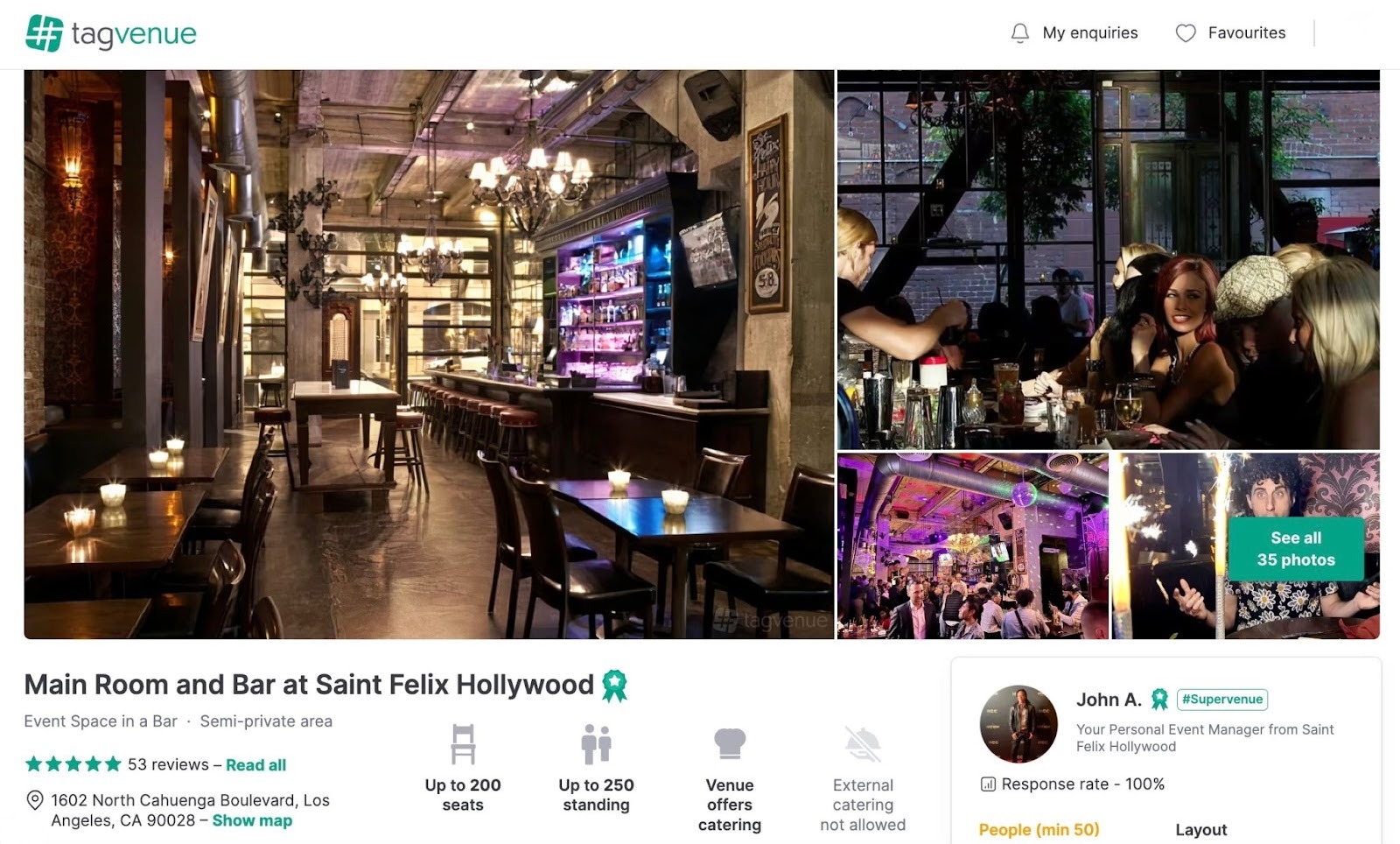
Multiple photos showcasing different events: Venues can upload as many images as they like, allowing them to show the same space set up for birthdays, corporate meetings, weddings, or private dinners. This helps planners and organisers visualise their event more easily.
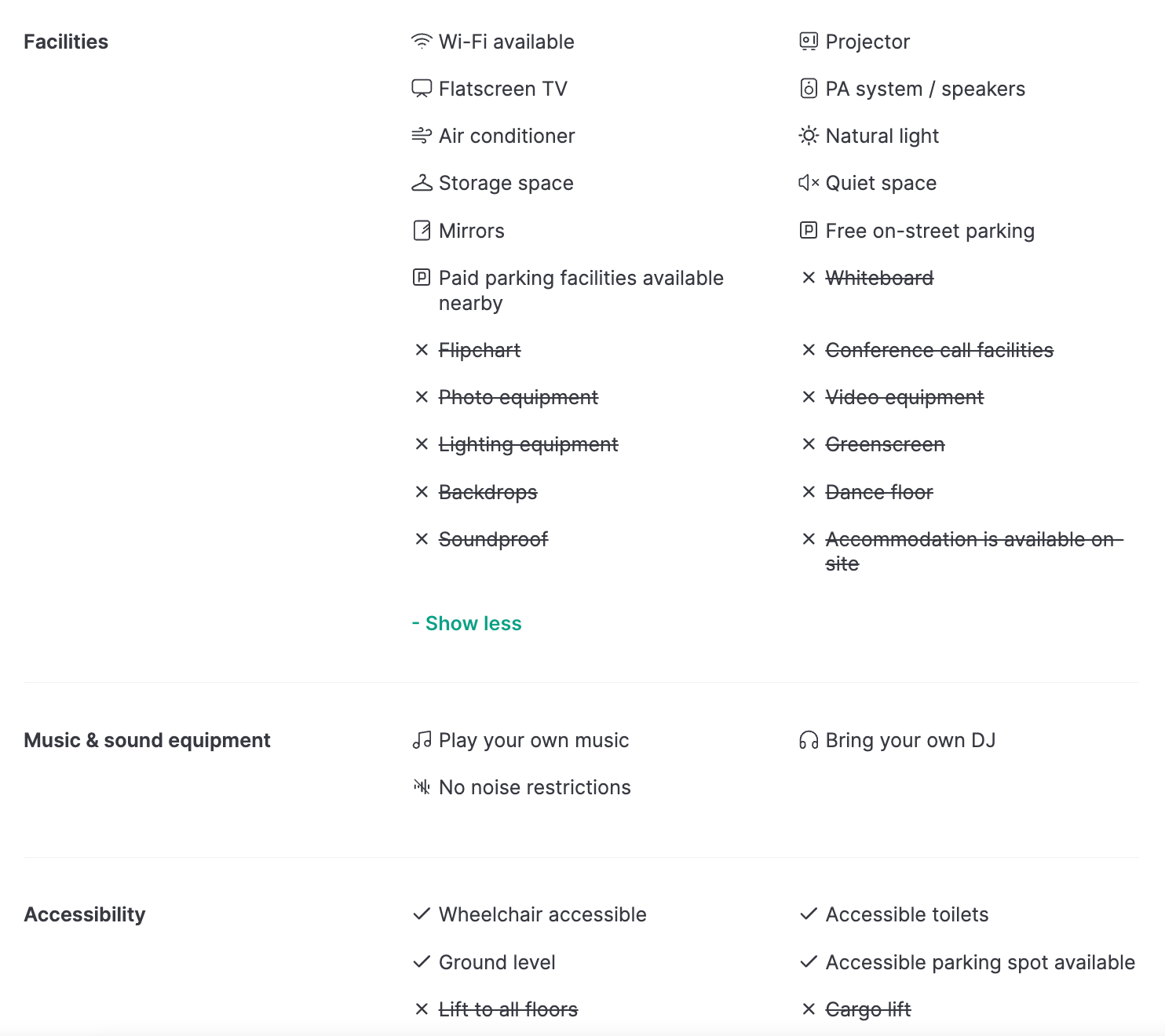
Clear amenities and facilities: Amenities such as AV equipment, furniture, catering options, or accessibility features can be listed clearly, reducing repetitive questions and improving enquiry quality.
Transparent pricing and availability: Venues can display hire fees, minimum spends, or per-person pricing upfront. This helps planners and customers understand the costs before making an inquiry, increasing conversion. Moreover, users can talk to the venue managers directly if details need clarification.
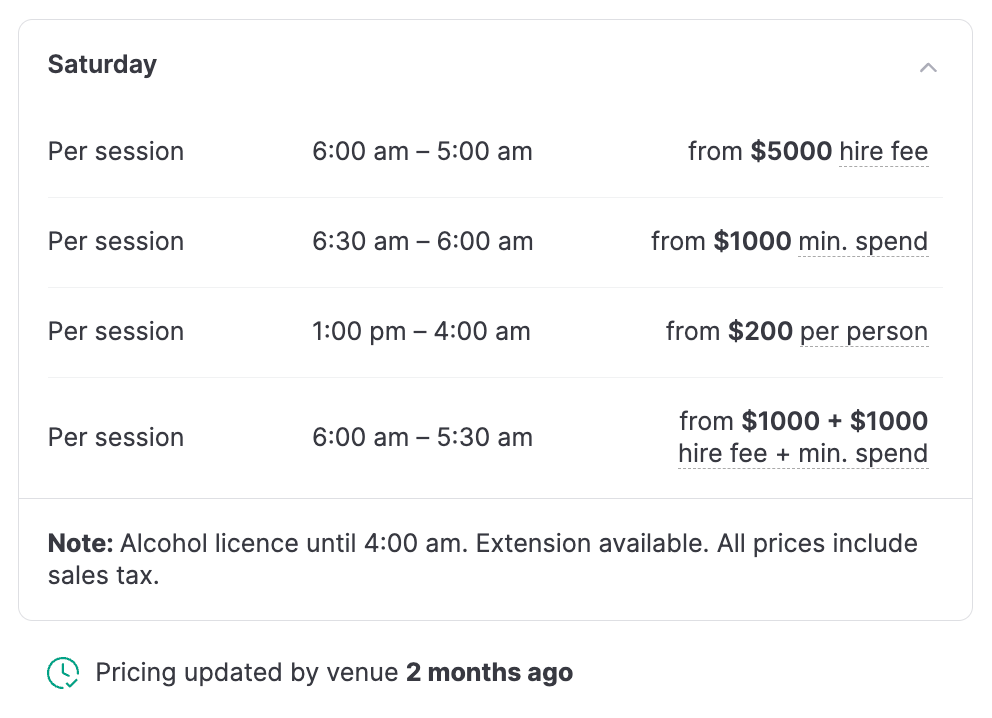
Clear Pricing & Availability
Venues can clearly display:
- Hire fees, minimum spends, or per-person pricing
- Availability rules
- What’s included vs optional
- Response rate and time
This reduces back-and-forth, filters out poor-fit enquiries, and saves time.
Flexible Pricing Models
Tagvenue supports multiple pricing approaches, allowing venues to:
- Adjust pricing by event type
- Reflect peak and off-peak demand
- Offer packages where appropriate
This flexibility is particularly valuable for spaces balancing private hire with regular trade. It’s also important to note that, on Tagvenue, commission is only charged on confirmed bookings
Tagvenue’s Role in Long-Term Venue Growth
Beyond individual bookings, Tagvenue supports venue managers by:
- Increasing long-term discoverability
- Attracting repeat event types
- Helping venues understand what performs best
- Reducing reliance on multiple platforms
Who Tagvenue Is Best For
Tagvenue works particularly well for:
- Small businesses
- Independent venues
- Pubs, bars, and restaurants
- Dedicated event spaces
- Venues entering the private hire market for the first time
- Private owners who want to market their space for events (lofts, mansions)
Its structure supports growth without requiring expensive subscriptions or complex fee models.
Get Started on Tagvenue in a Few Simple Steps
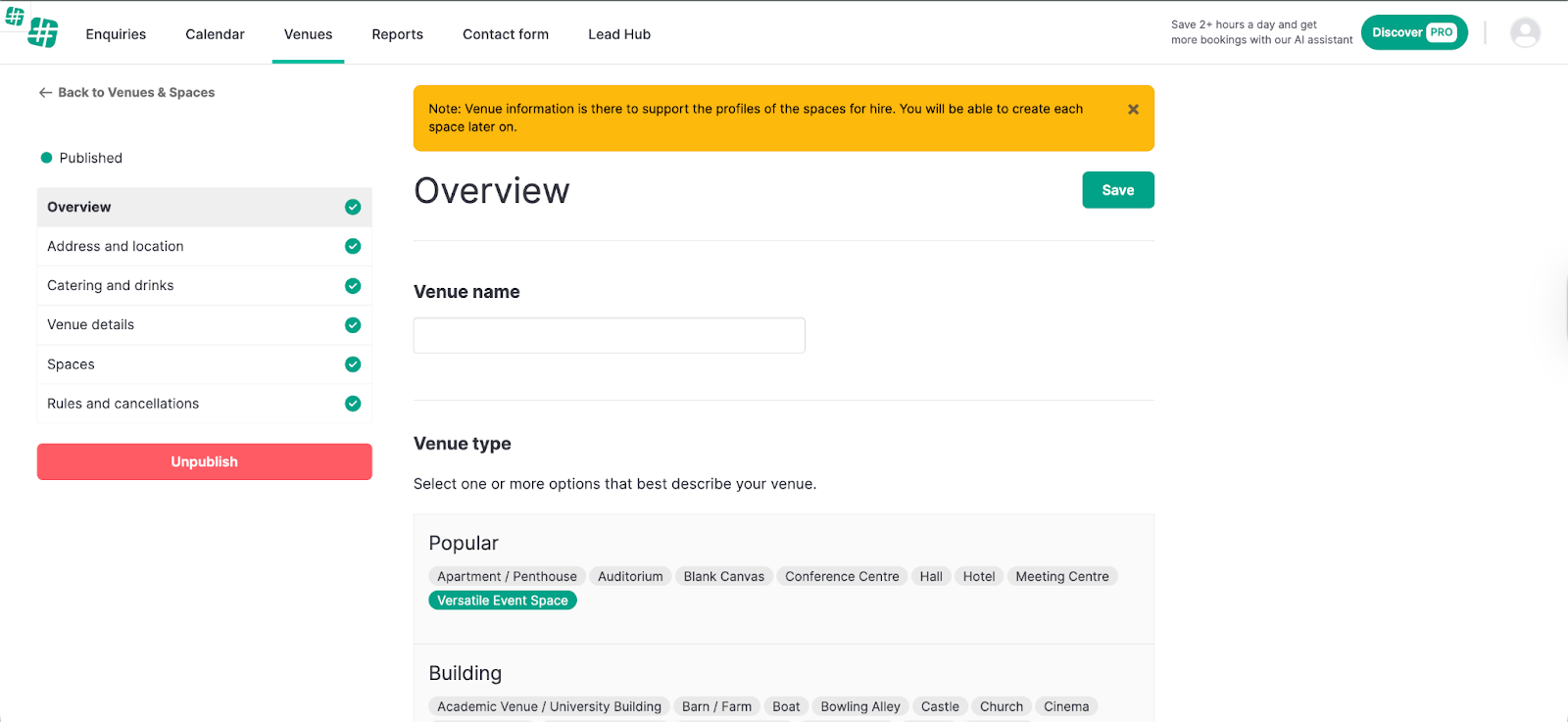
Listing your venue on Tagvenue is straightforward, even if you’re new to the private hire market.
Here is how to get started:
- Adding your venue overview
- Adding your address
- Catering information (if applicable)
- Completing venue details
- Choosing a cancellation policy
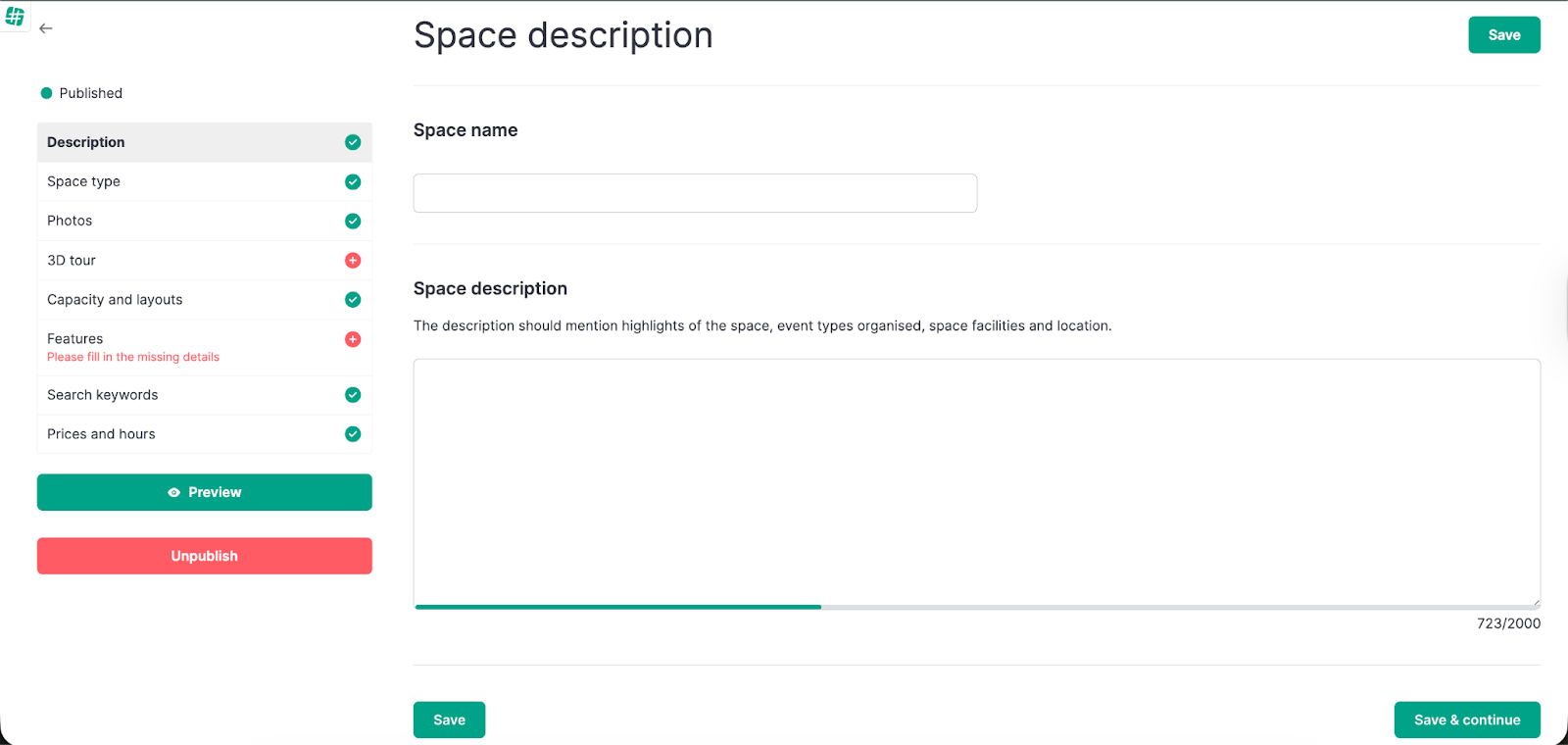
- Creating space descriptions for each hireable area
- Defining the space type (whole venue, private space, shared space, etc.)
- Uploading photos (the more, the better)
- Specifying capacity details
- Listing available facilities
- Choosing relevant keywords that represent your venue
- Adding prices and operating hours
Listing your venue online isn’t only about exposure. The right venue marketplace helps you:
- Manage enquiries efficiently
- Price confidently
- Attract suitable bookings
- Build visibility over time
Tagvenue offers a balanced approach, combining strong reach, transparent costs, and tools aligned with how venue managers actually work.
For those entering the venue rental market or looking for a more sustainable way to manage bookings, it provides a reliable place to start and scale.
Related articles
See all